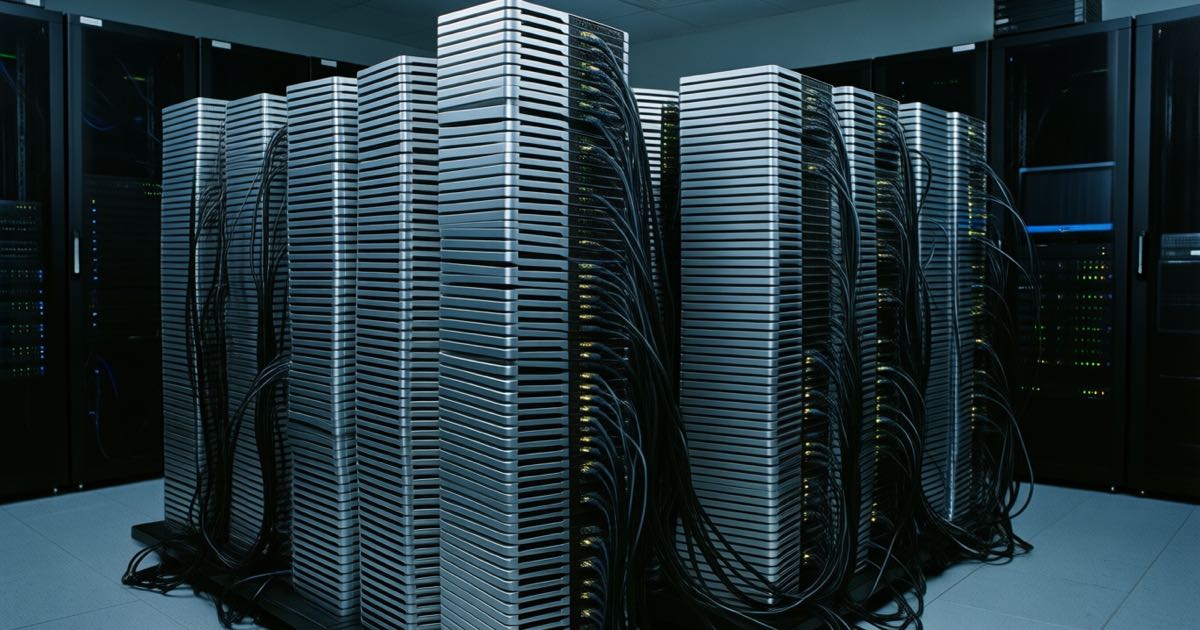
The frontier AI labs have found a use for the humble Mac mini that Apple never pitched: teaching AI agents to use computers. According to a report from The Information published 30 August, OpenAI has bought tens of thousands of Mac minis and Mac Studios over recent months, while Anthropic is renting Mac minis through Amazon Web Services for similar work.
🔍 THE BOTTOM LINE: The demand for AI agents that can actually operate a computer — click, browse, type, learn from mistakes — has created a hardware appetite that GPUs alone don’t satisfy. Small consumer Macs, bought by the rack, have quietly become infrastructure.
Why Agents Need Macs Specifically
Training a language model still happens on GPU clusters — nothing about that has changed. But training a computer-use agent is a different problem. These are systems that watch a screen, keep a desktop environment in memory, click through a browser, and learn from repeated attempts. Each training session needs a real desktop environment that can be reset, snapshotted, and run again — thousands of times in parallel.
Apple’s unified memory architecture turns out to fit this well. A Mac can run a local model and a live desktop environment on the same machine without shuffling data between a GPU server and a separate computer. Wccftech’s coverage notes the labs are also exploiting Thunderbolt 5’s low-latency networking to cluster Minis directly — bypassing TCP/IP for fast machine-to-machine connections.
None of this makes a Mac mini a substitute for an Nvidia training cluster. It makes it a complement: big models train on GPU datacentres, and then those models need somewhere concrete to practise being useful — which is what the Mini fleets are for.
Consumers Are Feeling It
The consequence for everyone else is scarcity. MacRumors reported shipping waits stretching into months earlier this year, with the base Mac mini listed as unavailable in Apple’s online store at points. Apple’s Mac revenue rose 29 per cent year over year to US$10.4 billion in the June quarter — the fastest-growing major product segment it has.
The squeeze sits on top of an existing memory-supply problem: AI demand is already inflating RAM and storage prices globally, a trend with direct flow-on effects for New Zealand electronics pricing. When the same memory that prices out a student’s laptop build is also being hoovered up in Mini-fleet quantities, the consumer market pays.
Apple’s answer was to accelerate hardware: the M6 Mac mini and M5 Ultra Mac Studio refresh arrived last week, partly read as a move to catch supply up with lab-scale demand. Whether it succeeds is genuinely uncertain — The Information quotes webAI CEO David Stout warning that enterprises unable to get high-memory Macs will simply choose different hardware.
The New Map of AI Compute
What the story really documents is a shift in the geography of AI compute. Google has TPUs, Amazon has Trainium, Nvidia has DGX Spark — and now Apple has labs buying Minis by the truckload. For years the assumption was that serious AI ran exclusively on rented GPU clusters. Agents that operate computers need actual computers, at volume, with local models attached — and that has handed Apple an infrastructure role nobody was forecasting two years ago.
It also runs in the same direction as the memory chip squeeze: when agents-in-training join consumer electronics in competing for the same chips, everything connected to the supply chain gets tighter.
❓ FAQ
What are computer-use agents? AI systems that control a desktop the way a person does — reading the screen, moving the cursor, clicking through applications. Google’s Gemini 3.5 Flash is one consumer-facing example of the direction.
Why Mac minis instead of cheaper Linux boxes? The Information’s report points to Apple Silicon’s unified memory — a single machine can hold a large model and the desktop environment the agent is learning from, without data shuffling between systems.
Does this affect Mac prices in New Zealand? Supply pressure is real globally, and it compounds with memory chip price rises already flowing through to NZ electronics. If you have been timing a Mac purchase, waiting may cost more than it saves.
Is OpenAI confirmed as the buyer? The purchase figures come from The Information’s sourcing and have been widely republished; OpenAI itself has not confirmed the numbers. Treat the scale as reported, not confirmed by the company.
🔍 THE BOTTOM LINE
The frontier labs have converged on a two-tier compute map: GPU clouds for training the models, and fleets of small consumer machines for teaching them to behave. The Mac mini — built for desks — is now bought like infrastructure. Apple’s problem is no longer selling the idea of Macs for AI; it is building enough of them.
📰 Sources
- The Information — Apple Stumbled Into AI Hardware Success
- Wccftech — OpenAI hoarding Mac mini and Mac Studio devices
- Startup Fortune — OpenAI is buying so many Mac minis Apple can’t keep up
- Crypto Briefing — OpenAI acquires thousands of Macs for AI training
- India Today — OpenAI buys thousands of Mac minis for agent training