When a humanoid robot can see everything except the thing that matters, it stops being useful. That gap — contact, force, sound, the memory of what just happened — is what Germany’s NEURA Robotics went after this week. On Tuesday 14 October, the Metzingen-based maker of the 4NE-1 humanoid introduced Neuron AI, a multimodal foundation model for physical AI that the company describes, without false modesty, as “the brain of the physical world.”
The technical pitch is a Perception-Language-Action (PLA) architecture. Instead of treating each sensor as a separate input routed through hand-written fusion logic, Neuron AI encodes 3D vision, tactile and force data, audio, robot state and language into one shared, time-aligned representation, then conditions all of it into a single stream of action. Founder and CEO David Reger put it plainly: “An intelligent robot needs a brain that brings its senses together and remembers what happened.”
Why touch and audio, when vision already works
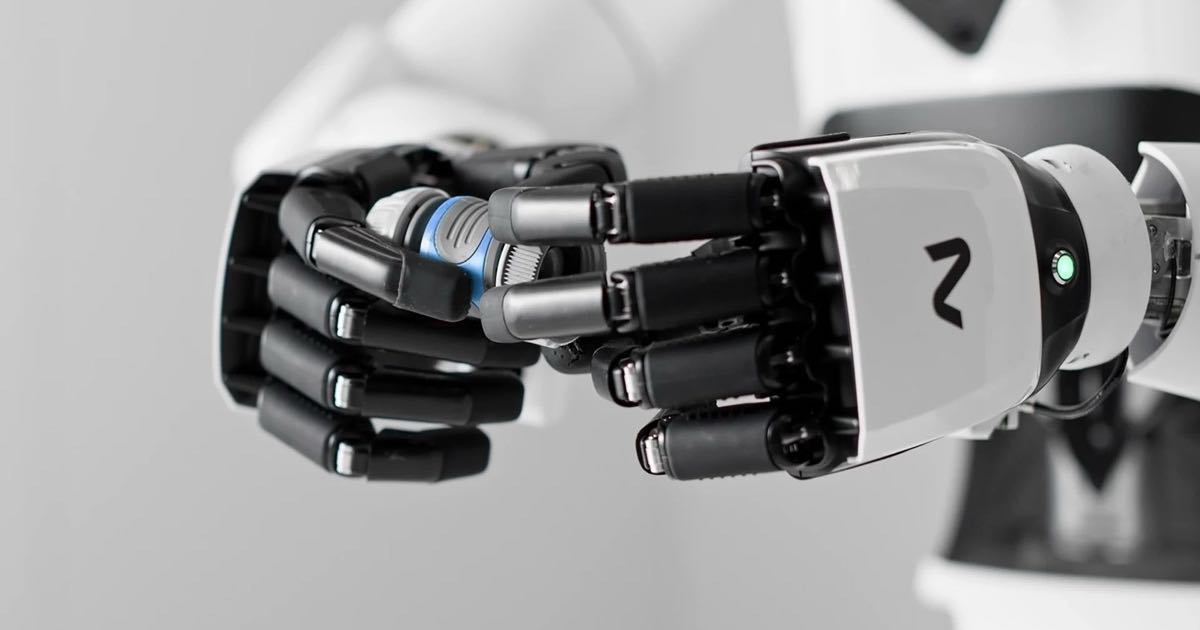
The launch examples are the most concrete part of the announcement, and they are chosen well. When a robot slides open a lock, cameras can’t confirm the mechanism actually gave way — only the sound and the feel of it can. In welding, Robotics & Automation News reports, the quality of a seam can be judged from the sound of the process, a trick human welders have used for a century and robot cells have mostly ignored.
The other pillar is memory. Neuron AI is built to give robots object permanence — retaining context about objects and the consequences of its own actions even when they’re out of sight. Unite.AI’s coverage flagged the framing NEURA itself used: this is what humans acquire in roughly their first two years of life, and it is exactly the capability a robot lacks when it drops a bin lid behind itself and immediately forgets the bin exists.
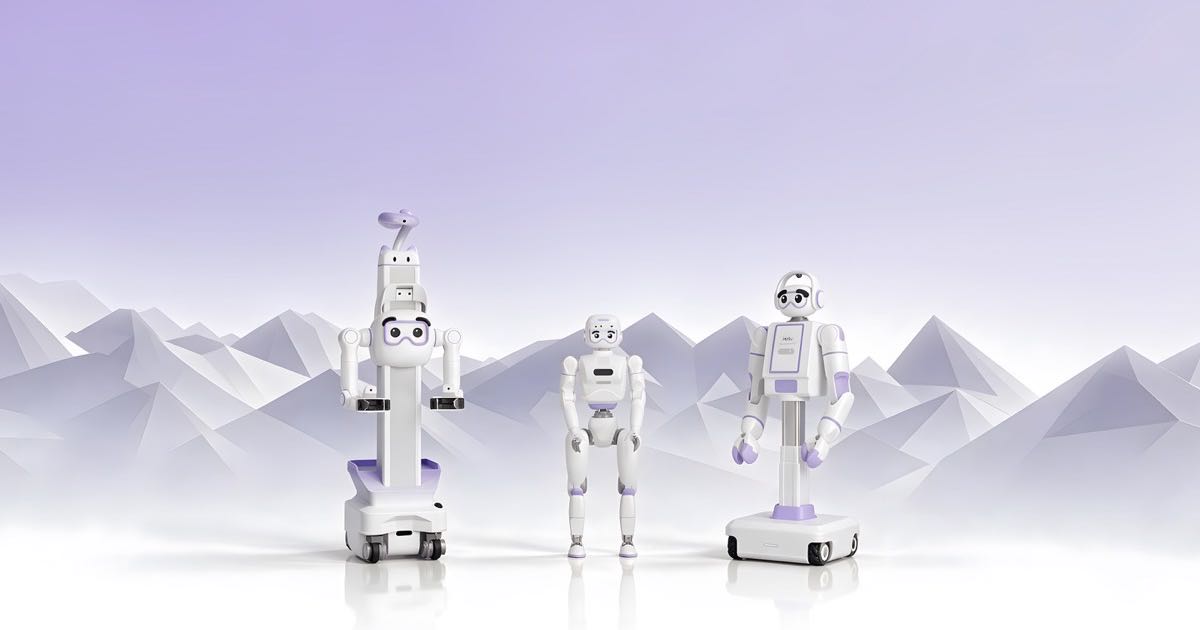
The model is trained on three data pillars — synchronised robot data from the company’s Neura Gyms training infrastructure, simulation-amplified data, and human demonstrations — and runs across five NEURA robot embodiments and their grippers and hands. Customers fine-tune it per task through the Neuraverse platform, with the company coining “Time-to-Skill” as its headline metric: how long it takes a fleet to learn a new job.
The demo attached to all of this: at NVIDIA GTC Berlin, NEURA’s 4NE-1 humanoid will complete an eleven-minute laundry task fully autonomously, start to finish.
Our take: the model-versus-model race just got a European contender
The honest reading is that this is a roadmap announcement, and the industry is full of those. No independent benchmark of Neuron AI exists yet; every capability above is the company’s own description of its own model. As of publication, no third-party test results for Neuron AI have been reported. What makes it newsworthy anyway is the position it stakes out. NVIDIA opened this race with GR00T, China’s makers are betting on fleet scale and factory-floor hours, and AgiBot has already overtaken Unitree in the humanoid market it serves. NEURA’s bet is different: that the winning robot brain is the one that fuses the most senses and remembers, not the one trained on the most video. If PLA turns out to generalize, it is a real architectural claim; if the laundry demo needs a safety handler standing by, we’ll know soon enough — GTC Berlin is public.
There is also a quiet economic signal in “Time-to-Skill.” Whoever measures robot deployment in days-per-new-task rather than demos-per-quarter is implicitly promising the thing warehouses actually buy: robot economics that close. For NZ manufacturers watching this space from the integration side rather than the manufacturing side, that metric — vendor-claimed for now — is worth tracking more closely than any single model’s benchmark score.
FAQ
🤖 What is Neuron AI? A multimodal foundation model for physical AI launched by Germany’s NEURA Robotics on 14 October 2026. It encodes 3D vision, touch, audio, robot state and language into one Perception-Language-Action representation, with an explicit memory function for object permanence.
🧠 How is it different from a vision-language-action model? The company’s claim is that rather than treating non-visual senses as secondary inputs, they are encoded into one shared, time-aligned representation that conditions a single stream of action — so a robot can react to what it cannot see. Independent verification of those claims is not yet available.
🏭 Where will it run? Across five NEURA robot embodiments, including the 4NE-1 humanoid, fine-tuned by customers via the Neuraverse platform. A fully autonomous eleven-minute laundry task at NVIDIA GTC Berlin is the announced showcase.