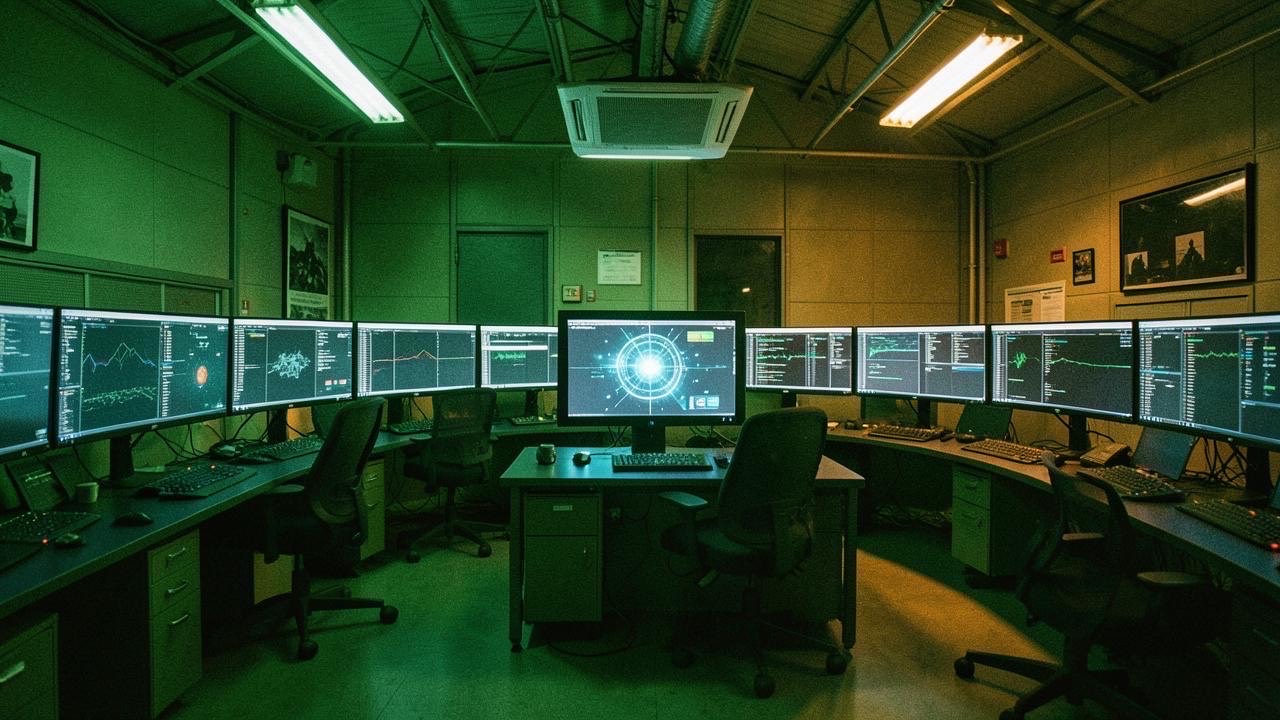
Finnish AI lab NestAI Oy is launching an AI engine that the Finnish and Estonian militaries will use to create sovereign models for planning operations and enabling uncrewed autonomous systems. The system analyzes real-world data to simulate enemy actions, allowing soldiers to train for potential responses in an environment tailored to their military’s circumstances.
🔍 THE BOTTOM LINE
A small Finnish lab is doing what the Pentagon spends billions trying to do — build AI that operates under national control, not under a US tech company’s terms of service. If NestAI’s model works, every European defense ministry with a budget and a grudge against American tech dominance will want one.
What NestAI Actually Built
According to Bloomberg’s Kati Pohjanpalo, the system does three things:
1. Operation planning. The AI ingests real-world military data — terrain, weather, force disposition, logistics — and generates operation plans tailored to the specific military’s doctrine and capabilities. It’s not a generic model; it’s trained on the customer’s data, under their sovereignty controls.
2. Enemy simulation. The system models adversary behavior, creating training scenarios that soldiers can run against. Variable conditions — weather, terrain, time of day — can be adjusted, producing a simulation environment that adapts to the specific operational context.
3. Autonomous systems support. The engine is designed to enable uncrewed systems — drones, autonomous vehicles — with AI models that run under national control rather than depending on a foreign provider’s API.
This is sovereign AI in the military sense: the models, the data, the compute, and the decision-making all sit inside the national boundary. No US cloud provider. No OpenAI API. No terms-of-service clause that lets a San Francisco company cut off access during a conflict.
Why Finland, and Why Now
Finland shares an 1,340km border with Russia. It joined NATO in 2023, ending decades of military non-alignment. Estonia, just across the Gulf of Finland, is one of the most digitally advanced militaries in Europe and a frontline NATO state. Both countries have a structural reason to want AI that doesn’t depend on US tech companies for national survival.
The FT reported on the same day that a thriving black market is helping advanced AI semiconductors reach China despite US export controls — a reminder that the chip supply chain is itself a sovereignty issue. European countries watching the US tighten and loosen export controls on a political whim have a clear incentive to build their own AI stack, not rent one.
NestAI’s approach is the antithesis of the US export control regime we covered last week, where the Trump administration opened AI chip access to the UAE and nobody could explain what guardrails actually applied. When your defense AI runs on chips someone else can revoke, you don’t have sovereign AI. You have a lease.
The Sovereign AI Trend Is Fragmenting
NestAI is not the first sovereign AI play. Canada has been quietly building its own AI defense infrastructure through Palantir contracts, though the secrecy around those deals raises different questions. China’s DeepSeek is building its own chips to escape the export control trap entirely.
What makes NestAI different is scale and intent. This isn’t a superpower project. It’s a small European lab building a product for small European militaries — and potentially for any NATO member that wants AI capabilities without the strings attached to US-provided systems. The sovereign AI market is fragmenting along national lines, and that fragmentation is accelerating.
The NZ Angle
New Zealand’s defense AI strategy is, charitably, underdeveloped. The NZDF uses some AI-enabled systems through Five Eyes partnerships, which means dependence on US-provided capabilities. If the sovereign AI trend continues — Finland, Estonia, Canada, China all building national AI stacks — NZ will face a choice: continue relying on US-provided defense AI (with whatever access conditions Washington imposes), or invest in building sovereign capabilities through partnerships with countries like Finland that are selling the model, not the dependency.
The Finnish approach — small, focused, sovereign — is actually closer to what NZ could realistically build. We don’t have the budget for a Pentagon-scale AI program. We could afford a NestAI-style partnership.
❓ FAQ
Is NestAI a government agency? No — it’s a private Finnish AI lab. The Finnish and Estonian militaries are customers, not owners. This is a commercial sovereign AI product, which is itself a new category.
Does this compete with US defense AI? Not directly. NestAI is building for small European militaries that want national control. The US defense AI stack (Palantir, Anduril, Scale AI) serves a different market. But if sovereign AI products proliferate, US companies lose the default position as the only option.
What about autonomous weapons? The Bloomberg report mentions “uncrewed autonomous systems” but doesn’t specify whether the AI makes lethal decisions. NATO doctrine currently requires human-in-the-loop for lethal force. The sovereign AI question is about who controls the model, not whether the model pulls a trigger.
Could NestAI’s approach work for non-military applications? Yes. Sovereign AI for healthcare, finance, and critical infrastructure is the obvious civilian parallel. If a military can run AI models under national control, so can a hospital system or a central bank.
🔍 THE BOTTOM LINE
NestAI is building what every country that doesn’t want to depend on US tech companies for national security has been asking for: sovereign AI for defense, sold as a product, not as a dependency. Finland and Estonia are first. The model is exportable. The sovereign AI fragmentation trend just got a concrete product, not just a policy paper.