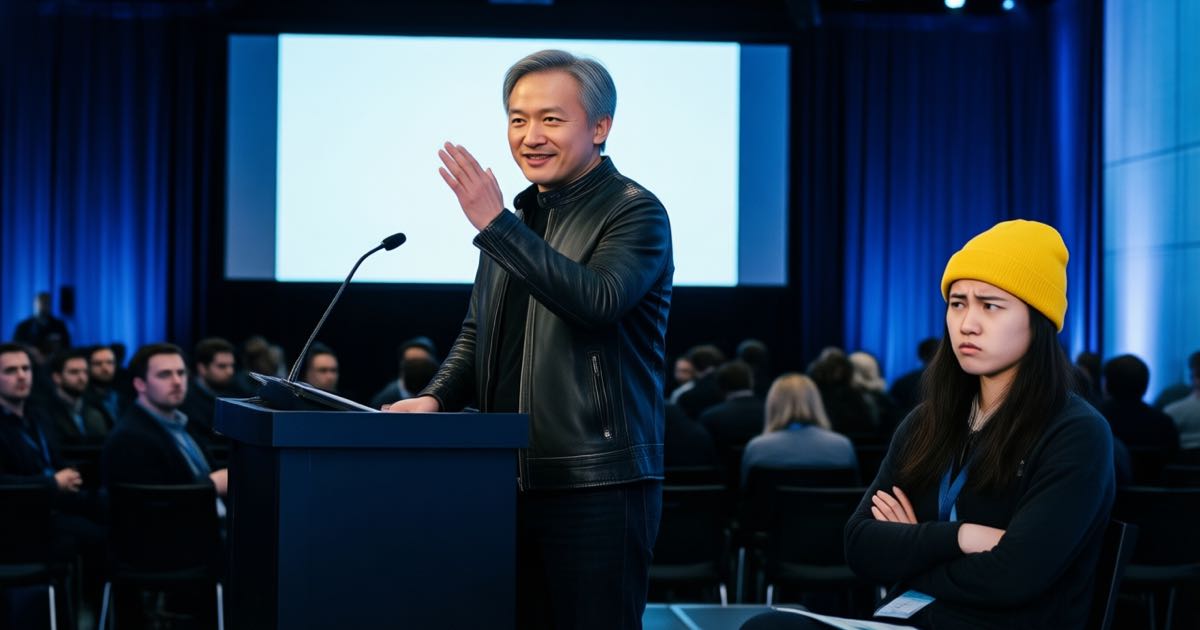
Japan is planning to purchase 27,500 next-generation Nvidia Rubin chips to build a homegrown foundational AI model designed specifically for robots, according to Bloomberg Technology. The deal, announced during Nvidia CEO Jensen Huang’s visit to Tokyo this week, is the latest and largest sovereign AI hardware commitment from a government racing to automate its shrinking workforce.
🔍 THE BOTTOM LINE
Japan isn’t buying chips to train chatbots. It’s buying them to train robots. The 27,500 Rubin units — Nvidia’s next-generation accelerator, reportedly in production despite delay rumours — will power a domestic AI model purpose-built for factory automation, shipbuilding, and the physical AI stack that Prime Minister Sanae Takaichi has made a national priority. This is sovereign AI with a concrete use case, not a vanity project.
What 27,500 Rubin Chips Actually Buys
The scale is significant but not unprecedented. For context, Meta has reportedly ordered over 100,000 Nvidia H100 units, and Microsoft’s infrastructure spends dwarf individual national deals. But Japan’s purchase is targeted: these chips are earmarked for a sovereign AI model that will serve the country’s robotics ecosystem — Fanuc, Yaskawa Electric, Kawasaki Heavy Industries, and Toyota, among others.
Nvidia confirmed that Vera Rubin is already in production with “giant amounts of production incoming,” pushing back against a SemiAnalysis report that manufacturing snags on a specialised circuit board would delay the rollout. Huang made the remarks on the sidelines of a developer event in Tokyo, where he was courting the little-known Japanese suppliers that underpin the global AI supply chain.
The chip deal aligns with Japan’s broader plan, announced earlier in July, to develop a homegrown AI model and deploy 10 million AI-equipped robots across more than a dozen sectors. The country’s shrinking population is the forcing function — manufacturers can’t find enough welders, assemblers, and line workers, and the answer from Tokyo is automation powered by domestic AI infrastructure.
Jensen Huang’s Tokyo Courtship
Huang’s visit wasn’t just about the chip sale. According to Nikkei Asia, the Nvidia CEO was in Tokyo’s Kanda district on Wednesday night, hosting suppliers over pork skewers and promoting semiconductor supplies for a government-backed AI developer formed by SoftBank and other players.
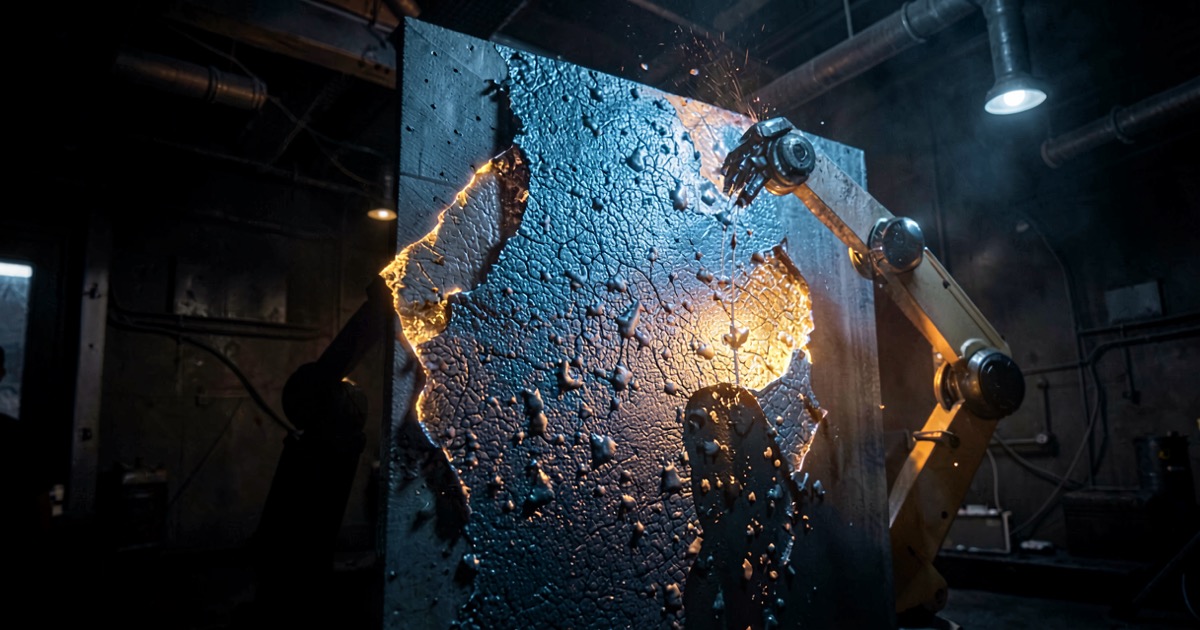
The trip included a partnership with Kawasaki Heavy Industries to build a robot-equipped AI shipyard, using Nvidia’s digital twin technology. Kawasaki will also collaborate on autonomous robots capable of performing welding at shipyards — a direct response to the welder shortage hitting Japanese heavy industry.
Huang’s message was clear: Nvidia isn’t just selling chips to Japan. It’s embedding itself in the Japanese industrial supply chain as the AI layer for the country’s robotics renaissance. The sovereign AI pitch — “your data, your model, your infrastructure” — is the sales wrapper around a much deeper hardware and software entanglement.
The Sovereign AI Pattern
Japan’s deal fits a pattern we’ve been tracking. Nvidia has partnered with developers across Europe, the Middle East, and Asia to create sovereign AI systems, each with national security and economic independence as the stated rationale. The pitch works because it’s true — running critical AI workloads on foreign cloud infrastructure creates genuine dependency risk.
But sovereign AI is also the most effective sales strategy Nvidia has ever executed. Every national government that buys in becomes a multi-decade customer for chips, software stacks, and developer ecosystems. Japan’s 27,500-unit order is a down payment on a relationship that will span hardware refresh cycles, software updates, and the eventual migration to whatever comes after Rubin.
This connects to the broader APAC sovereign AI race we covered earlier, where New Zealand’s absence from the sovereign AI conversation is becoming conspicuous. Japan, South Korea, Singapore, and Australia are all making concrete bets. NZ is not.
Why This Isn’t Just About Japan
The robotics angle is what separates Japan’s sovereign AI push from the others. Most sovereign AI initiatives — France’s with Mistral, Saudi Arabia’s, India’s — are about data sovereignty and reducing dependence on US cloud providers. Japan’s is about physical AI: models that operate in the real world, controlling robots on factory floors and shipyards.
Nvidia’s release of Cosmos 3 Edge, a 4-billion-parameter open-source model that runs locally for “physical” AI applications, is the software complement to the hardware sale. Japan gets the chips for training; Cosmos 3 Edge gives them a starting point for deployment on edge devices. The full stack — training infrastructure, foundation models, edge deployment — is Nvidia’s end-to-end play.
The global humanoid robot race is accelerating. Hyundai just took full ownership of Boston Dynamics with plans to deploy Atlas in factories by 2028. SoftBank is acquiring ABB’s robotics unit. Tesla is building Optimus. Japan’s 27,500-chip bet is the national-scale version of the same trend: the countries and companies that own the AI models powering physical robots will own the manufacturing productivity gains of the 2030s.
The Export Control Backdrop
Huang also confirmed that a small number of Nvidia H200 chips have been shipped to customers in China after receiving Washington’s approval, and that the Trump administration’s easing of export restrictions is creating new market openings. The Japan deal sits in a different category — an ally buying next-generation chips for an allied industrial base — but the export control framework is the invisible scaffolding around every chip sale Nvidia makes.
For New Zealand, the export control regime matters indirectly. NZ companies buying Nvidia hardware through standard distribution channels face no restrictions today, but as sovereign AI infrastructure becomes a strategic asset, the question of whether NZ has any domestic AI compute capacity — or is entirely dependent on Australian, US, or Singaporean cloud — becomes a national resilience question, not just a procurement one. The NZ Super Fund’s sovereign AI infrastructure exploration is the first domestic signal that this conversation is happening.
❓ FAQ
Why does Japan need its own AI model instead of using existing ones from OpenAI or Google? Sovereign AI is about control over data, model weights, and infrastructure. For a country deploying AI in factories and military-adjacent applications, relying on a US company’s cloud API creates dependency and security risk. Japan’s model will be trained on Japanese industrial data, optimised for Japanese robotics hardware, and run on Japanese-controlled infrastructure.
What are Rubin chips and how do they differ from H100 or Blackwell? Rubin is Nvidia’s next-generation accelerator platform (the full system is called Vera Rubin). It succeeds the Blackwell architecture. Huang says it’s already in production, though analysts at SemiAnalysis reported manufacturing delays on a key circuit board. Rubin is designed for the next wave of AI training and inference workloads, with higher memory bandwidth and interconnect speeds than Blackwell.
Could this deal be delayed by export controls or manufacturing issues? Export controls are unlikely to block an ally-to-ally sale of next-generation chips to Japan. The manufacturing delay risk is real — SemiAnalysis flagged a specific circuit board issue — but Huang’s direct rebuttal in Tokyo suggests Nvidia is confident in the production timeline. The 27,500 units won’t arrive all at once; deployment will be phased.
What does this mean for New Zealand? Japan’s deal highlights the gap between countries making concrete sovereign AI infrastructure investments and those that aren’t. NZ has no comparable chip purchase, no domestic AI model initiative, and no industrial robotics strategy tied to AI infrastructure. The question isn’t whether NZ needs 27,500 Rubin chips — it doesn’t — but whether the country has any plan for AI compute sovereignty at all.
🔍 THE BOTTOM LINE
Japan’s 27,500-chip purchase is the clearest signal yet that sovereign AI has moved from policy whiteboard to procurement order. The bet is specific: a shrinking population needs robots, robots need AI models, and those models should run on domestic infrastructure. Nvidia is happy to supply the shovels for every gold rush — and sovereign AI is the most lucrative gold rush in the chip industry’s history. The countries that haven’t placed their orders yet are the story New Zealand should be watching.
📰 Sources
- Bloomberg Technology — Japan to Buy Nvidia Rubin Chips
- Nikkei Asia — Nvidia cashes in on sovereign AI, sets sights on Japan
- Nikkei Asia — Nvidia, Kawasaki Heavy to build robot-equipped AI shipyard
- Yahoo Finance — Nvidia’s Huang Declares Vera Rubin on Track
- Japan Times — Japan plans sovereign AI model and 10 million AI robots
- The Information — Nvidia Releases New Robotics AI Model