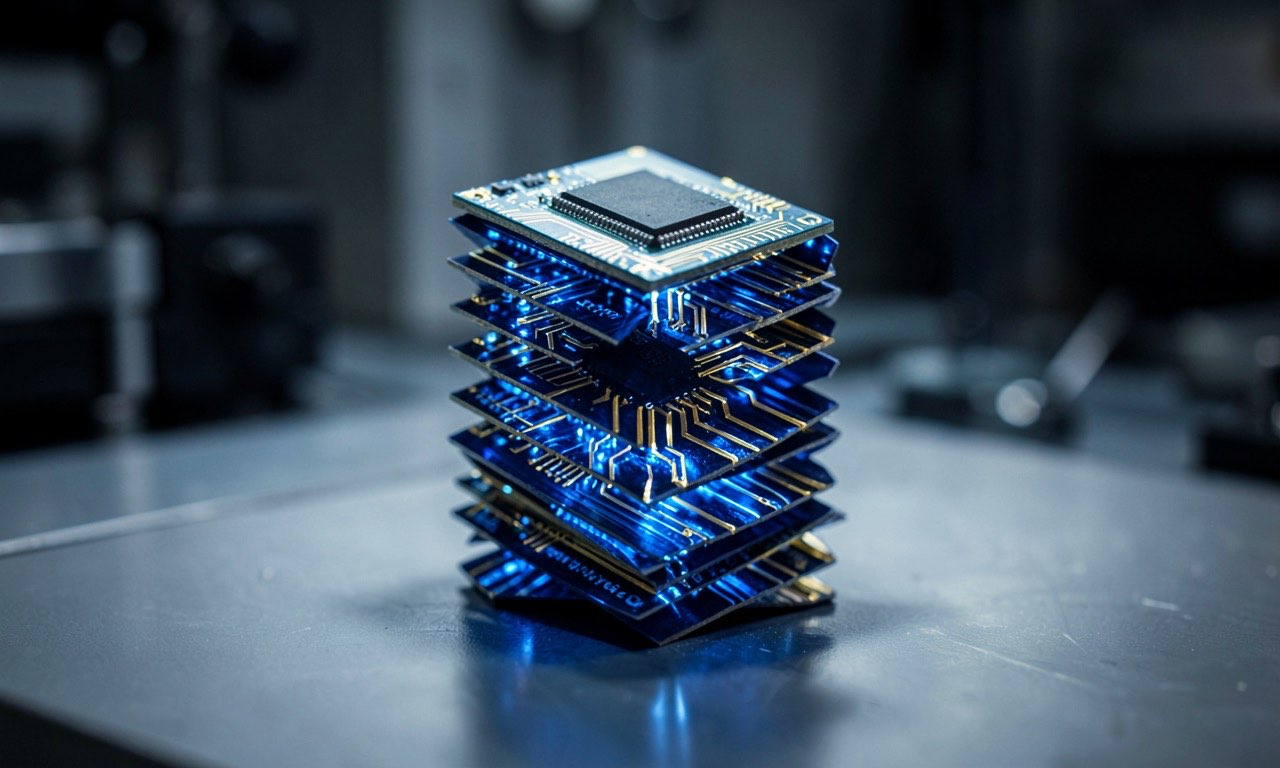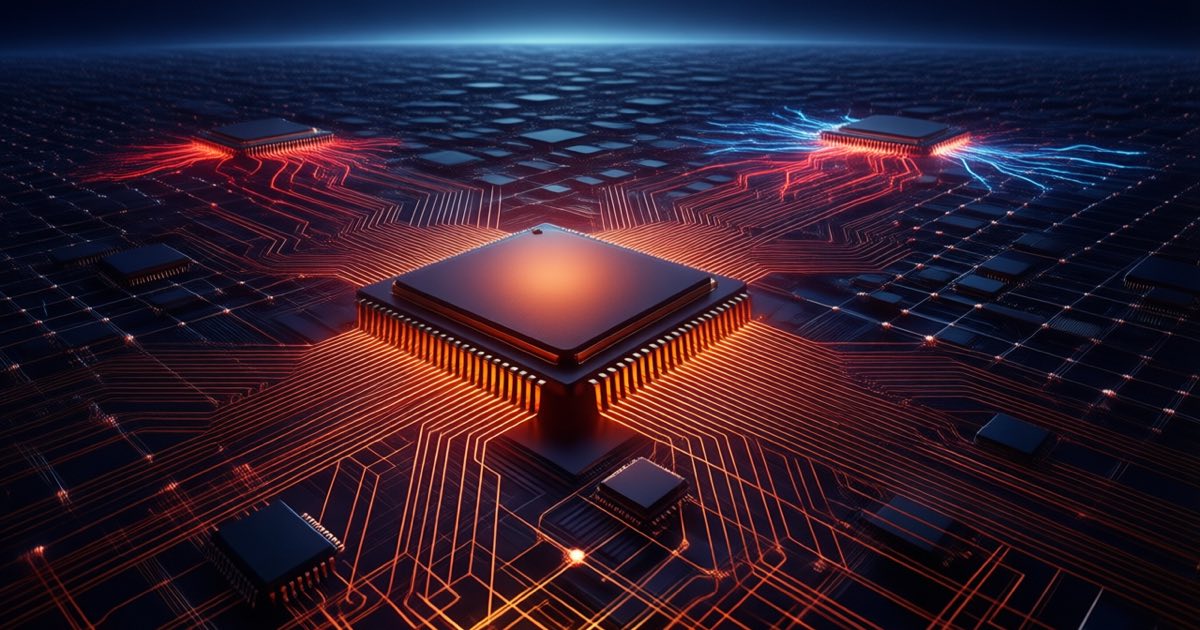
Huawei has moved the launch of its next-generation Ascend 960DT AI chip forward to the first quarter of 2027 — two quarters earlier than the Q3 2027 timeline it had previously given, a company spokesperson told TechCrunch. David Wang, Huawei’s rotating and acting chairman, announced the updated schedule on Thursday at the company’s Huawei Connect conference: “The Ascend 960DT is expected to be ready in Q1 2027. Ascend 960 chips are launching ahead of schedule, doubling performance and advancing year by year.”
The timing is conspicuous. The announcement lands one week before President Trump and President Xi Jinping are scheduled to meet on September 24 in Washington, DC — a summit where technology restrictions, including the semiconductor curbs that have cut Chinese firms off from advanced chips, are expected to feature.
Millions of chips, one computer
The accelerated chip schedule is the component-level piece of a larger architectural bet. Huawei’s stated goal is to turn “hundreds of thousands, and eventually millions” of AI chips into one giant computer through what it calls the Peerium Computing Architecture, which relies on UnifiedBus — Huawei’s technology for linking processors with memory, storage, and networking. Rotating chairman Eric Xu said in the company’s statement that the architecture is designed to build larger AI computing systems for both training and inference.
The first systems on the architecture are the Atlas 950 SuperPoD and SuperCluster. Huawei says an Atlas 950 SuperCluster can connect up to 256,000 accelerator cards — an interconnect-first design philosophy that treats raw chip count as the compensable variable, an approach the company has been converging on since its earlier scaling-law work argued system design could offset single-chip deficits.
The fine print: smaller than promised
Not everyone is reading the announcement as pure acceleration. China tech analyst Rui Ma noted on X that Huawei had previously said its Atlas 960 SuperPoD would scale to 15,488 Ascend 960 chips, while this week’s announcement referred to a system with 4,096 chips. “The chip itself is coming WAY earlier, but the SuperPoD they announced is much smaller than what they originally laid out,” Ma wrote. In other words: the individual chip is ahead of schedule, but the flagship cluster built from them has been quietly scaled back — at least in this round of announcements.
The broader context is a chip race that has repeatedly produced claims neither side can fully verify. Huawei’s earlier Ascend 910C was used to train DeepSeek’s 1.6-trillion-parameter model entirely on domestic silicon, and Nvidia’s chief executive has openly conceded the China market to Huawei — but the performance gap per chip remains, and announced timelines in this sector have a habit of slipping in both directions. Independent verification of the 960DT’s “doubling performance” claim will have to wait for the chips to ship.
The political frame around the launch is equally explicit. Trump has pushed back against calls from AI industry leaders to slow development, arguing the US needs to maintain its lead over China. Xu argues the mirror image: China needs to accelerate AI development to catch up, saying Chinese companies need to advance further before they can fully understand and address the risks of more powerful AI systems, according to the Financial Times. Both governments have now arrived at the same answer — speed — by opposite routes. Meanwhile Beijing has eased its own restrictions to let Chinese firms buy limited volumes of Nvidia’s H200, even as it funds the domestic alternative — a hedging strategy that suggests the Ascend roadmap is being written for the scenario where that access closes again.