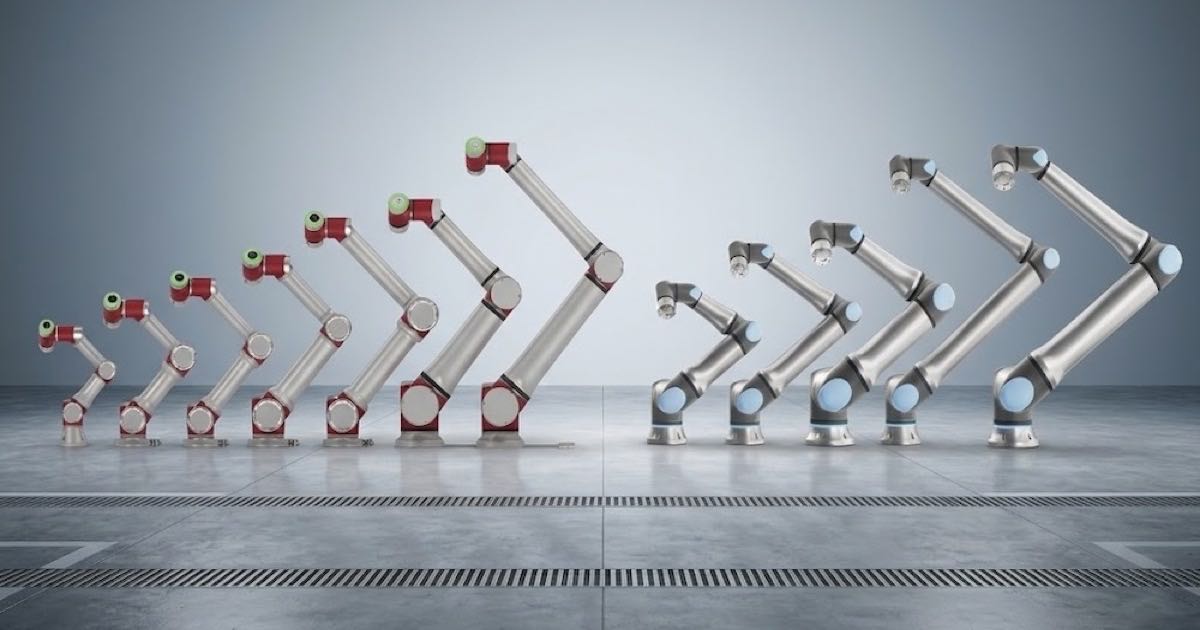
The patent fight between Teradyne Robotics — parent of Universal Robots — and Chinese cobot maker JAKA has escalated into duelling public statements, and the details matter more than the drama.
Last week Teradyne sued JAKA’s German subsidiary, alleging infringement of patents covering hardware and software used in collaborative robot arms. On September 3, JAKA answered with an unusually pointed counter-move: it has gone to court seeking injunctive relief over what it calls Teradyne’s “false, misleading, and damaging” public statements about the case.
The strange part: nobody can find the case
Here’s what makes this fight genuinely unusual. JAKA says it has received no direct communication from Teradyne or its lawyers, has seen no legal documents or court notices, and learned of the allegations only through Teradyne’s social media announcement and press inquiries. JAKA’s legal advisers found that, as of September 2, no patent-infringement proceedings had been filed or opened against the company. At press time, The Robot Report had not located any court documents either.
Teradyne’s response, from Universal Robots CTO David Brandt, is that the case has been filed with the courts in Copenhagen and that any delay in serving JAKA “may be due to the time required by the courts, but they should receive it shortly.”
Both things can be true — filing and service are separate steps and European courts can be slow. But a company announcing a lawsuit on social media before the defendant has been served is a choice, and JAKA is treating it as the whole ballgame. Its injunction bid is not about the patents; it’s about the publicity.
The substance of each side’s argument
JAKA’s defence breaks into three claims: it develops its own technology through independent R&D and holds more than 300 granted patents worldwide; it commissioned two independent freedom-to-operate analyses before entering the European market, and neither flagged infringement concerns; and cobot safety depends on the full application — design, integration, configuration, risk assessment — rather than the manufacturer’s country of origin.
That last point is aimed at something specific. JAKA characterises Teradyne’s suggestions that its products are lower-quality or less safe as statements tied to “the company’s Chinese origin,” and calls them unsubstantiated. It frames the whole episode as an attempt to create “anti-competitive uncertainty” in the market.
Teradyne’s counter, from Brandt: the freedom-to-operate analyses “apparently [have] not [been] done [well]” if they missed Teradyne’s patents, and JAKA’s patent count is irrelevant — “it is not about the quantity of patents but the strength.”
Why this fight is a template
The allegations have not been tested in court, and nothing here establishes who is right. What the dispute does show is a pattern: established Western robotics firms increasingly litigating against fast-moving Chinese competitors entering their home markets, and the Chinese firms answering not just in court but in the press. Teradyne previously sued another Chinese cobot maker; JAKA is the second.
The public-announcement-first strategy makes sense if you’re trying to chill customer procurement decisions — a hospital integrator or automotive plant choosing a cobot vendor does not want to buy into a patent fight. But it also hands the target a defamation-adjacent counterattack if the case is slow to materialise or narrow in scope. JAKA is trying to make the announcement itself the liability.
For anyone buying cobots, the practical read: demand indemnities and freedom-to-operate documentation from vendors of either origin, because this market is entering its litigation phase. Price competition from Chinese cobot makers has been compressing margins for years; expect the incumbents to keep using courtrooms as a competitive tool.
FAQ
What is the JAKA vs Universal Robots dispute about? Teradyne Robotics, Universal Robots’ parent, sued JAKA’s German subsidiary in early September 2026 alleging patent infringement in cobot hardware and software. JAKA denies infringement and is seeking injunctive relief over Teradyne’s public statements about the case.
Has a court ruled on the JAKA–Teradyne patent case? No. JAKA says it had not been served any legal documents as of September 2, 2026; Teradyne says the case was filed with the Copenhagen courts. No merits ruling exists.
Could the dispute affect cobot buyers? Possibly — if procurement uncertainty is the goal, integrators may face pressure to choose vendors with clear patent indemnities while the case proceeds.
— CJ Murden, editor of Singularity.Kiwi. Former digital technologies teacher, author of AI-focused books. Writing with a New Zealand focus.