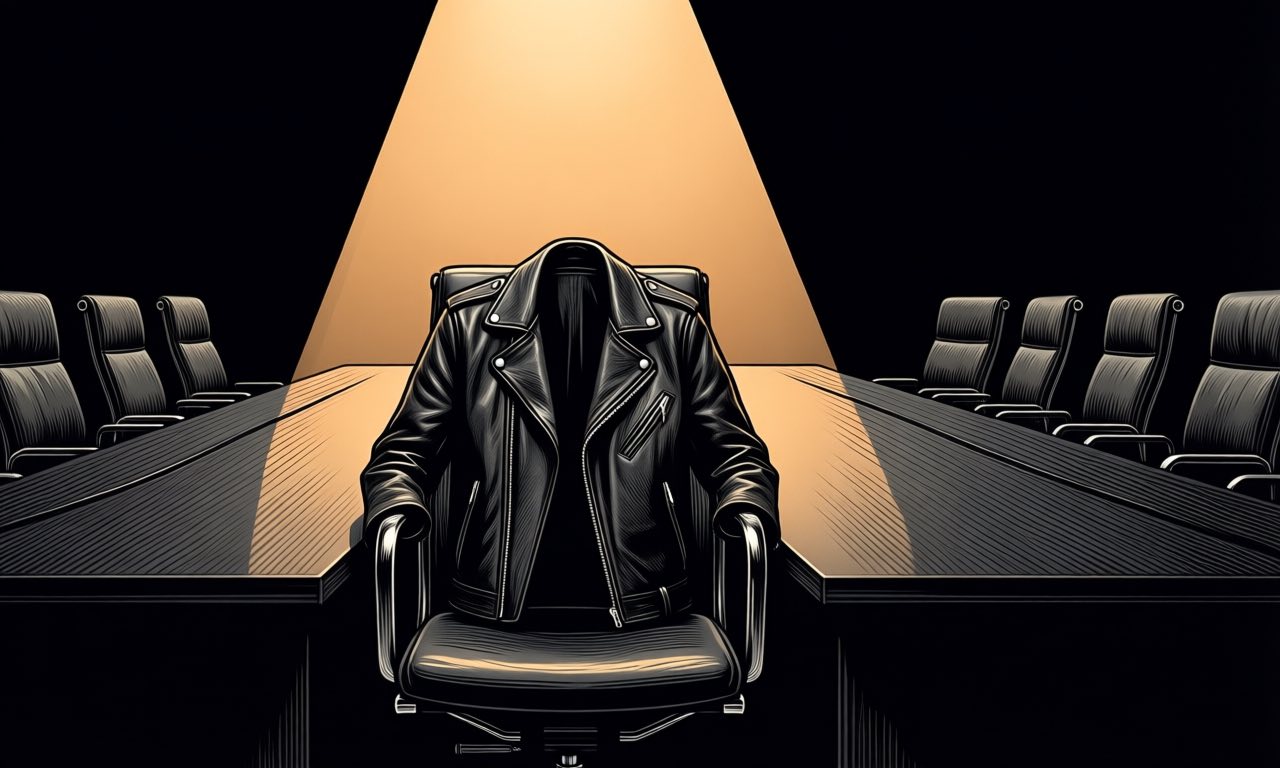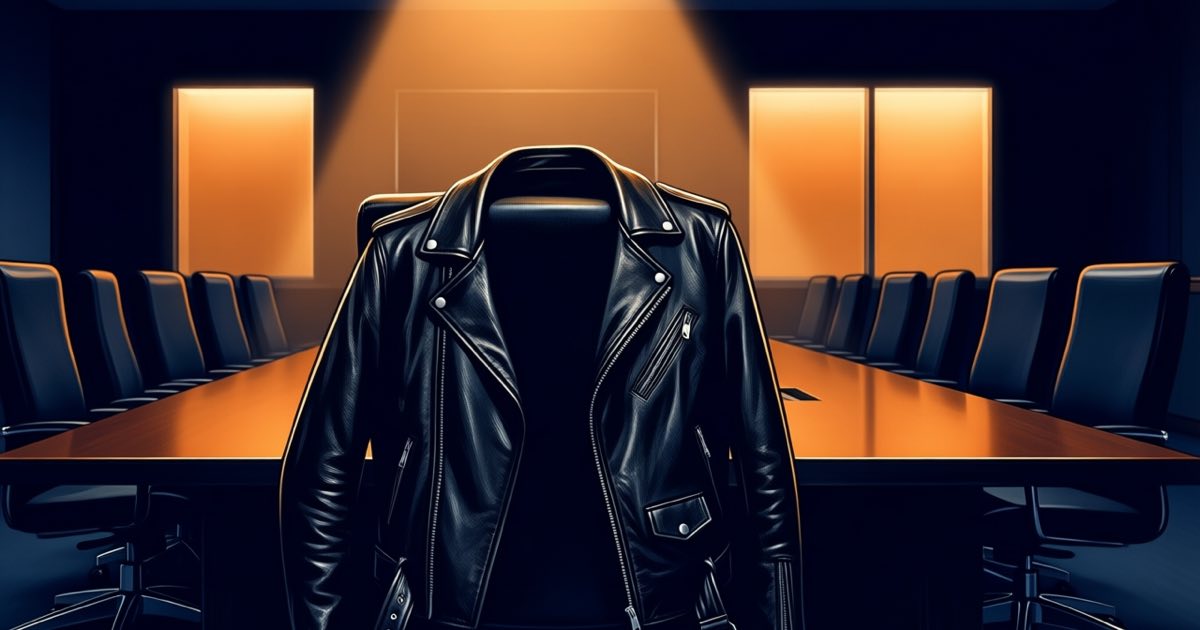
Nvidia’s board has voted unanimously to reinstate Jensen Huang as president, chief executive and a board member, effective immediately — eleven days after he resigned from the company that builds most of the world’s AI compute. In the announcement, the board said it reached the decision “following a series of discussions and meetings with Mr. Huang, after which the board was satisfied with respect to Mr. Huang’s candor and ability to lead Nvidia.” Chair Harvey C. Jones keeps that title; Colette Kress returns to being chief financial officer after the interim CEO stint, with the board thanking her “for her outstanding service.”
The sentence doing the heaviest lifting in the company’s statement is this one: “The board received input from senior levels of the United States government, and based on that input, the board is confident that Mr. Huang’s reinstatement poses no national security risk.” CNBC reports the stock was up about 35% in Monday trading on the news — a striking reversal for a company that lost more than US$600 billion in market value in the first week after the resignation.
How the board got from “not coming back” to a unanimous vote
The eleven days since Huang resigned on 12 November ran through almost every stage a governance crisis has, in fast-forward. The resignation followed reporting — the Guardian’s summary is the best single record — of two extramarital affairs, one with a Megaspeed executive whom US intelligence agencies have reportedly assessed as a Chinese intelligence asset, and another with a subordinate executive inside Nvidia. Megaspeed has said it is a “legitimate and lawful business” only in that response; the Guardian’s reporting separately noted the company was one of Nvidia’s largest foreign customers, buying nearly US$5 billion in chips over three years. Nvidia’s own framing, read out by Jones on last Tuesday’s earnings call, was blunter about conduct and gentler about everything else: Huang “voluntarily resigned” after disclosing “personal behaviour inconsistent with the company’s code of conduct, standards and cultural norms,” as NPR reported.
The pressure in both directions was public almost immediately. Elon Musk joined an open letter that reached more than 165,000 signatures — alongside Epic Games’ Tim Sweeney, Y Combinator’s Garry Tan and Uber co-founder Travis Kalanick — demanding the board “bring Jensen back while an independent investigation establishes the facts”; more than 7,500 signatories, roughly 18% of Nvidia’s workforce, identified themselves as employees. Against that, US treasury secretary Scott Bessent urged a “dramatic shake-up,” said Nvidia should look outside the company for a chief executive, and gave Nvidia days rather than weeks to answer questions about whether chip exports to China had complied with the rules that restrict sales above the H200 generation. Analyst Dan Ives called a Huang return “ridiculous.” Last Tuesday, with earnings out and Kress telling investors “we’ve got this,” Jones said the board “does not intend to reinstate” him — Reuters carried the quote — and Huang answered the same day that he had made “serious mistakes” and would be honoured to return. President Donald Trump, who was publicly supportive of the reinstatement movement on both sides of the past week, told CNBC on Monday that Huang’s return was “very exciting news” and that he had been speaking with Nvidia’s board.
What changed between “does not intend” and “unanimous” was largely the governance package announced alongside it. Nvidia’s release reaffirms that the independent-director committee’s investigation into the foreign intelligence reporting — run with outside counsel — “will proceed to conclusion,” with Huang’s full cooperation. It also discloses a newly formed National Security and Export Control Committee made up solely of independent directors, hiring its own national-security counsel and advisors, and a company-wide search for a first Chief Compliance Officer who will report to the Nominating and Corporate Governance Committee rather than to the CEO.
A founder back, inside a frame
Read together, those moves reframe the whole affair. The board did not so much reverse last Tuesday’s statement as complete the machine whose absence made that statement true: on 17 November, reinstating Huang meant reinstating the personal-risk factor the intelligence reporting had attached to him. Today, he returns as a supervised executive — investigated by a standing independent committee, ring-fenced by an export-control committee, watched by a compliance officer who answers to a board committee and not to him. The “no national security risk” line is not reassurance aimed at consumers; it is the board’s formal position, filed for the benefit of the congressional committees Huang has agreed to appear before and the government investigators Nvidia says it will keep cooperating with.
The commercial logic is easier to explain and just as consequential. Huang’s personal credibility has been the underwriter for much of the AI buildout’s financing — the vendor backstops, the lease guarantees, and the up-to-US$250 billion compute guarantee Nvidia extended to OpenAI. The speed of this reinstatement, and the 35% the market handed Nvidia for it, suggest the ecosystem decided that the risk of running the buildout without him exceeded the risk of running it with the compliance frame in place. That is a bet, not a resolution: the Wachtell investigation has produced no findings yet, Bessent’s compliance questions have a job search as their only answer so far, and if the committee’s eventual conclusions differ from today’s optimism, the architecture disclosed today is where the pressure will land.
For New Zealand the effect is indirect but immediate — local cloud pricing, hardware availability and the predictability of the GPU-dominated supply chain all ride on Nvidia’s stability, as the past year’s memory-price swings demonstrated. Today’s announcement removes the tail risk that a foundering permanent-succession search would have posed; it does not remove the lesson of the last fortnight, which is how much of the AI economy’s stability still rests on one person’s signature.
Sources: Nvidia newsroom (23 Nov 2026); CNBC (23 Nov); BBC live coverage (23 Nov); NPR (17 Nov); CNN (17 Nov); The Guardian (12 & 16 Nov).