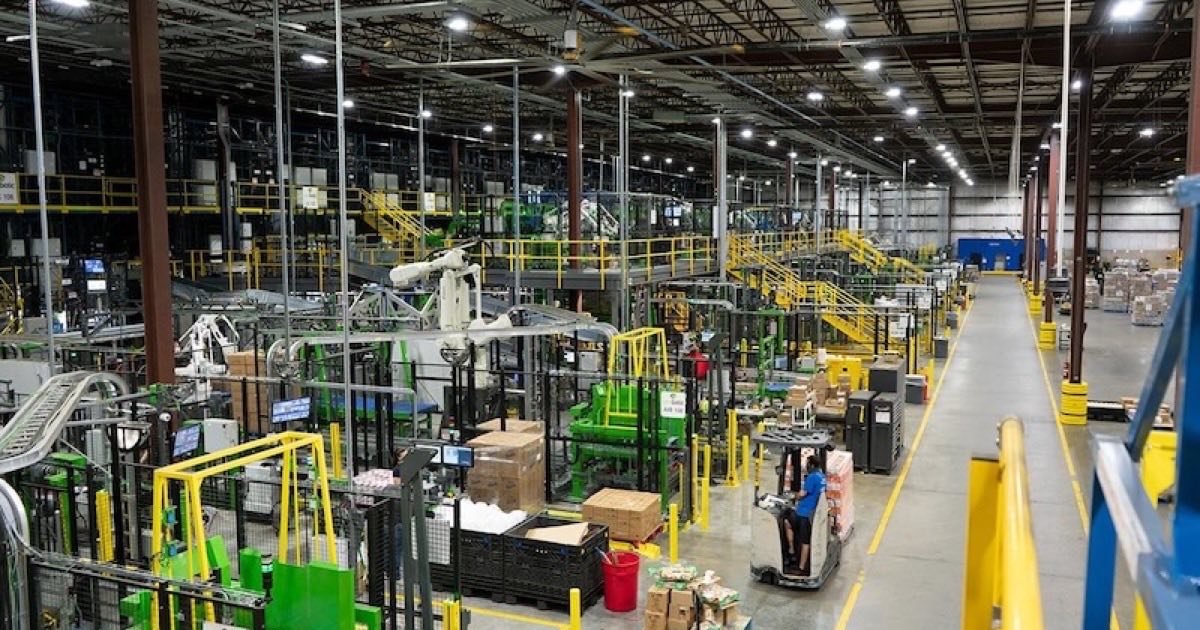
Walmart said on October 29 (US time) that it will commit roughly US$6 billion to an expanded automation agreement with Symbotic, the Massachusetts robotics firm whose AI-orchestrated systems already move a large share of the retailer’s US distribution volume. The commitment, reported by Securities.io from the companies’ announcement, covers “additional automation capabilities” across 25 US regional distribution centers, plus undefined opportunities across Walmart’s global supply chain network.
The news first crossed the Reuters wire on the evening of October 29; most trade coverage — Robotics & Automation News, Loadstar, Chain Store Age — landed across October 30, and the story was still moving a day later. For a deal of this size the disclosures are thin: approximately $6 billion as an “initial commitment,” spread “over several years across multiple locations.” No per-site budget, no timeline, no robot counts. That vagueness is itself informative, because the announcement is really about extending an existing programme, not starting one.
What the system actually does
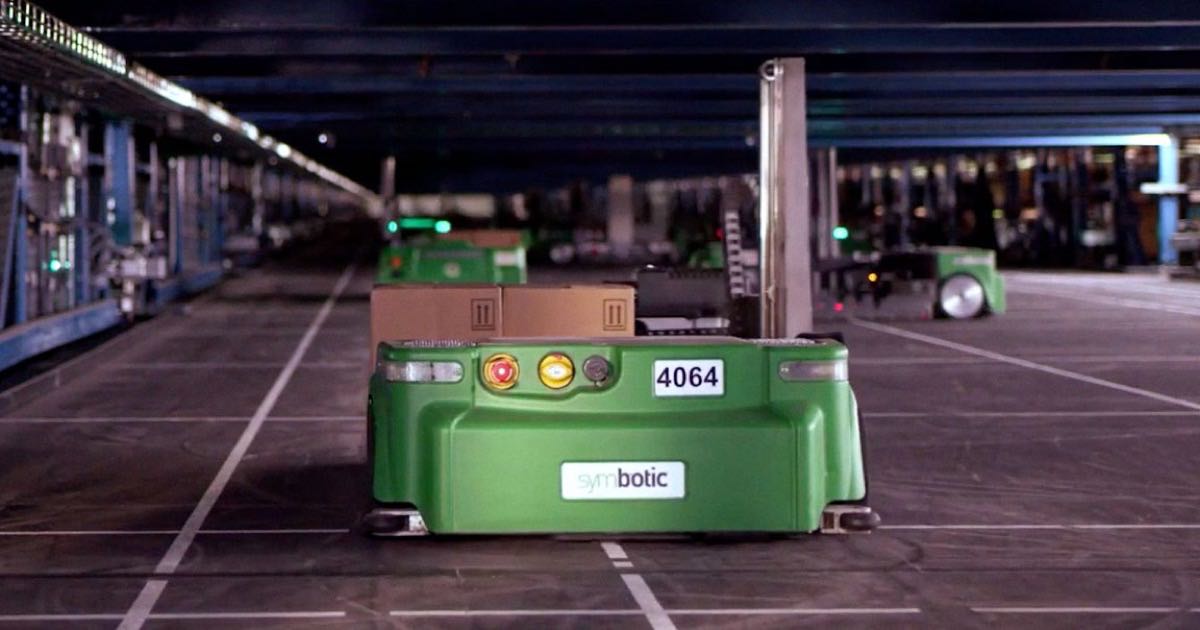
Symbotic’s platform is the one we looked at three weeks ago in Walmart’s reality-check piece on warehouse robots: pallet-building systems that sort department-coded inventory, now extended with BreakPack, an each-picking solution where small wheeled robots open cardboard cases and pick individual items, and SymMicro, a micro-fulfillment system aimed at e-commerce. Everything on top runs on proprietary software the companies say orchestrates “millions of cases every day.”
The new agreement ties the investment to e-commerce upstream inventory management, storage capacity and replenishment speed — the unglamorous plumbing that decides whether a click in Auckland or Arkansas is fulfilled from a shelf or a warehouse. Walmart’s Rob Montgomery, EVP for US supply chain operations, framed the deal in classic retailer terms: “Our work with Symbotic over the years, including this expanded agreement, helps us improve service, grow capacity, simplify work for our associates and lower costs.”
Rick Cohen, Symbotic’s chairman and CEO, reached for decade-scale framing: “Our partnership with Walmart started with a single product over a decade ago, and now we offer a full end-to-end solution to help power Walmart’s growth across its supply chain for years to come.”
One customer, one vendor
The history matters. Walmart and Symbotic have worked together since 2017. In May 2022 the companies announced the platform would go into all 42 of Walmart’s US regional distribution centers over eight-plus years — at the time, an $11 billion committed backlog. In January 2025, Symbotic bought Walmart’s Advanced Systems and Robotics business for $200 million cash plus milestone payments of up to $350 million, a deal that came with $520 million of Walmart development funding for store-level pickup-and-delivery systems.
Which raises the concentration question, and The Robot Report has been blunt about it: Symbotic’s quarterly filing lists its largest customer — Walmart, named in the annual report — as 90.5% of revenue in the quarter ended June 27, 2026, out of $720.8 million total revenue and $55 million net income. Roughly half of Symbotic’s ~2,000 employees work at customer sites installing and maintaining systems. A $6 billion top-up from the same anchor customer deepens the partnership and the dependence in the same gesture.
The quiet message in a big number
Three things are worth pulling out of a press release.
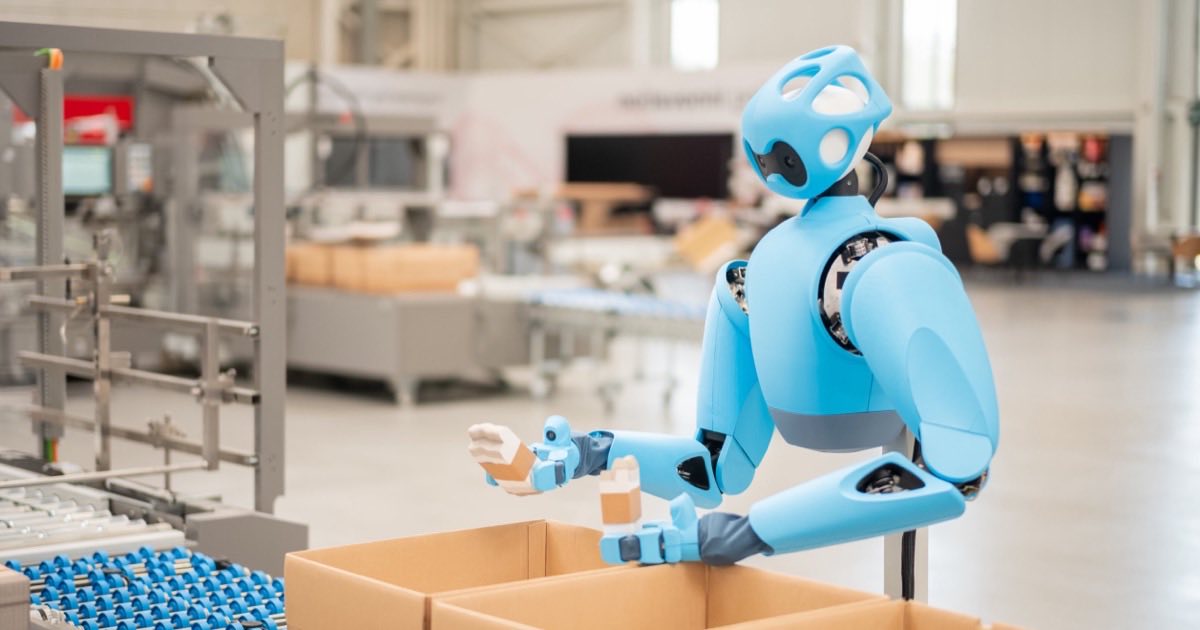
First, the money is going where robots already work. Retail automation is consolidating around proven deployments rather than speculative pilots — Walmart has seen Symbotic systems run long enough to triple down on them, which tells you where robotics actually earns its keep: repetitive, high-volume case handling, not the humanoid moon shots that dominate headlines.
Second, the labor language is worth reading carefully. “Simplify work for our associates” is doing a lot of load-bearing in Montgomery’s quote. A $6 billion commitment to pick and move cases without human hands is a capital-labour substitution at scale, announced in the vocabulary of workplace improvement. The honest version is that both are true: the jobs being simplified are also the jobs being automated, and the faster US e-commerce requires more of it.
Third, the pattern generalises. Our read of Q3’s North American robot-order data was that demand is broadening across industries. Walmart’s move shows the other half of the story: the biggest buyers keep being the biggest buyers, and they’re negotiating terms — equity, acquisitions, funded development — rather than simply issuing purchase orders. For NZ and Australian retailers and logistics operators watching from a distance, the lesson is that this playbook is not confined to Walmart’s scale; the economics of automated case-picking improve on every deployment, and the technology tier below this one is already being marketed regionally.
The figures here come from the companies’ own announcement as relayed by trade press; how the $6 billion is scheduled, and what the “global network” clause amounts to in practice, are not disclosed.