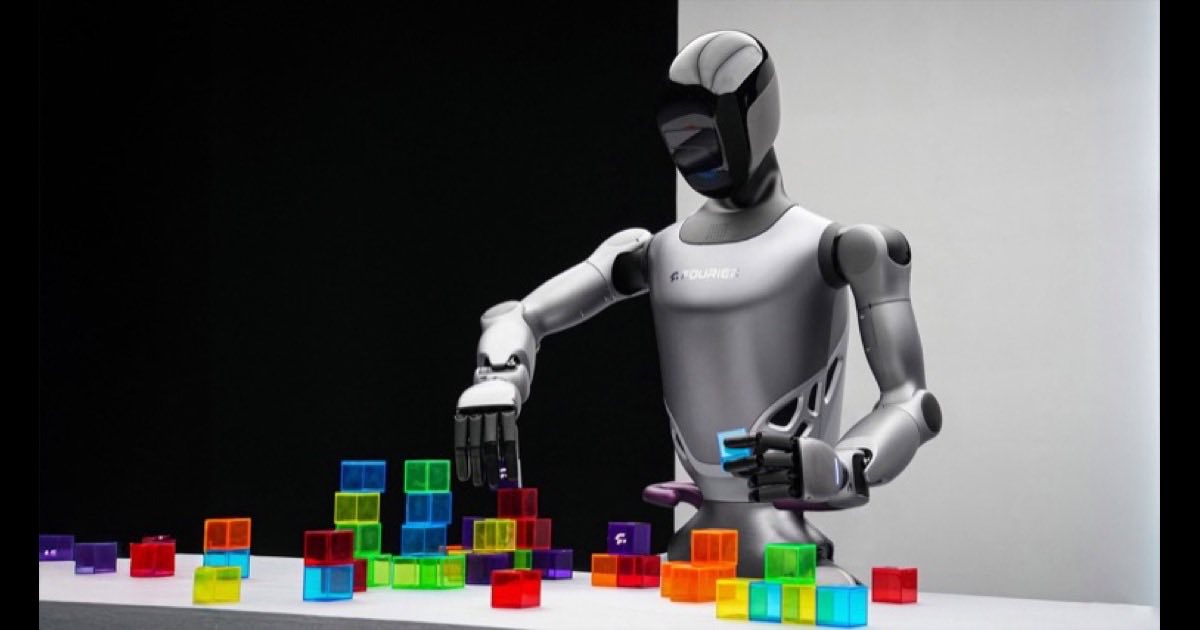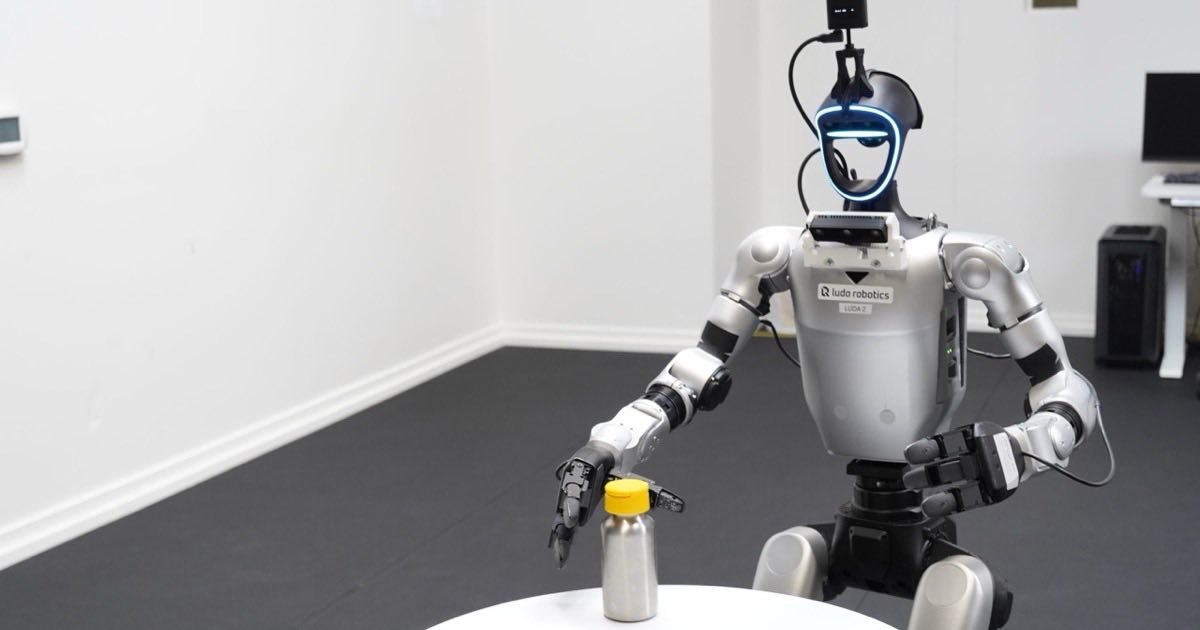
Krafton, the South Korean publisher best known for PUBG: Battlegrounds, is making an unusually direct play at robots that understand people. Its spin-out Ludo Robotics debuted Ludi 0.2 on October 30 (US time), according to SiliconANGLE — a second generation of a robotics AI system built to combine perception, dialogue, reasoning and physical action in one control stack.
The credentials are remarkable for a robotics lab. Krafton CEO CH Kim personally serves as Ludo’s CEO; Krafton’s Chief AI Officer Kangwook Lee is its CTO, and KoreaTechDesk reported in March when the appointments were made. The company operates from Palo Alto with an R&D lab in Seoul, and describes itself, per its own site, as “building social intelligence for robots” — systems that let “everyday people instruct, guide, and collaborate with robots naturally — through speech, gesture, and shared understanding.”
What 0.2 adds
Ludi 0.1 launched in August 2026 as an agentic architecture connecting human intent to robot action, combining a vision-language model for reasoning and dialogue with specialised navigation and manipulation. Version 0.2, per SiliconANGLE’s report, layers in social intelligence, memory and reasoning, tool coordination, and gesture interpretation — the difference between a robot that follows a stated command and one that reads the room while doing it.
Lee’s framing of the problem is the most useful thing in the announcement: “Robots are becoming increasingly capable of performing physical tasks, but understanding and responding to people remains a major challenge. Ludi 0.2 represents another step toward our goal of bringing conversation, reasoning and physical action together so robots can better understand human intent, respond to feedback and adapt as situations change.”
The company says it is working toward a final Ludi version that integrates perception, dialogue and physical action — a “brain” that watches, listens, interprets gestures and reasons about the environment in real time. The destination, as both the company and SiliconANGLE frame it, is the “Holy Grail” of physical AI: robots that work in retail and domestic spaces — restaurants, living rooms, kitchens — rather than only the caged, mapped environments of warehouses and factories. Ludi 0.2 was presented at the Bay Area Robotics Symposium at UC Berkeley on October 30.
Why a games company thinks it can do this
The pedigree argument is real, not vanity. Krafton’s businesses are simulation, real-time systems and agents — games are, among other things, factories of interactive human behaviour data. Krafton has developed AI teammates with Nvidia designed to understand players in real time, and Lee’s Fast Company essay in October argued games teach precisely the skills embodied AI lacks: reading context and intent, responding at the right moment, adapting as situations change. A company that spent two decades making virtual humans behave believably is betting that the hard part of home robots is behavioural, not mechanical.
There is a second, quieter strategy visible here. Physical simulation in game engines is cheap; physical trial-and-error with real robots is not. A studio with deep simulation infrastructure can train and test social-interaction models in synthetic environments before committing hardware — the same sim-first economics driving the major humanoid programmes.
The gap between demo and domestic
Context from our own archive keeps this honest: when we looked at the humanoid shipment numbers earlier this year, the striking finding was that most shipped humanoids are not working in factories — and generalisation outside mapped environments remains the bottleneck. AGIBOT’s attempt to define a robot productivity metric showed the same gap from the measurement side: the industry can count cycles, but nobody can yet certify “understands the room.”
That is exactly the surface Ludi 0.2 attacks. The honest read: this is a research system with a version number, not a product — there is no hardware partner, deployment count or pricing attached. But the stack it describes — intent, gesture, memory, dialogue fused with navigation and manipulation — is the missing layer between the warehouse robots that already work and the household robots everyone wants. Korea has now put a games giant, its star CEO and a Berkeley-connected AI officer on that layer. Watch whether version 0.3 ships on someone else’s robot.
As of publication, Ludi 0.2’s capabilities rest on the company’s own descriptions relayed through press coverage; no independent benchmarking has been reported.