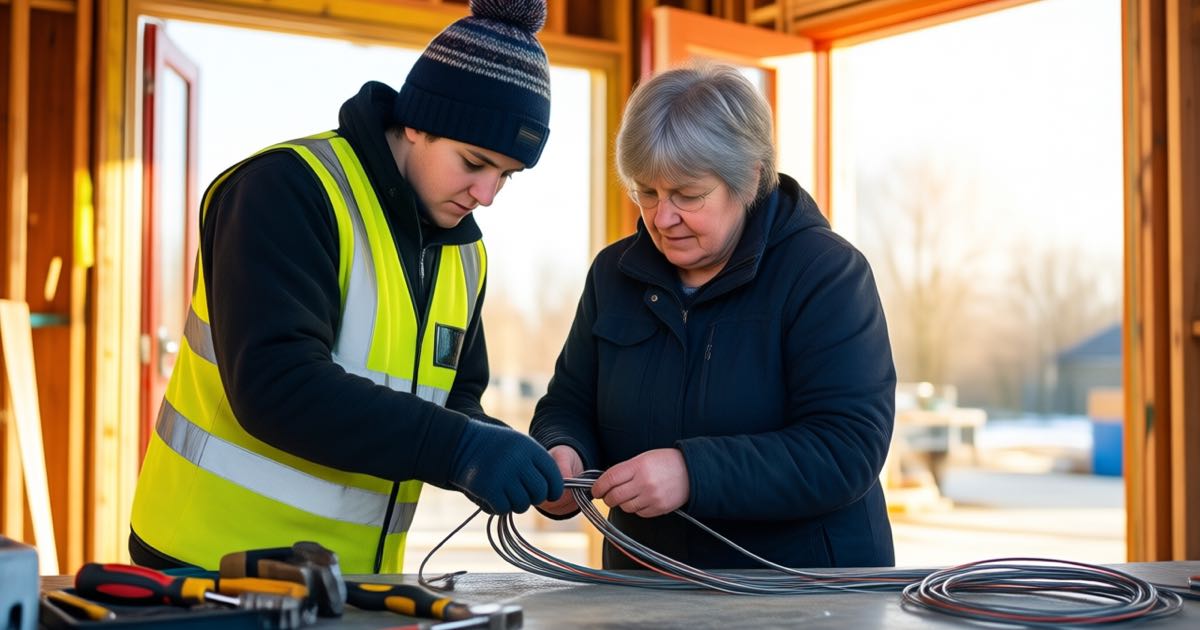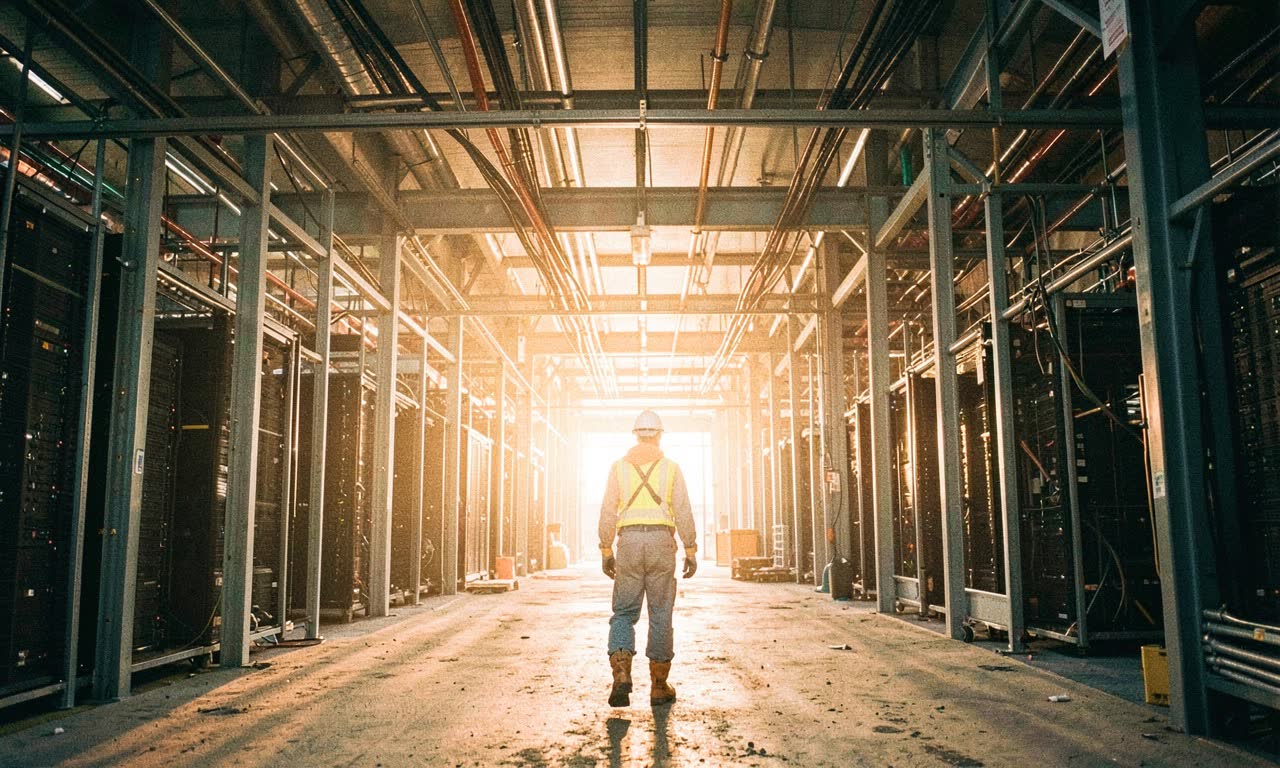
Here’s the irony that 2026 delivers: the same AI that eliminated your desk job will pay you $300,000 a year to build the building that houses the servers that replaced you.
According to a Fortune report published April 20, white-collar tech workers laid off due to AI automation are increasingly pivoting to skilled trade roles in data center construction and maintenance — and some are earning more than they ever did in their previous careers.
The Pivot Nobody Predicted
When AI started displacing software engineers, marketing managers, and data analysts, the standard narrative was grim: knowledge workers would face a shrinking market with no clear path forward. Retrain? Into what? The entire point of AI was that it was coming for cognitive work.
Nobody expected the counterweight: the physical infrastructure boom.
Data centers don’t build themselves. The global explosion in AI compute demand has triggered a construction frenzy — and construction requires electricians, welders, HVAC technicians, network cable specialists, and project managers who understand both the physical and digital layers.
Former tech workers, it turns out, have a surprising advantage in this market. They understand the systems they’re building. An ex-software engineer who can explain latency requirements to an electrician running power to GPU clusters is worth a premium.
The Numbers
- Skilled trade roles in data center construction and maintenance are reportedly paying up to $300,000 annually in high-demand markets
- The roles combine technical understanding with physical infrastructure skills
- Data center construction spending globally is projected to exceed $400 billion through 2027
- In the US alone, an estimated 1.2 million data center construction jobs will need filling by 2028
These aren’t minimum-wage gigs. This is specialized infrastructure work that commands specialized pay — and the supply of qualified workers hasn’t caught up with demand.
Why This Matters Beyond the Irony
This trend challenges several assumptions at once:
The “nowhere to go” narrative. Displaced knowledge workers do have options — but they look different from what they’re used to. The path forward may involve hard hats and work boots, not standing desks and Slack channels.
The skills gap is physical. While everyone focused on retraining coders to be… different coders, the real shortage was in skilled trades. Electricians, welders, and HVAC technicians who understand data center requirements are rare and getting rarer.
Geographic redistribution. Data centers are being built in places like New Zealand’s Southland, West Texas, and Northern Sweden — not just Silicon Valley. The jobs follow the cheap power and cooling, not the venture capital.
The New Zealand Opportunity
New Zealand is directly in the path of this trend. Data center development in Southland is accelerating, and the country faces the same skilled trade shortage as everywhere else.
For Kiwi tech workers facing displacement, the irony hits differently. The career pivot isn’t toward Auckland’s increasingly crowded tech scene — it’s toward Invercargill’s data center corridors, where the pay is high and the competition is thin.
NZ’s vocational training infrastructure — polytechnics and industry training organisations — could position the country as a supplier of data center construction talent, if it moves fast enough. The window won’t stay open forever.
The Bigger Picture
This isn’t a feel-good story about resilient workers finding new paths. It’s a structural shift with real teeth:
- The jobs AI creates are different in kind from the jobs it destroys — more physical, more localized, more hands-on
- The pay can be higher, but the work is harder, more dangerous, and less flexible
- Career identity disruption is real: moving from “software architect” to “data center electrician” isn’t just a title change
- The workers who thrive in this transition are the ones who can bridge both worlds — technical understanding plus physical skills
The AI economy isn’t just reshaping what work looks like. It’s reshaping where it happens, what it pays, and who does it. The tech workers pivoting to trades are early signals of a much larger shift — one that policy, education, and labor markets are only beginning to grapple with.
SOURCES
- Fortune (April 20, 2026)