Tesla’s Q2 2026 earnings were a mess by conventional metrics. GAAP operating margin collapsed to 1.4%. Earnings per share of $0.33 missed by $0.21. Free cash flow flipped negative. The stock dropped 12%, wiping out $140 billion in market value.
But two numbers in the report attracted attention from investors tracking Tesla’s AI trajectory — and they suggest the company is spending heavily on infrastructure that could reshape what it actually does.
Tesla analyst Warren Redlich flagged both in a detailed breakdown after the call: the scale of the company’s Cortex compute cluster, and the growth trajectory of its unsupervised robotaxi miles. Neither number was the headline. Both may be more consequential for the long-term story than any quarterly profit miss.
Cortex: The Compute Factory
Tesla disclosed $5.79 billion in capital expenditure for Q2 — more than double the $2.49 billion it spent in Q1. The bulk of that increase went to its Cortex supercomputer cluster in Austin.
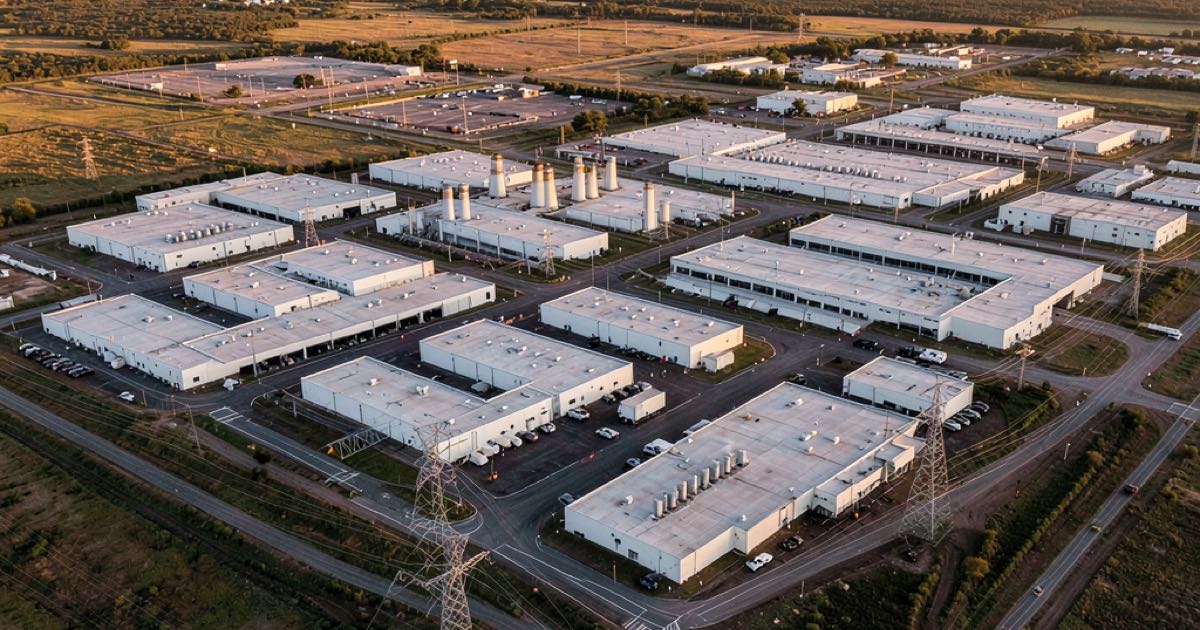
Cortex is not a single supercomputer in the traditional sense. It is a modular compute facility designed to house over 100,000 Nvidia H100 and H200 GPUs, alongside Tesla’s in-house Dojo chips. Tesla has been building it through 2025 and 2026, and the Q2 spend suggests the deployment is accelerating.
The market treated the capex as a cost problem — it drove the negative free cash flow and weighed on margins. The alternative view, which Redlich and others on the AI side of Tesla’s investor base argue, is that Cortex is a capitalised asset that will train both Full Self-Driving and Optimus. If the compute powers autonomous driving at scale or enables Optimus to generalise across tasks, the $5.79 billion looks less like a burn and more like a bet on the same infrastructure that AI labs are spending similar sums to build.
The difference is that Tesla’s compute is owned, not rented. It does not pay OpenAI or Google for inference — it runs its own models on its own hardware.
The Unsupervised Miles Curve
Tesla reported that cumulative paid robotaxi miles had passed 2.4 million. On its own, that number is small relative to the miles driven by Uber or Waymo. But Redlich’s analysis focused on the growth curve rather than the total.
Tesla’s robotaxi service, which launched in limited pilots in Austin, Orlando, and Tampa, has been scaling gradually. The company’s own shareholder deck showed the cumulative miles chart climbing steadily, and Redlich argued the compound growth rate — even from a small base — matters more than the absolute number at this stage.
He pointed out that the unsupervised miles are accumulating without the safety driver incidents that plagued early autonomous vehicle programs from competitors. Tesla has disclosed 380,000 miles without notable incident during the period, a figure that aligns with the most recent unsupervised robotaxi deployment timeline.
If the growth curve holds, the cumulative miles number will look very different by Q4. But for the market focused on the immediate earnings miss, the trajectory was noise.
What the Market Saw vs What It Missed
The conventional read of Tesla’s Q2 is straightforward: vehicle margins compressed, FCF went negative, and the stock deserved to fall. That is not wrong.
But the company is spending into a different thesis. The Cortex buildout and the robotaxi deployment are both early-stage infrastructure investments that suppress near-term profitability. Tesla is choosing to spend now rather than later — and the Q2 numbers make that choice visible in a way it was not before.
The question for investors is whether those investments compound into returns. Cortex can train both FSD and Optimus from the same compute base. Robotaxi miles generate real-world data that feeds back into the same training pipeline. If the flywheel works, the $5.79 billion quarter is the cost of building it. If it does not, it is one of the largest capital allocation mistakes in recent automotive history.
The two numbers Redlich flagged do not prove the thesis. They prove the thesis is being funded.
NZ Angle
New Zealand has no Tesla robotaxi pilots and no direct stake in Cortex, but the country’s autonomous vehicle regulatory framework is still being drafted. NZTA is consulting on a graduated licensing system for autonomous vehicles through 2027. If Tesla’s unsupervised miles data helps demonstrate safety at scale, it could influence how quickly regulators — including NZ’s — move from pilots to permanent frameworks. The compute infrastructure that trains those models also matters for any New Zealand company trying to build autonomous systems, because the cost of entry is rising as the leading players build clusters that smaller competitors cannot match.
❓ FAQ
What is Cortex? Tesla’s supercomputer cluster in Austin, Texas, designed to house over 100,000 GPUs for training AI models — including Full Self-Driving and Optimus.
How much is Tesla spending on it? Q2 capital expenditure was $5.79 billion, more than double the previous quarter. The bulk went to Cortex and related infrastructure.
What are unsupervised miles? Miles driven by Tesla’s robotaxi service without a human safety driver behind the wheel. Tesla reported cumulative paid unsupervised miles had passed 2.4 million.
Did Tesla’s earnings actually miss? Yes. EPS of $0.33 missed consensus by $0.21. Operating margin fell to 1.4%. Free cash flow was negative $350 million.
Does Cortex train both cars and robots? Yes. Tesla’s compute infrastructure is shared — FSD and Optimus both train on Cortex and Dojo.
📰 Sources
- [Tesla Q2 2026 Shareholder Deck (SEC Filing)]
- [Tesla Q2 2026 Earnings Call Transcript]
- Warren Redlich (@WR4NYGov) — Tesla Q2 breakdown
- TechCrunch — Tesla Cortex supercomputer deployment
- Reuters — Tesla Q2 earnings recap