Self-driving cars spent a decade learning the rules of the road. Now the people who built them are tackling a messier problem: construction sites.
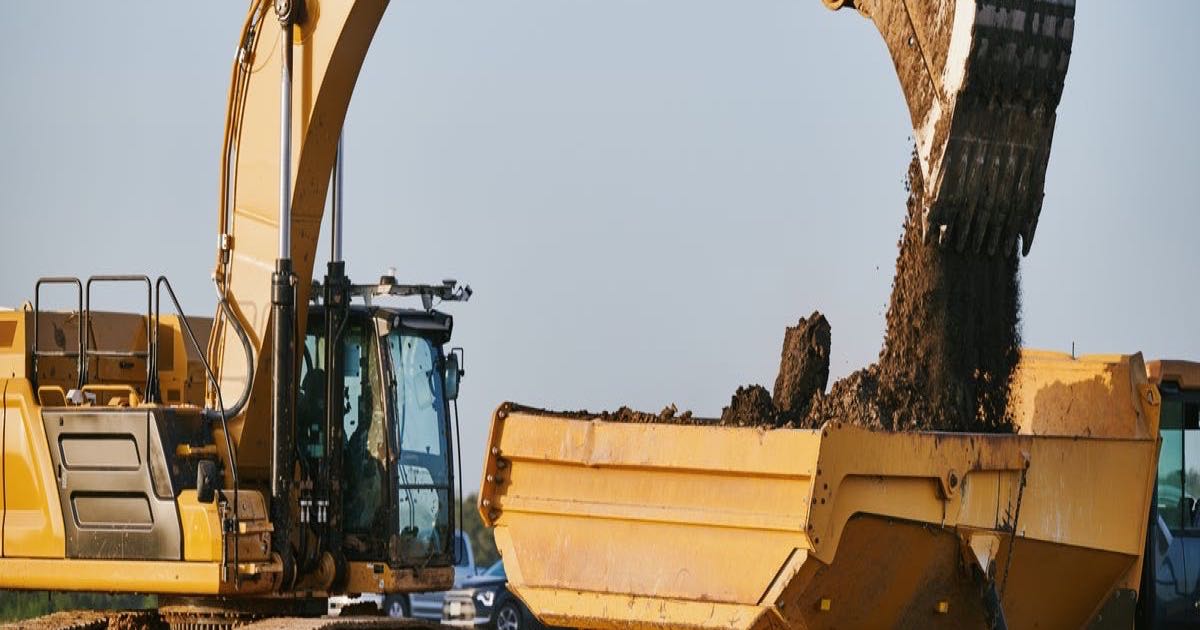
San Francisco-based Bedrock Robotics announced on August 17 that excavators fitted with its autonomous AI system are working without human operators on three commercial sites across Texas and Nevada. The machines are digging and moving earth on active projects, including a water treatment facility, partnering with Sundt, Champion Site Prep, and Zachry.
What is Bedrock Robotics? Founded in 2024 by Waymo veterans Boris Sofman and Kevin Peterson, Bedrock retrofits existing excavators with sensors and onboard computing rather than building machines from scratch. The company is valued at $1.75 billion and raised $270 million in February 2026. Sofman spent nearly five years at Waymo, bringing autonomous cars to freeways and leading its trucking division. CTO Peterson compares Bedrock’s current stage to Waymo’s early days, when its cars operated within just a few city blocks.
Why Construction Is Harder Than Roads
A construction site is less predictable than a factory floor or a highway. Terrain shifts daily. Crews move. Tasks change. An excavator that can dig a foundation trench on Monday might need to grade a slope on Tuesday, with different soil conditions and obstacles.
Bedrock’s system handles this by retrofitting standard excavators with perception sensors and computing units that let them read their surroundings, plan movements, and execute tasks set by a site manager. The next technical challenge is whether the same system can transfer to other equipment — bulldozers, dump trucks, loaders.
“There are open questions about that transfer,” Peterson told Business Insider. “We think it will work, but it will be hard.”
The Labour Math
The economic case is straightforward. More than 40 per cent of the construction workforce is projected to retire by 2031, according to the National Center for Construction Education and Research. The industry faces chronic delays, thin margins, and high rates of worker deaths. Contractors bid competitively, leaving little room for costly experiments.
“It would be fair to say it’s a limited test,” said Vineet Kamat, a construction management professor at the University of Michigan. For a contractor to invest a few hundred thousand dollars in robotics equipment, they need certainty it will generate a return. Once that proof exists, “everybody will want in.”
Bedrock is not alone. Built Robotics already deploys autonomous machines on solar and data-centre projects, including at Meta’s Hyperion data center in Louisiana. Caterpillar has more than 800 autonomous haul trucks running in mining operations. AIM Intelligent Machines retrofits machinery for construction, mining, and defence sites.
The Waymo Playbook
What distinguishes Bedrock is the pedigree. Sofman and Peterson are applying the same incremental scaling philosophy that took Waymo from a few blocks in Phoenix to commercial robotaxi service across multiple cities.
“If you look at the scaling Waymo did year by year, we think our scaling will occur in the same way,” Peterson said. Start narrow. Prove reliability. Expand.
The difference is that construction lacks the structured infrastructure that roads provide. No lane markings. No traffic lights. No predictable right-of-way rules. Every site is a new environment. That makes the problem harder, but also means the incumbent advantage — the data and experience Bedrock accumulates from each deployment — compounds faster.
Fernanda Leite, a civil engineering professor at the University of Texas at Austin, expects construction sites to look more like airports in the near term, where highly automated systems operate alongside skilled workers. “The robot is competing against a highly flexible, general-purpose system,” she said, “which is a highly trained human.”
What This Means for New Zealand
New Zealand’s construction sector faces similar demographic pressure. The country’s infrastructure pipeline — including the Roads of National Significance programme, water infrastructure upgrades, and Christchurch rebuild legacies — runs against a chronic trades shortage. Construction companies here have been slower to adopt automation than their Australian counterparts, but the economics that make autonomous excavation attractive in Texas apply in Tauranga too.
The retrofitting model is particularly relevant. New Zealand contractors operate mixed fleets of largely imported excavators. A system that bolts onto existing machines, rather than requiring purpose-built robots, fits a market where capital expenditure is carefully scrutinised.
The Real Question
Three excavators on three sites is a proof of concept, not a commercial scale deployment. Bedrock’s own CTO calls it a limited test. The construction industry is littered with automation pilots that never scaled.
But the Waymo comparison is worth taking seriously. Waymo’s early deployments looked equally modest — a handful of cars in a single city. The trajectory mattered more than the starting point. If Bedrock can follow that curve, the construction site of 2030 could look radically different from today’s.
The physical economy, as Sofman puts it, is the next great frontier for machine learning. After roads, after warehouses, after factory floors — the messy, unstructured world of construction is the problem that remains.