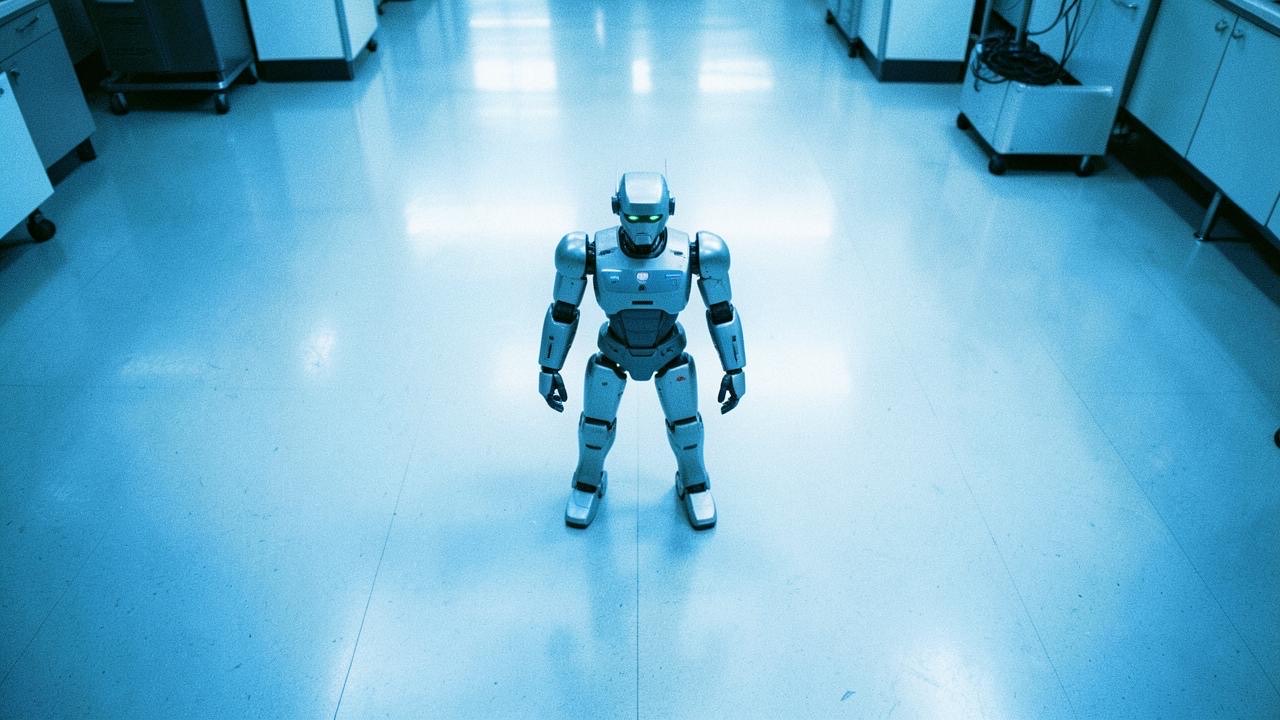
Unitree
The price disruptor. G1 at $13.5K changes the math for everyone.
Key specs
Latest developments
Unitree unveiled the GD01 Human, a 1.68m, 80kg piloted humanoid exoskeleton designed as a "personal AI assistant" — its second manned transformable robot of 2026 after May's 9ft GD01 mecha, per New Atlas, The Robot Report and designboom. The company is positioning both as consumer-ready products alongside its humanoid lineup.
China's securities watchdog has formally slowed humanoid IPO approvals: CSRC guidance issued Sep 9 now requires robotics applicants to prove recurring revenue, a credible path to profitability and genuine technological differentiation, per The Information and Crypto Briefing — a direct response to Unitree's 629% first-day pop and subsequent crash. Deep Robotics and Leju Robotics both have pending listings now subject to the tougher bar, and LimX Dynamics' Hong Kong filing is likely to face similar scrutiny.
Speaking at the World Robot Conference days after the IPO, founder Wang Xingxing said humanoids aren't factory-ready — new tasks still require full retraining, throughput trails human workers, and the industry's "ChatGPT moment" (80% of tasks in 80% of unfamiliar environments via voice alone) is 2-3 years away at best, 5-10 at worst, per CNBC. A notable reality check from the CEO whose stock just jumped 460%.
Shares are down roughly 53% from the IPO debut peak, erasing about $35B in market value, according to The Robot Report — and China has tightened humanoid IPO rules in response, per The Information. Company countermoves: the UnifoLM-X2-1.0 world model demo (Sep 7) claims the first fully autonomous humanoid combat, and Unitree's robot dance act earned Sofia Vergara's Golden Buzzer on America's Got Talent.
Unitree humanoid robots demonstrated at IFA in Berlin were remotely hacked from 30 metres away, according to Tech Times reporting — a security black eye for EU buyers, though no import restrictions were triggered.
IPO'd on the Shanghai stock exchange after 8,000x oversubscription, then popped 629% on day one to a valuation around $50B, according to Forbes. Also unveiled the "Superman" humanoid that hit 45.6 km/h — faster than Usain Bolt's top recorded speed.
Price dropped to $13.5K, undercutting every competitor in the humanoid space.
US Commerce Department opens Section 232 review of Chinese humanoid imports, signalling potential trade barriers.
G1 shipping globally with OTA software updates, bringing continuous improvement to deployed units.
16 configurations available from $13.5K to $73.9K, spanning research, education, and industrial variants.
Timeline
Focus areas
Price disruption
The defining feature of Unitree's strategy. At $13.5K, the G1 is 5-10x cheaper than competitors like Tesla Optimus and Figure 02. This forces the entire industry to compete on cost, not just capability.
Open ecosystem
Unitree provides SDKs and APIs for developers, making the G1 accessible to research labs and universities. The "Android of humanoids" approach — open enough to customise, cheap enough to experiment with.
Research & education
The low price point makes the G1 viable for academic research. Universities that couldn't afford a $150K humanoid can now field multiple G1s for the same budget.
Warehousing
Initial commercial deployments focus on logistics and warehousing — structured environments where the G1's capabilities match the requirements without needing advanced general intelligence.
Why it matters
Unitree is the Chinese answer to the humanoid race — and it's working. At $13.5K, the G1 is cheaper than a car. The quality gap is real, but the price gap is massive. Unitree forces every competitor to compete on cost, not just capability.
The "Android of humanoids" label is earned: open enough for researchers, cheap enough for anyone. Whether that's enough to win against the vertically integrated approaches of Tesla and Figure AI depends on how fast Unitree can close the software and quality gap.
In a race where everyone is building supercars, Unitree built a Corolla. And a Corolla wins by being everywhere.