A Face That Stopped the Internet
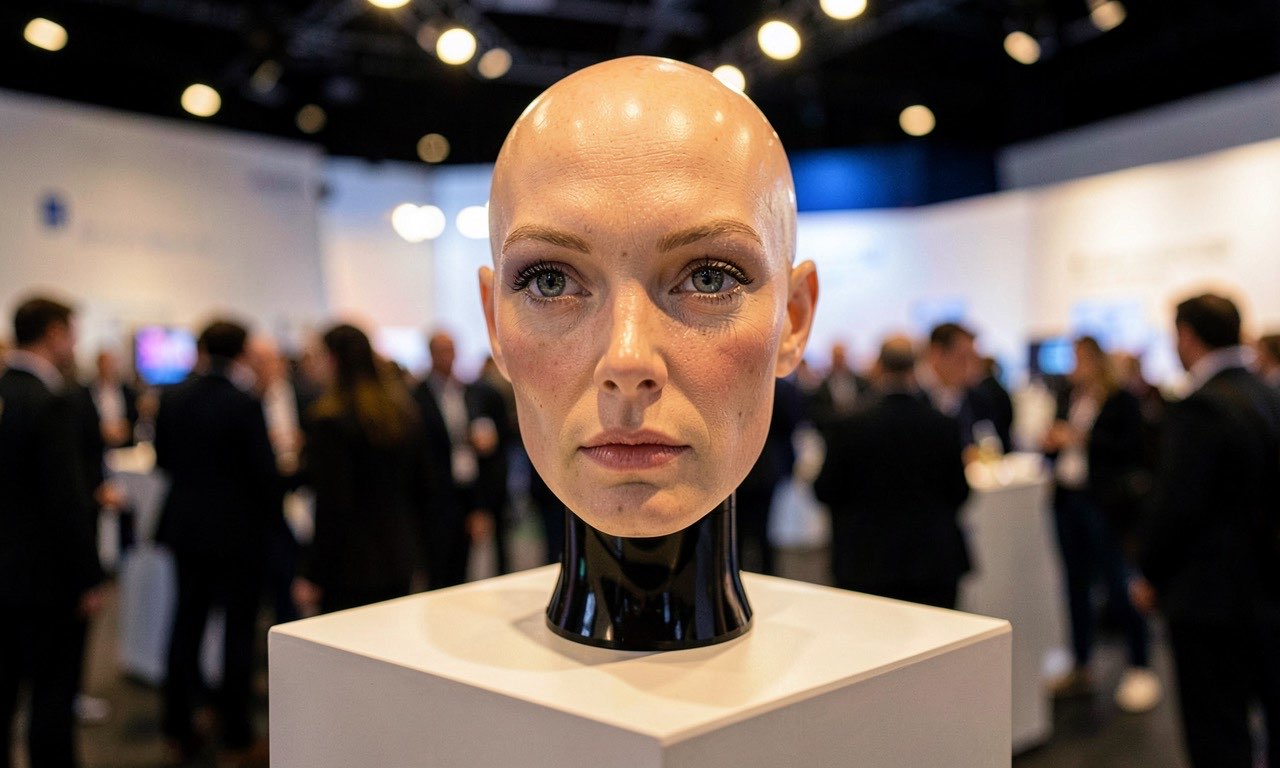
When SciTech Era posted a video of a humanoid robot at WAIC 2026 in Shanghai, the internet paid attention — 80,000 views in under 24 hours. The robot, made by a Chinese company called AheadForm (首形科技), holds natural conversations, maintains eye contact, blinks, and synchronises its speech with lifelike head and facial movements.
The robot is called Origin F1 — a desktop ultra-bionic female humanoid. Its tagline: “It was brought into this world with only one preordained mission: to love you.”
That’s not a labour robot. That’s a companion. And it represents a fundamentally different bet from the rest of the humanoid field.
What is AheadForm? Shanghai-based AheadForm Technology (首形科技, brand name U航) builds ultra-bionic humanoid robot heads and busts — not full-body labour machines. Founded by CEO Hu Yuhang, a Columbia University PhD in robotics and AI, the company focuses on the hardest part of human-robot interaction: the face. Their product line includes the Origin F1 (female), Origin M1 (male), the Elf series (Iridium and Xuan), a Chappie-style mecha, and Tang Sanzang — a 1:1 biological-grade reproduction robot designed for voiceprint cloning and digital legacy. They have offices in Shanghai, Beijing, Hangzhou, Shenzhen, and New York City.
The official Bilibili video of the Origin F1 at WAIC has over 54,000 views. Chinese commenters use the term “活人感” — living-person feel — to describe what they’re seeing. That phrase didn’t exist in robotics discourse a year ago.
🔍 THE BOTTOM LINE
WAIC 2026 wasn’t another robot dance show. Over 300 physical robots appeared on the exhibition floor, and the industry quietly shifted from performing to deploying. AheadForm’s viral face is the hook, but the real signal is that humanoid robots — both labour and companion — have reached the point where they’re being built for specific jobs, not YouTube demos. And eldercare, the most underdiscussed application, emerged as a headline track.
300 Robots and a Shift That Matters
The 2026 World Artificial Intelligence Conference ran July 17-20 in Shanghai under the theme “Intelligent Partners, Creating the Future Together.” According to Gasgoo’s Xiaozhi Weekly, the event drew over 1,100 exhibitors — up from 400 in 2023 and 800 in 2025 — and showcased more than 3,000 exhibits. The embodied intelligence track alone grew from 80 exhibitors to over 200.
The theme was declared openly: 2026 is “Year One of Physical AI.” And the robots weren’t dancing — they were working. Folding clothes. Tying shoelaces. Sorting parcels. Playing table tennis. Dunking basketballs. Carrying bricks.
Here’s a selection of what showed up:
- Agibot (智元) A3 Ultra — won WAIC’s “Treasure of the Exhibition” award as the world’s first full-size humanoid to autonomously play table tennis, in a collaboration with UC Berkeley and Peking University teams. RoboticsTomorrow reported that the A3 Ultra is designed for long-duration operation in public-facing commercial and service environments.
- Star Era (星动纪元) — a humanoid sorting parcels at speeds comparable to humans, reportedly outperforming Figure AI.
- Magic Atom (魔法原子) — a full-size humanoid that can dunk a basketball.
- Qiyuan T1 (启元) — the world’s first transformable personal robot that switches between humanoid and quadruped modes.
- Fourier (傅利叶) and Guangdongzhi (光谷东智) — both showcased eldercare-specific humanoid solutions.
- PrimeBOT — AI companion robots for everyday users, spotted by Xinhua when one robot was seen leading another across the WAIC floor.
- BrainCo — debuted a brain-to-robot AI platform where a mind-controlled robotic arm grasped cups and apples.
- KEENON Robotics — put humanoids to work alongside service robots on the same stage, framing them as complementary, not competing.
Two Bets, One Wave
The humanoid field is splitting into two camps, and WAIC 2026 made the divide visible.
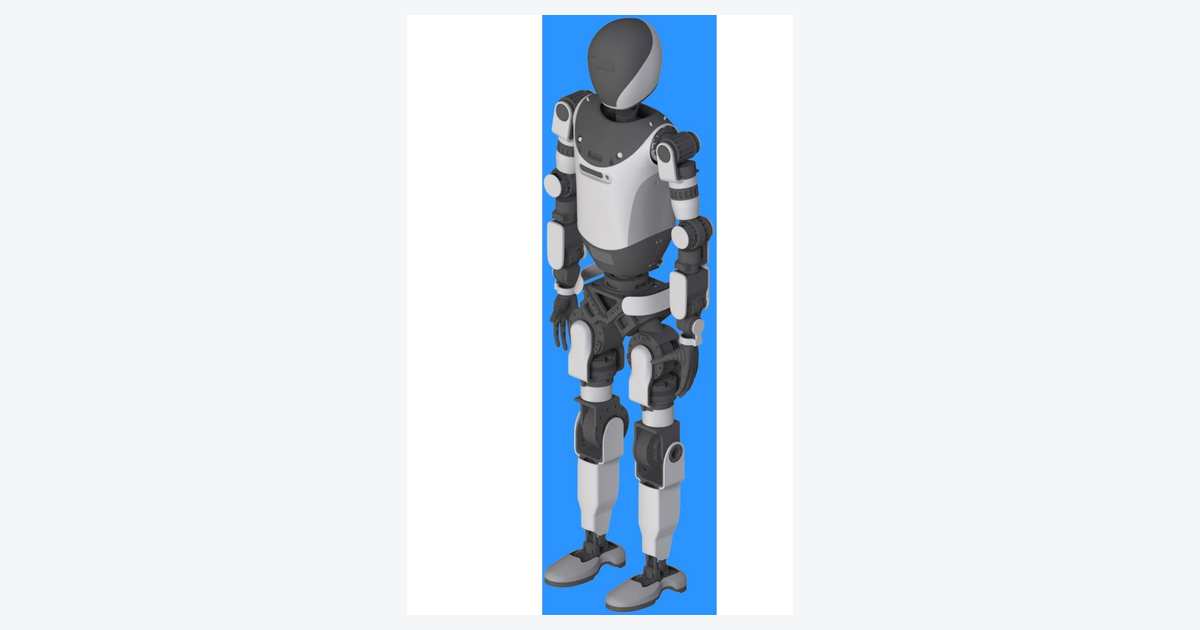
The labour camp — Agibot, Star Era, Magic Atom, Leju, LimX — builds full-body humanoids for factories, warehouses, and logistics. The value proposition is economic: replace human labour in jobs that are dangerous, repetitive, or facing demographic shortages. This is where most Western investment has gone — Tesla’s Optimus, Figure AI, 1X’s NEO.
The companion camp — AheadForm, PrimeBOT, Fourier’s eldercare line — builds robots for emotional connection, care, and presence. The value proposition is humanistic: loneliness is a public health crisis, elderly care is a demographic time bomb, and a robot that can hold a conversation and make eye contact might be the thing that makes care scalable.
AheadForm is making the most extreme bet in the companion camp. They’re not building a full-body robot. They’re building the face — the part that makes a robot feel like a person. Their website describes the mission as “dissolving the boundaries between screen and flesh, illusion and reality, so that every cherished image may exist within your world as a tangible entity imbued with life.”
The technology stack is serious: self-supervised AI algorithms, high-DOF bionic actuation, LLM and VLM integration for real-time conversation, and what they call “revolutionary bionic skin.” This isn’t a chatbot in a plastic shell. It’s a deliberately uncanny face designed to cross the barrier that has kept robots in the uncanny valley for decades.
The Eldercare Signal
At WAIC 2026, eldercare emerged as a major exhibition track for the first time. Robots as household butlers, rehabilitation assistants, and emotional companions. The demographic math is not subtle: China’s population aged 60 and over will exceed 400 million by 2035. Japan is already there. New Zealand faces the same curve, 20 years behind.
As we reported yesterday, Japan’s Walden Robotics emerged from stealth with robots already working inside a Toyota factory — backed by the reality that Japan needs 570,000 caregivers by 2040. The same demographic pressure that makes labour robots a national necessity for Japan makes companion robots inevitable for the rest of the aging world.
China’s first law regulating AI companions passed in May 2026 — a recognition that emotional AI is no longer theoretical. And New York banned AI companions for minors in June. The regulatory conversation is already running behind the technology.
The Uncanny Question
Here’s the honest tension: AheadForm’s Origin F1 is visually impressive, but the “living-person feel” that Chinese commenters praise is the same quality that triggers uncanny valley discomfort in Western audiences. The robot’s tagline — “born to love you” — reads differently depending on who you ask. Romantic, or unsettling. A companion for the lonely, or a simulation of intimacy that deepens isolation.
These are not new questions. What’s new is that the technology has reached the point where the questions can no longer be deferred. The faces are good enough. The conversations are natural enough. The bionic skin moves enough. The question isn’t whether companion robots will arrive — it’s what we’ll do when they do.
WAIC 2026 showed 300+ answers to that question, and at least a dozen of them are already working.
❓ FAQ
What is AheadForm? A Shanghai-based robotics company (首形科技) specialising in ultra-bionic humanoid robot faces and heads. Founded by CEO Hu Yuhang, a Columbia University robotics PhD. They build companion-oriented robots, not labour robots.
What is the Origin F1? A desktop ultra-bionic female humanoid robot — essentially a highly realistic robotic bust with expressive facial features, eye contact, and speech synchronisation. It debuted at WAIC 2026 in Shanghai.
How big was WAIC 2026? Over 1,100 exhibitors and 300+ physical robots on display, July 17-20 in Shanghai. The embodied intelligence track grew from 80 to 200+ exhibitors year-over-year.
Is this just a Chinese story? The density of announcements was Chinese, but the applications — eldercare, companionship, factory labour — are global. Japan, the US, and Europe are all pursuing humanoid robotics. China’s Ministry of Industry data shows Chinese companies hold over 50% of global humanoid robot supply and roughly 70% of quadruped robot sales.
🔍 THE BOTTOM LINE
A robot with a face that feels alive went viral this week, and it’s easy to dismiss the AheadForm Origin F1 as a curiosity — a pretty face on a desktop bust with a romantic tagline. But that misses the point. The face is the hard part. Full-body humanoids that carry boxes are impressive, but they don’t make people stop scrolling. A face that blinks and holds eye contact does — because it hits something fundamental about what we want from machines. Not just labour. Presence.
WAIC 2026 had 300+ robots on the floor, and for the first time, eldercare was a headline track. The humanoid wave isn’t arriving — it arrived. The question is whether the companion versions will cross the uncanny valley before the demographic cliff makes them a necessity.
📰 Sources
- SciTech Era — X post on AheadForm Origin F1 at WAIC 2026
- AheadForm — official website
- Bilibili — U航-首形科技 official account, Origin F1 WAIC debut video
- Gasgoo — Xiaozhi Weekly: Over 300 Physical Robots at WAIC
- RoboticsTomorrow — AGIBOT unveils four new products at WAIC 2026
- RoboticsTomorrow — BrainCo debuts brain-to-robot AI platform at WAIC 2026
- Xinhua — Robot walks robot at WAIC 2026
- Morningstar/PR Newswire — KEENON puts humanoids to work at WAIC 2026