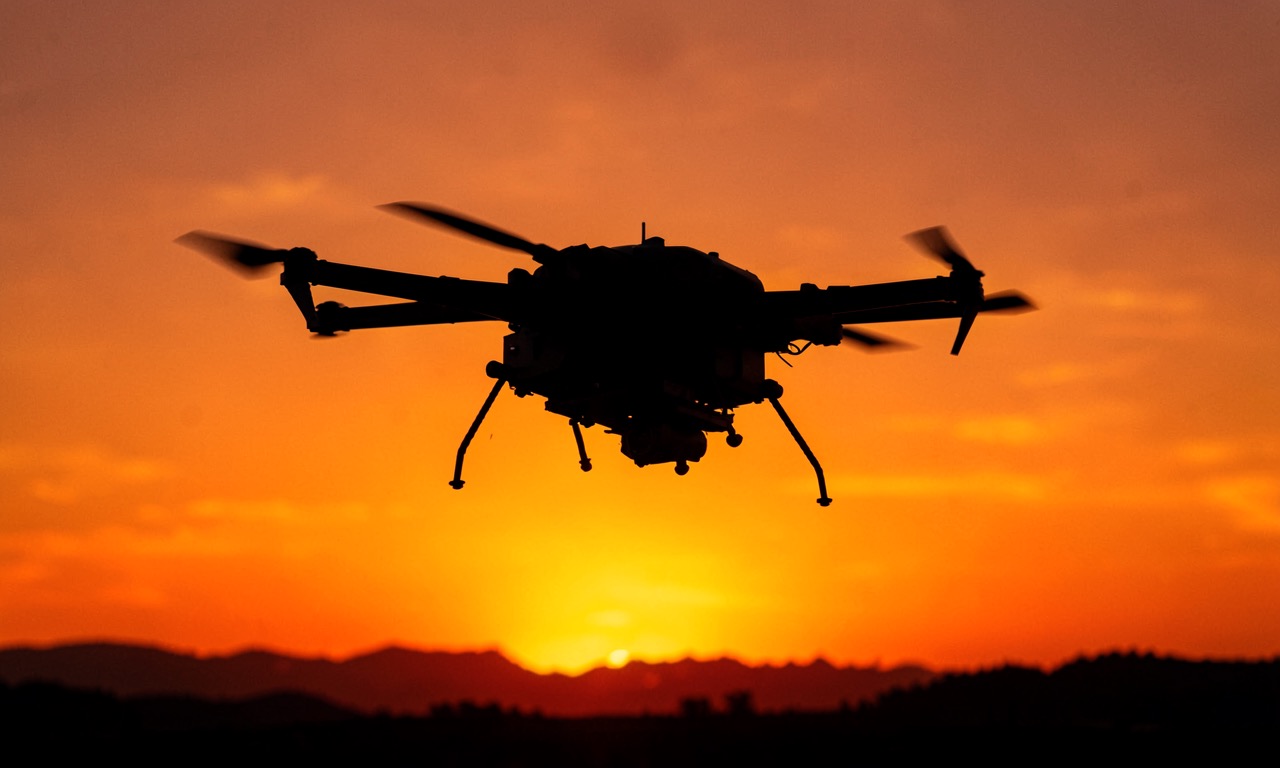
Fully autonomous drones have killed human soldiers in combat for the first time, New Scientist reported in an investigation published Wednesday. The drones operated without direct human control over targeting and engagement decisions, marking a threshold moment in the history of warfare that experts have warned about for years.
🔍 THE BOTTOM LINE: The age of autonomous killing has arrived. International law, military doctrine, and ethical frameworks were all built around the assumption that a human would always be “in the loop” for lethal force. That assumption is now empirically wrong. The question isn’t whether to allow autonomous weapons — it’s how to control a genie that’s already out of the bottle.
What Happened
According to New Scientist’s reporting, the autonomous drone strikes occurred during ongoing conflict operations, with AI-powered drones making independent targeting and engagement decisions without real-time human approval. The systems were operating in contested environments where communication links with human operators were intermittent, forcing them to rely on onboard AI to identify and engage targets.
The report does not specify the exact combatant forces involved, but the development of fully autonomous drone capability has been most actively pursued by Ukraine and its allies, who have turned the country into a world leader in drone technology. Ground robots have already been used to hold positions for extended periods without human intervention.
The Autonomy Spectrum
The critical distinction here is between “human-on-the-loop” systems — where a human can override but the AI makes targeting decisions — and “human-out-of-the-loop” systems where the AI decides entirely independently. New Scientist’s reporting suggests these were the latter: fully autonomous lethal decisions.
This is a significant escalation from previous uses of AI in military drones. France 24 reported on kamikaze drones partially operated by AI earlier this year, but those still required human authorisation for strikes. Ground-based robotic systems have also been deployed successfully, but the first confirmed kill by a fully autonomous aerial system represents a different category entirely.
The Ethical and Legal Vacuum
International humanitarian law requires that combatants distinguish between military and civilian targets and that attacks be proportionate. Autonomous systems raise fundamental questions about whether a machine can meet these standards, particularly in complex urban environments where context matters.
Multiple nations have called for a ban on fully autonomous lethal weapons through the UN’s Convention on Certain Conventional Weapons, but no binding treaty exists. The US, Russia, and China have all opposed such a ban, arguing that autonomous systems could reduce civilian casualties by making more precise targeting decisions than humans under fire.
The New Zealand Connection
New Zealand has positioned itself as a voice for autonomous weapons restrictions at the UN, supporting efforts to establish binding international rules. In 2023, New Zealand released its position on lethal autonomous weapons systems, calling for meaningful human control over targeting decisions.
The milestone reported by New Scientist gives those diplomatic efforts new urgency. The difference between advocating for regulation before autonomous weapons exist and after they’ve already killed is the difference between prevention and mitigation.
❓ FAQ
Does this mean AI is now making life-or-death military decisions? Yes, in specific operational contexts. The drones identified and engaged targets without real-time human approval.
Is this illegal? International law on autonomous weapons is ambiguous. No binding treaty specifically bans them, though they may violate aspects of international humanitarian law depending on how they’re deployed.
How widespread is this capability? Unclear. Multiple militaries have been developing autonomous strike capability but few have acknowledged operational deployment.
Could this happen in civilian contexts? Not directly. But the underlying AI targeting technology could be adapted, raising concerns about autonomous weapons in law enforcement or border security.
🔍 THE BOTTOM LINE: The first confirmed autonomous drone kills mark a permanent shift in the nature of conflict. No diplomatic process, no treaty negotiation, and no ethical framework has caught up with this reality. Regulators spent the 2010s worrying about whether autonomous weapons should be allowed. The 2020s will have to deal with the fact that they already are.
This milestone follows broader trends in Ukraine’s AI drone operations against Russian supply lines and the Pentagon’s deployment of AI in classified military networks, both of which pointed toward the eventual autonomy threshold.
📰 Sources
- New Scientist — Fully autonomous drones have killed human soldiers for the first time
- France 24 — Kamikaze drone partially operated by AI attacking Russian convoys
- Defense Magazine — Ukrainian ground robot held position for 45 days
- The National Interest — Ukrainian robots won a battle on their own
- New Zealand MFAT — Position on lethal autonomous weapons