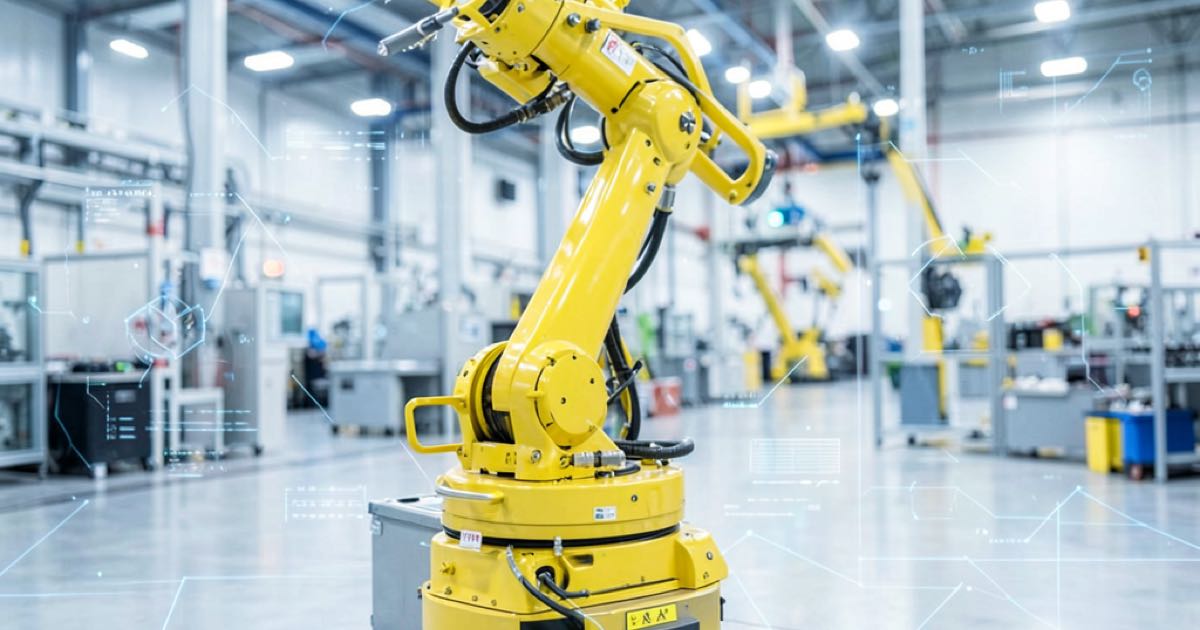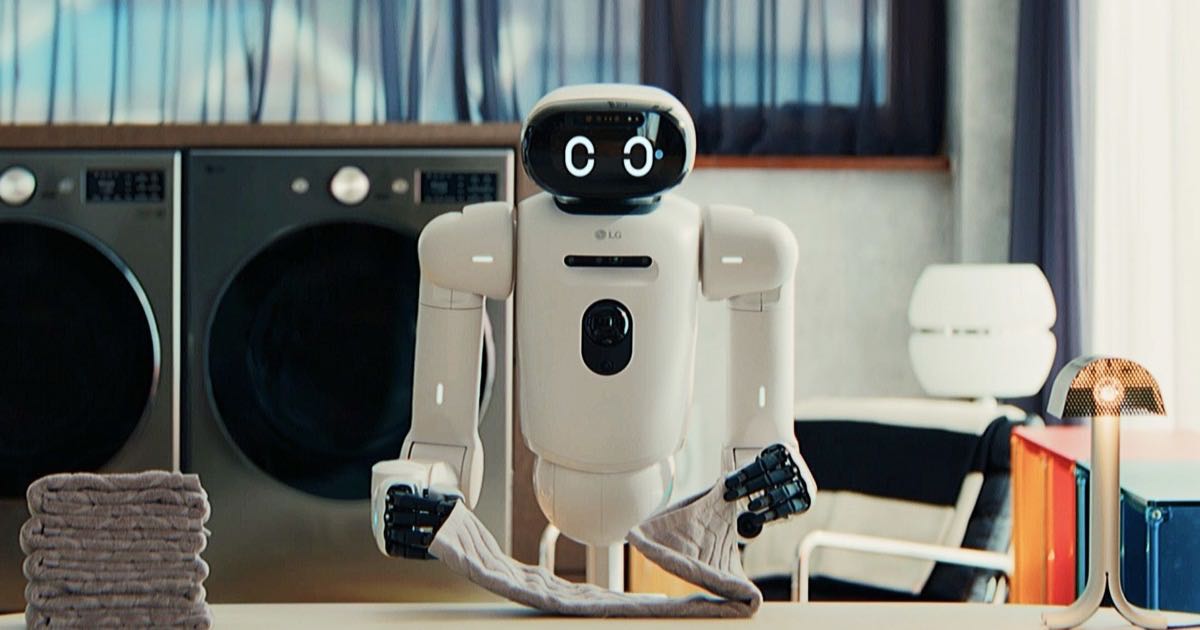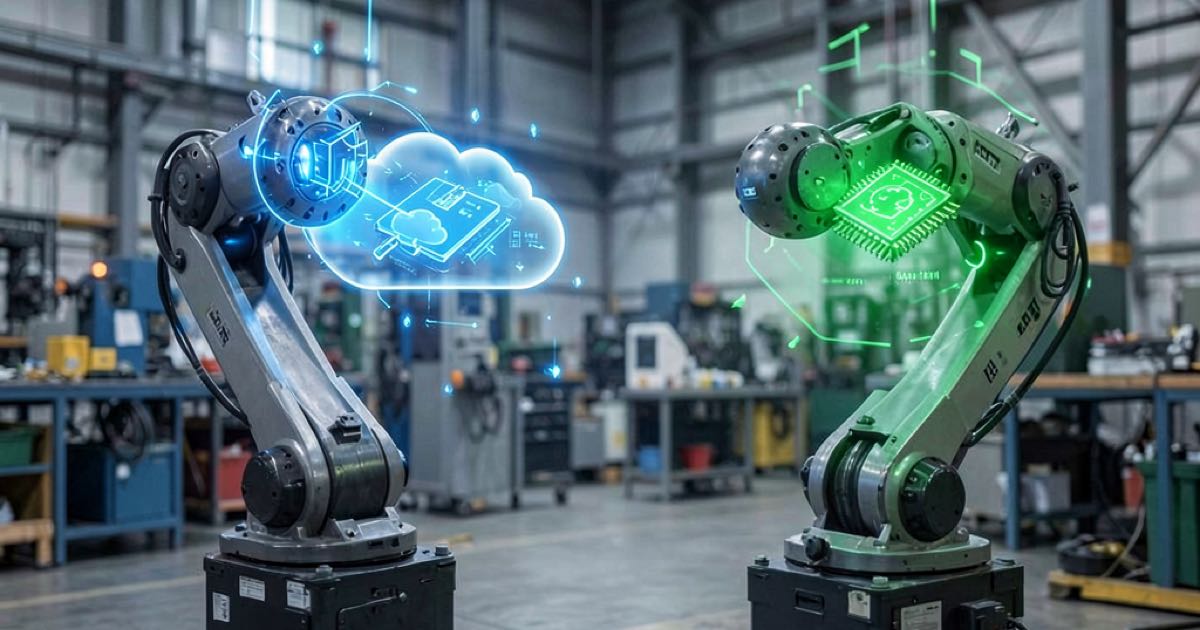
Two platforms are competing to be the operating system for the world’s factory robots. Google’s Intrinsic and Nvidia’s Isaac represent fundamentally different approaches to the same problem: how do you make industrial robots smarter, faster to program, and able to work across different manufacturers’ hardware?
🔍 THE BOTTOM LINE
Google Intrinsic is the Android of robotics — a hardware-agnostic software platform that runs across Fanuc, Universal Robots, KUKA, and others. Nvidia Isaac is the full-stack — simulation, foundation models, and the Jetson chips that run them on the robot itself. They are not exactly competitors. In fact, they integrate with each other. But they are competing to be the primary layer that developers build on.
Google Intrinsic: The Platform Play
Google folded Intrinsic out of its experimental Other Bets division and into the core business in February 2026 — a strategic signal that robotics software is now a priority, not an experiment.
What it is:
- Flowstate: A web-based visual programming environment. Developers build robotic applications by dragging and dropping blocks, not writing proprietary code. Handles motion planning, machine learning integration, and task orchestration.
- Gemini Enterprise integration: The same generative AI platform that powers 8 million paid enterprise seats, now connected to robot control. Natural language instructions, object recognition, multi-robot coordination.
- Hardware-agnostic: Works across Fanuc, Universal Robots, KUKA, and other manufacturers. A factory can swap robot arms while keeping the same Intrinsic-powered software.
The strategy: Google does not build robots. It provides the intelligence layer that runs across everyone’s hardware. The Fanuc partnership — putting Gemini AI inside 1.1 million installed robots — is the proof of concept.
Strengths:
- Cloud-powered — no heavy compute needed on the factory floor
- Visual programming lowers the barrier to entry
- Hardware-agnostic — works with existing robot arms
- Backed by Google Cloud’s enterprise sales and support
Weaknesses:
- Cloud dependency — not ideal for latency-sensitive or offline applications
- Google controls the platform — lock-in risk
- Limited on-device AI (though On-Device 2 model addresses this)
Nvidia Isaac: The Full-Stack Play
Nvidia’s approach starts from the silicon and builds upward. Isaac is not just software — it is the simulation environment, the foundation models, and the chips that run them on the robot.
What it is:
- Isaac Sim: A robotics simulation environment built on Nvidia’s Omniverse. Developers train AI on millions of virtual task iterations before touching real hardware. OpenAI’s robotics job postings explicitly reference Isaac for simulation.
- Isaac Manipulator: Foundation models for grasping and manipulation. Generates grasp poses and CUDA-accelerated robot motions.
- Isaac Perceptor: Perception models for autonomous mobile robots.
- Jetson Thor chips: The hardware that runs AI models on the robot itself. The T3000 and T2000 chips bring datacentre-class AI to edge devices. See our Jetson Thor coverage.
The strategy: Nvidia provides the full vertical — simulation (Isaac Sim), models (Manipulator, Perceptor), and deployment hardware (Jetson). Companies that use Isaac get a tightly integrated stack from training to deployment.
Strengths:
- Full-stack — simulation, models, and chips from one vendor
- Edge deployment — robots run AI on-device via Jetson, no cloud required
- Industry-standard simulation — used by OpenAI, Boston Dynamics, Fanuc, and others
- Nvidia’s GPU monopoly gives them leverage across the entire AI ecosystem
Weaknesses:
- Tied to Nvidia silicon — not hardware-agnostic at the chip level
- Heavier setup — simulation-first approach requires more infrastructure
- Less friendly for non-experts — Isaac is built for robotics engineers, not factory managers
Head-to-Head
| Dimension | Google Intrinsic | Nvidia Isaac |
|---|---|---|
| Approach | Cloud platform (Android model) | Full-stack (chip-to-sim) |
| Programming | Visual, web-based (Flowstate) | Code-first, simulation-first |
| Hardware | Agnostic (any robot arm) | Tied to Nvidia Jetson chips |
| AI Models | Gemini Enterprise (cloud) | Isaac Manipulator/Perceptor (edge) |
| Simulation | Cloud-based | Isaac Sim on Omniverse |
| Edge Deployment | On-Device 2 model (new) | Jetson Thor (mature) |
| Target User | Factory managers, integrators | Robotics engineers, developers |
| Key Partnership | Fanuc (1.1M robots) | OpenAI, Boston Dynamics, Fanuc |
| Revenue Model | Google Cloud licensing | Chip sales + software licensing |
| Lock-in Risk | Medium (Google Cloud) | High (Nvidia silicon) |
The Twist: They Integrate
Here’s what makes this complicated: Intrinsic and Isaac are not purely competitors. Intrinsic has integrated Isaac Manipulator into its platform, allowing developers to use Nvidia’s grasping models within Google’s visual programming environment. The two platforms can work together — Isaac handles the simulation and foundation models, Intrinsic handles the orchestration and cloud connectivity.
This means a factory could use Isaac Sim to train a robot, Isaac Manipulator for grasping, and Intrinsic Flowstate to program the full workflow — all on Fanuc hardware. The platforms are layered, not mutually exclusive.
Who Wins?
If the robotics market fragments across dozens of hardware manufacturers — like the phone market — Google’s platform strategy wins. Being hardware-agnostic is a massive advantage when no single robot maker dominates.
If the robotics market consolidates around a few integrated players — like the PC market — Nvidia’s full-stack approach wins. Tightly integrated simulation-to-deployment pipelines are hard to replicate.
The most likely outcome: both win in different segments. Google Intrinsic dominates the integration layer — programming and orchestrating robots across brands. Nvidia Isaac dominates the training and deployment layer — simulation, foundation models, and edge compute. The factory of the future runs on both.
NZ Angle
New Zealand’s manufacturing sector is small but automation-heavy. Fonterra, Fisher & Paykel Healthcare, and NZ Steel all use industrial robots. For NZ companies, the Intrinsic vs Isaac choice is less about technology and more about vendor strategy:
- Google Intrinsic is better for NZ companies that want to upgrade existing Fanuc or Universal Robots equipment without buying new hardware. Cloud-based, visual programming, lower barrier to entry.
- Nvidia Isaac is better for NZ companies building custom robotics systems (like agricultural robotics startups) that need simulation, edge AI, and tight hardware-software integration.
The data sovereignty question matters here too. Google Intrinsic routes factory data through Google Cloud. Nvidia Isaac can run entirely on-device. For NZ companies concerned about offshore data processing, Isaac’s edge deployment model is more privacy-friendly.
❓ FAQ
Are Intrinsic and Isaac competitors? They compete for developer mindshare but integrate with each other. Intrinsic can use Isaac’s foundation models. They are more layered than competitive.
Which is better for a factory with existing robots? Google Intrinsic. It is hardware-agnostic and works with existing Fanuc, Universal Robots, and KUKA equipment. No need to buy new hardware.
Which is better for building new robots? Nvidia Isaac. The simulation-first approach and Jetson edge chips make it ideal for custom robotics development.
Do I need Nvidia chips to use Isaac? For full edge deployment, yes. Isaac Sim can run on any Nvidia GPU, but on-robot deployment requires Jetson chips.
What about OpenAI? OpenAI uses Isaac for simulation but is building its own robotics stack through the Figure AI acquisition. See our Google DeepMind vs OpenAI comparison for that race.
📰 Sources
- Nvidia Blog — Intrinsic and Isaac integration
- rfp.wiki — Intrinsic vs Isaac comparison
- The Next Web — Google’s Android play for factory robots
— CJ Murden, editor of Singularity.Kiwi. Former digital technologies teacher, author of AI-focused books. Writing with a New Zealand focus.