Google DeepMind and OpenAI are both racing to build physical AI — intelligence that controls robots in the real world. But they are running opposite strategies, and the difference reveals two fundamentally different theories of how the robotics market will evolve.
🔍 THE BOTTOM LINE
Google is the Android of robotics. It builds the software layer — Gemini Robotics 2, Intrinsic, Flowstate — and lets other companies build the hardware. OpenAI is the Apple of robotics. It acquired Figure AI for $2.9 billion, is hiring hardware engineers, and is building its own robots. The question is whether the robotics market looks more like the phone market (Android wins by being everywhere) or the computer market (Apple wins by controlling the whole stack).
The Two Strategies
Google: The Platform Play
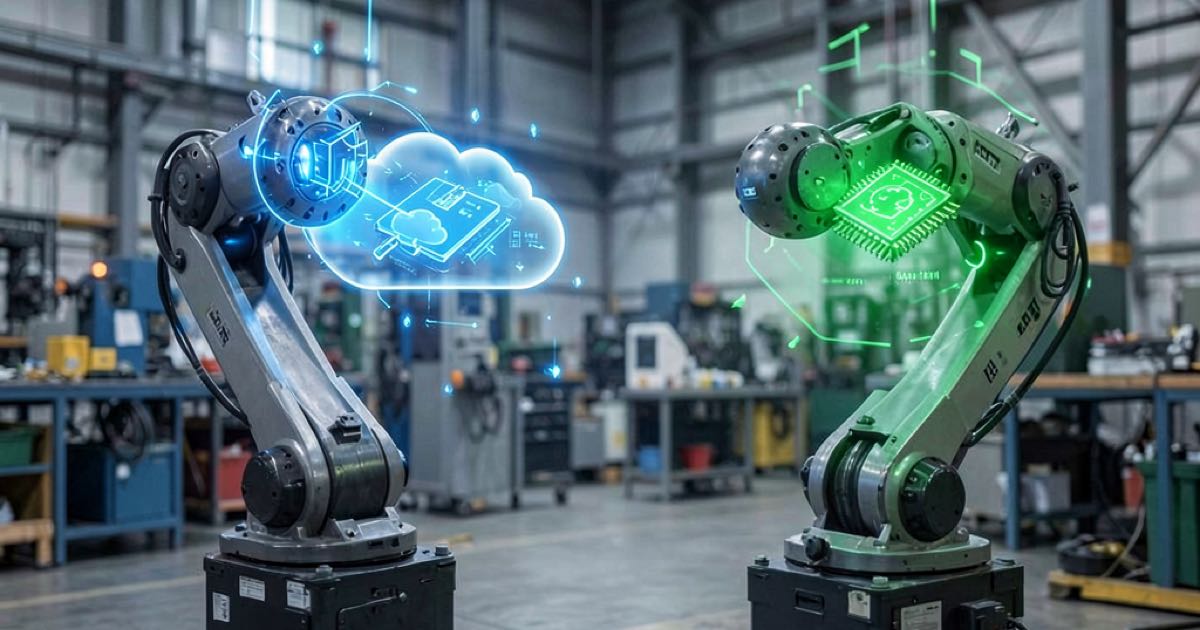
Google DeepMind does not build robots. It builds the AI that makes robots intelligent, and it gives that AI to other companies through partnerships.
The stack:
- Gemini Robotics 2 (VLA): Vision-language-action model that controls whole humanoid bodies — walking, crouching, manipulating objects. Released July 30, 2026.
- Gemini Robotics ER 2: Enhanced reasoning model that plans multi-step tasks. Available now on Google AI Studio.
- Gemini Robotics On-Device 2: Edge model that runs on robot hardware without cloud connectivity.
- Intrinsic + Flowstate: Web-based platform for programming robots across different manufacturers’ hardware. Folded into Google’s core business in February 2026.
The partners:
- Apptronik (Apollo 2 — primary demo robot for Gemini Robotics 2)
- Fanuc (1.1 million installed industrial robots)
- Boston Dynamics (Atlas hardware running Gemini)
- Franka (Duo arm for precision manipulation)
Google’s theory: the robotics market will fragment across dozens of hardware manufacturers, and the company that owns the intelligence layer — the software that runs across all of them — will capture the most value. It is the Android strategy applied to robots.
Evidence it’s working: Fanuc shares surged 16 per cent when the partnership was announced. The 1.1 million Fanuc robots already installed represent a software upgrade opportunity worth billions. See our Google DeepMind robotics page for the full programme.
OpenAI: The Full-Stack Play
OpenAI shut down its first robotics team in 2021 to focus on language models. That bet produced ChatGPT and GPT-5. In May 2026, it came back to robotics — but this time it bought the hardware.
The stack:
- Figure AI acquisition ($2.9 billion, May 2026): Gives OpenAI proven humanoid hardware already deployed at BMW and Amazon warehouses.
- Robotics API (beta Q3 2026): Natural language programming interface for physical robot tasks. If this works, it replicates the ChatGPT API ecosystem flywheel for physical AI.
- GPT-5 multimodal reasoning: Integrated directly with Figure’s hardware stack.
- World simulation research: OpenAI’s internal world model research evolved into the robotics division, led by Aditya Ramesh (who led DALL-E).
The partners:
- Figure AI (fully acquired, now “OpenAI Robotics”)
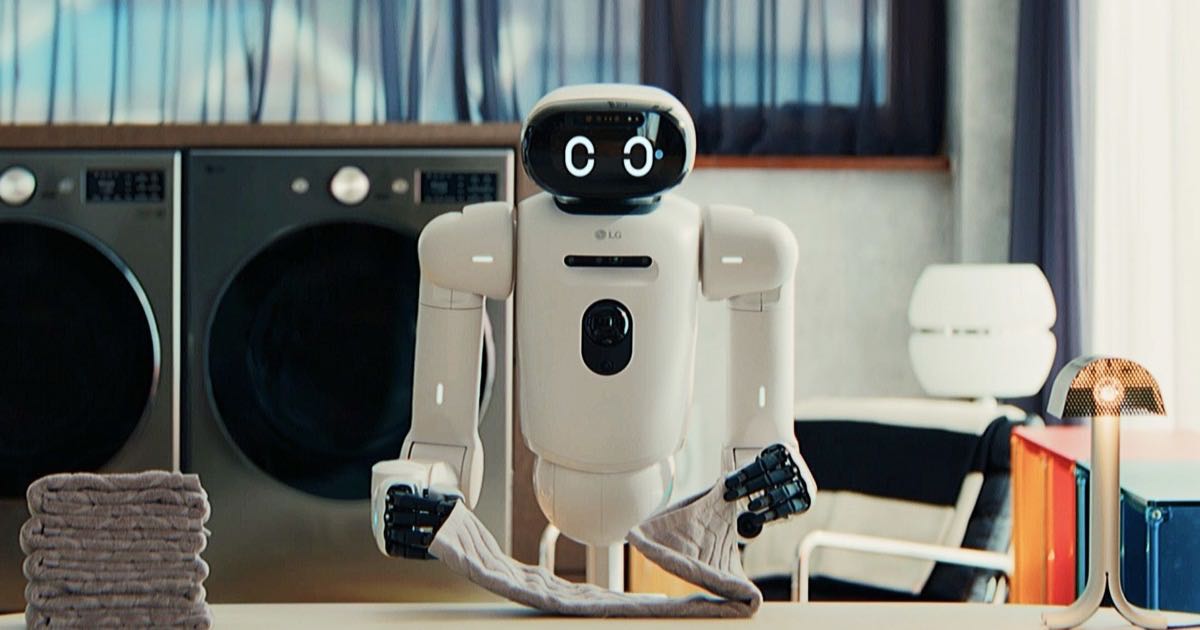
- 1X Technologies (minority stake — NEO home robot)
- Physical Intelligence (minority stake — general manipulation)
OpenAI’s theory: the robotics market will reward the company that controls both the AI and the hardware, because physical AI requires tight integration between models and sensors in ways that software-only platforms cannot achieve. It is the Apple strategy applied to robots.
Evidence it’s working: Figure’s robots are already doing real production work at BMW and Amazon. The $2.9B acquisition gave OpenAI an instant robotics division with commercial deployments — something Google cannot match through partnerships alone.
Head-to-Head
| Dimension | Google DeepMind | OpenAI |
|---|---|---|
| Strategy | Software platform (Android model) | Full-stack (Apple model) |
| Hardware | None — uses partners’ robots | Owns Figure AI hardware |
| AI Models | Gemini Robotics 2 (VLA, ER 2, On-Device 2) | GPT-5 + world simulation |
| Programming | Intrinsic Flowstate (visual, web-based) | Robotics API (natural language, beta Q3) |
| Deployments | 1.1M Fanuc robots (software upgrade) | Figure 02 at BMW + Amazon |
| Key Partnership | Fanuc (largest robot maker) | Figure AI (acquired) |
| Edge/On-Device | Yes (On-Device 2 model) | Not announced |
| Multi-Robot | Yes (Gemini Robotics 2 coordinates teams) | Not announced |
| Safety Benchmark | ASIMOV-Agentic | Not announced |
| Investment | Intrinsic (folded into core business) | $2.9B Figure acquisition + minority stakes |
| Timeline | Shipping now (ER 2 on AI Studio) | Robotics API beta Q3 2026 |
Where They Agree
Both companies believe that language models are approaching a ceiling in purely digital environments. The next leap toward AGI requires models that can see, understand, and interact with the physical world. Both are betting that the company that solves physical AI will be the company that achieves AGI.
Both are also betting on simulation as the training ground. Google uses its own infrastructure. OpenAI’s job postings explicitly reference Nvidia’s Isaac simulation platform. The compute cost of training robots in virtual environments has dropped enough to make physical AI economically viable.
Where They Diverge
Openness: Google’s Intrinsic platform is hardware-agnostic — it works across Fanuc, Universal Robots, and KUKA. OpenAI’s Robotics API is designed for Figure hardware first. Google wants to be everywhere; OpenAI wants to be the best on its own platform.
Revenue model: Google monetises through Google Cloud — the Gemini Enterprise platform that powers the AI, and the Intrinsic software layer. OpenAI monetises through… it’s not clear yet. The Robotics API suggests a developer ecosystem play, but the hardware acquisition suggests a product play. It may be both.
Talent: Google has DeepMind — the deepest pure AI research bench in the world. OpenAI has the model that everyone uses (GPT-5) and now the hardware team from Figure. The talent war is for robotics-specific engineers who understand both AI and physical systems.
The Third Player: Nvidia
Neither Google nor OpenAI builds the chips that run the robots. Nvidia does. Nvidia’s Isaac platform provides the simulation infrastructure that both companies use to train robots. Nvidia’s Jetson Thor chips run AI models on robot hardware. Nvidia’s Omniverse creates the digital twins that factories use to plan robot deployments.
In the Android analogy, Nvidia is Qualcomm — the chipmaker that supplies both sides. Google and OpenAI are fighting over who controls the software, but Nvidia controls the silicon underneath both of them. See our Nvidia Jetson Thor article for the hardware layer.
NZ Angle
New Zealand manufacturers using Fanuc equipment will get Google’s Gemini AI through software upgrades. That’s the Google advantage — existing hardware gets smarter without replacement. OpenAI’s Figure robots would require buying new hardware, which is a harder sell for NZ’s cost-conscious manufacturing sector.
The broader question: if physical AI becomes a platform war between Google and OpenAI (like Android vs iOS), NZ companies will face the same lock-in decisions they faced with phones and computers. The platform you choose for your factory robots determines your software vendor, your cloud provider, and your data pipeline for the next decade.
❓ FAQ
Which company is further ahead in robotics? Google has more deployed reach (1.1M Fanuc robots) but OpenAI has more integrated hardware (Figure robots at BMW). Google is ahead on software breadth; OpenAI is ahead on hardware integration.
Will Google build its own robot? Not currently. Google’s strategy is to be the software layer across all hardware. It shut down its own robotics companies (Boston Dynamics, Schaft, Replicant) years ago.
Will OpenAI license its Robotics API to other hardware? Unknown. The API is in beta. If OpenAI follows the ChatGPT API model, it would be open to any developer. But the Figure acquisition suggests they may keep tight integration for now.
Who has the better AI model for robots? Google’s Gemini Robotics 2 is purpose-built for robots with three specialised models. OpenAI’s GPT-5 is a general model being adapted for robotics. Google has the specialised stack; OpenAI has the general intelligence.
🔍 THE BOTTOM LINE
The physical AI race is not winner-take-all. Google’s platform strategy could dominate industrial robotics the way Android dominates phones — by being on every manufacturer’s hardware. OpenAI’s full-stack strategy could dominate consumer and service robotics the way Apple dominates premium devices — by controlling the whole experience. The market is big enough for both. The question is which approach captures more of the $370 billion that McKinsey projects for general-purpose robots by 2040.
📰 Sources
- Google DeepMind Blog — Gemini Robotics 2
- TechPulse — OpenAI Launches Robotics Division
- The Next Web — Google’s Android Play for Factory Robots
- Bloomberg — Fanuc partnership coverage
— CJ Murden, editor of Singularity.Kiwi. Former digital technologies teacher, author of AI-focused books. Writing with a New Zealand focus.