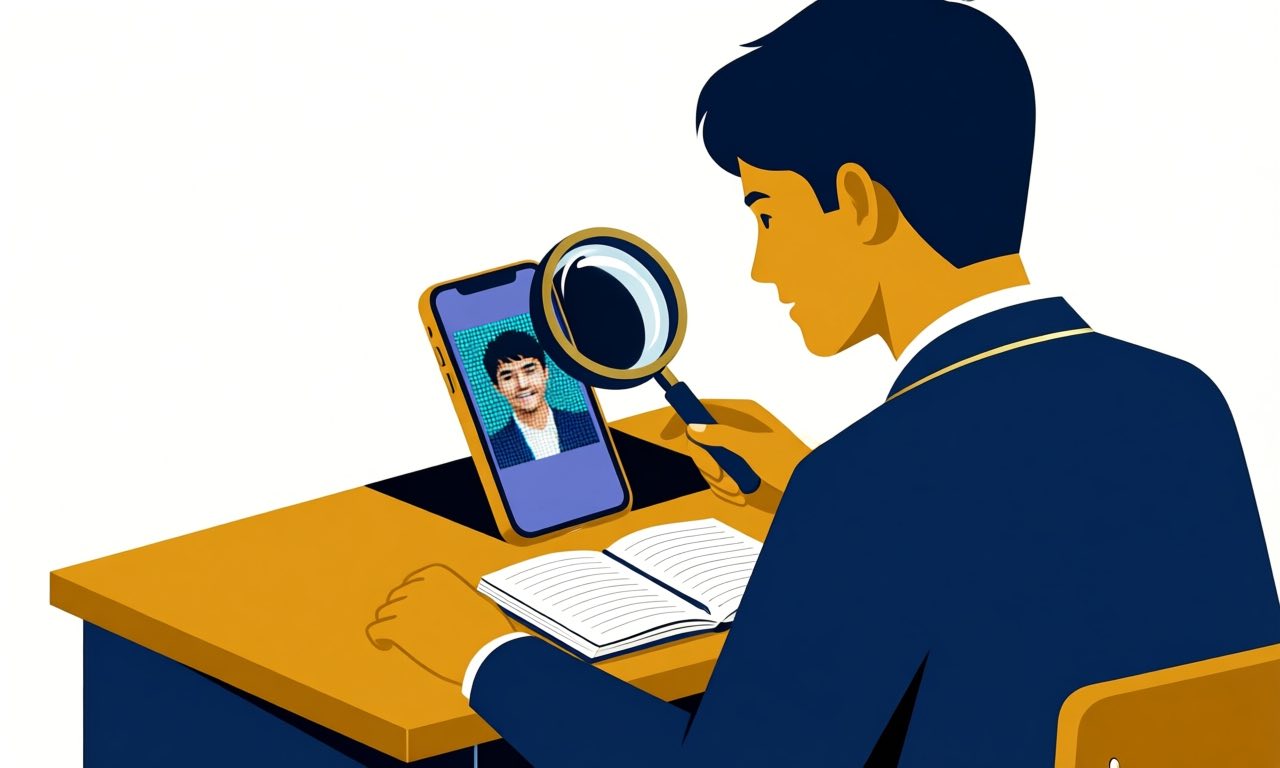
India’s national curriculum body has decided that the first thing its teenagers learn about AI should be how to distrust it. The National Council of Educational Research and Training (NCERT) has introduced a 20-hour module on computational thinking and artificial intelligence for Classes 9 to 12 — roughly ages 14 to 18 — that spends a full unit on deepfakes, AI errors and misinformation, and teaches students a five-step method for verifying AI-generated content before they share it. Free Press Journal reports it was developed by faculty from IIT Madras, IIT Jodhpur and NCERT itself, as Free Press Journal detailed, aligned with the National Education Policy 2020 and aimed at students with no prior AI knowledge.
🔍 THE BOTTOM LINE: Most countries still argue about whether AI belongs in classrooms at all. India has skipped the argument and written the syllabus — and the shape of the syllabus is telling. This is AI literacy as a defence skill, not a career skill: spotting deepfakes, protecting personal data, refusing to outsource thinking. For a New Zealand school system still without a national AI curriculum, the world’s most populous democracy has just shipped the reference implementation, and it did not wait for consensus.
What the module actually teaches
The five units map a specific philosophy of AI literacy, per EdexLive’s summary. Unit one introduces AI through things students already touch — predictive keyboards, music recommendations — and makes the point that pattern recognition lacks human context. Unit two has students train an image classifier and then deliberately break it, learning first-hand that training data quality determines system quality. Unit three — “When AI Gets It Wrong” — is the deepfake and misinformation unit, complete with the five-step verification method and the distinction between confident phrasing and correct content. Unit four covers data privacy and consent, naming India’s DPDP Act 2023 and warning students specifically not to feed Aadhaar numbers, PAN numbers, passwords, OTPs or personal documents into AI tools.
The fifth unit is the philosophical one: a “helper-stance” toward AI tools. Students learn to write and refine prompts, evaluate AI responses and correct its errors — while the module’s own Letter to the Students states, in Free Press Journal’s quote, that “this is not a module to be memorised. It is a set of habits to be practised.” The design assumption throughout is that students will meet AI whether or not school mentions it; the module’s job is to shape how they meet it.
The delivery design is the quiet innovation
The module’s most consequential detail may be its delivery options: schools can run activities on individual devices, shared devices, teacher-led demonstrations on one screen, or fully “unplugged” on paper. EdexLive reports NCERT frames the choice as ensuring “meaningful participation across diverse school contexts” — in practice, an admission that a 20-hour AI requirement cannot assume the infrastructure to teach it, and a design that lets under-resourced schools teach AI literacy without computers. That flexibility is what makes it a national standard rather than a metro-city pilot; the council has not yet specified a classroom implementation timeline, which is the honest gap between syllabus and reality.
The context: a regulation push on the same clock
The module does not exist in a vacuum of policy optimism — it is the education arm of a two-handed AI strategy India has been assembling through October. Union IT Minister Ashwini Vaishnaw announced in early October that MeitY will release a consultation paper on AI regulation “within a month”, covering AI safety, deepfakes, user harm and skilling, as MediaNama reported, with the minister framing India’s approach as “techno-legal” — technical tools and regulatory oversight working together, and industry carrying “the primary responsibility” for cybersecurity, safety and deepfake harms. Vaishnaw has been explicit that deepfakes are a central driver: “people believe them and the quality of deep fakes is increasing every day,” Mint quotes him as saying at the NDTV World Summit.
Read together, the two moves describe a system preparing its citizens on both ends at once: regulate the tools above, educate the users below with a module that names the specific harms — deepfakes, data extraction, dependency — that regulation is meant to address. It is a defensible strategy in a country where enforcement capacity is thin and median exposure to AI systems is already high.
The comparison New Zealand should actually run
For New Zealand the question is not whether NCERT’s five units are the perfect syllabus — they are an opening bid, no implementation timeline, principal quotes doing the work of a policy. The question is that India now has a syllabus, written down, with named developers and a delivery design that reaches schools without computers, while New Zealand schools hold their 76 percent no-policy rate alongside teachers who are self-taught — and our own reporting has tracked how that gap lands on students when schools improvise. NZ has strong pieces — the NZ AI strategy’s skills focus, a workforce still mostly learning AI on its own time — but no national classroom answer to the exact question NCERT just answered: what should a 15-year-old know about deepfakes, data leakage and dependency before they graduate?
The deepfake problem is not India’s alone. Australia took the eSafety route with a teen social media ban that has struggled, the UK is teaching media literacy with mixed results, and the US runs state-by-state patchwork bills. Nobody else has put “here is how a deepfake is constructed and here is your five-step verification drill” into national secondary syllabus at this scale. The comparative advantage India is building is not the module’s content — it is that 250 million students now share one reference point for what AI literacy means, which is precisely what an eventual international norm will be built from.
Sources: Free Press Journal, EdexLive, MediaNama, Mint