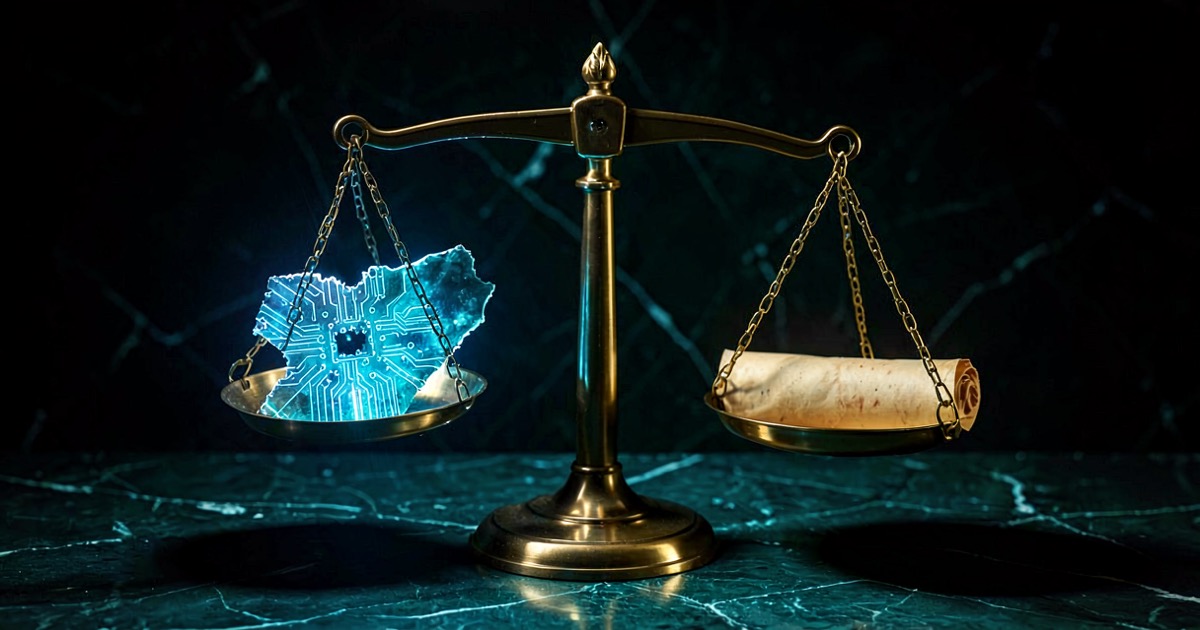
Japan’s Supreme Court has ruled that artificial intelligence cannot be listed as an inventor on patent applications, closing one of the last open doors in the global DABUS saga and settling — for Japan — a question that every major patent jurisdiction has now answered the same way: only humans invent.
🔍 THE BOTTOM LINE
The ruling makes Japan the latest in an unbroken chain of courts — the US Federal Circuit, the UK Supreme Court, the European Patent Office’s Board of Appeal, the Australian Federal Court, New Zealand’s High Court, and Switzerland’s Federal Administrative Court — to reject Stephen Thaler’s campaign to have his AI system DABUS recognised as a patent inventor. Only South Africa granted the patent, and it did so without substantive examination. The global wall is complete. But the ruling leaves untouched the harder question: when a human uses AI to generate something novel, who gets the patent — and does the AI’s contribution matter at all?
The Man Behind the Machine
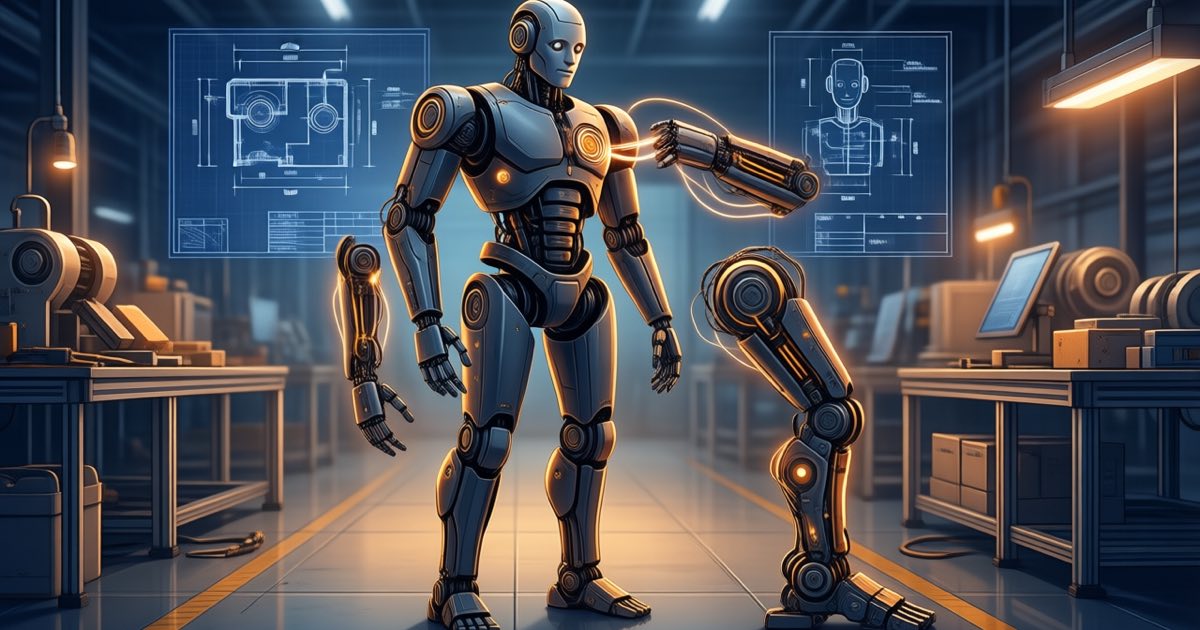
Stephen Thaler is a Missouri-based AI researcher who built a system he calls DABUS — Device for the Autonomous Bootstrapping of Unified Sentience. According to Thaler, DABUS independently conceived of two inventions: a food container with fractal geometry that allows rapid reheating, and a flashing emergency beacon. He filed patent applications in 17 jurisdictions naming DABUS, not himself, as the inventor.
The DABUS patent campaign became the world’s test case for AI inventorship. Thaler lost almost everywhere. The US Patent and Trademark Office ruled in 2020 that only natural persons can be inventors. The US Court of Appeals for the Federal Circuit affirmed that in August 2022. The UK Supreme Court dismissed Thaler’s final appeal in December 2023, holding that an “inventor” under the Patents Act 1977 must be a natural person. The European Patent Office’s Board of Appeal confirmed the same in December 2021.
In Japan, Thaler filed his application in 2020. The Patent Office ordered him to provide the name of a human inventor. He refused. The application was rejected. The Supreme Court has now upheld that rejection.
What the Court Actually Said
The Japan News / Yomiuri Shimbun reported the ruling, which centred on Japan’s Patent Act requirement that an inventor be a “natural person.” The court found that an AI system cannot exercise the creative judgment that patent law attributes to an inventor — it cannot hold rights, cannot be held accountable, and cannot meaningfully consent to a patent assignment.
This is the same reasoning applied across jurisdictions. The UK Supreme Court’s December 2023 judgment noted that the Patents Act 1977 was drafted with the assumption that an inventor is a person. The EPO’s Board of Appeal said the “ordinary meaning of the term inventor” requires legal capacity. Japan’s ruling is not an outlier — it is a confirmation.
The Switzerland Loophole
One jurisdiction offered a partial opening. In June 2025, the Swiss Federal Administrative Court ruled that while DABUS itself cannot be an inventor, Thaler could refile the application with himself listed as the inventor — on the basis that a human who recognises and files an AI-generated invention may be considered the actual deviser. The decision (B-2532/2024) can still be appealed to the Swiss Federal Supreme Court.
This is the thin end of a wedge that patent scholars have been watching. If a human can simply refile AI-generated work under their own name, the distinction between “AI as inventor” and “human who used AI as a tool” collapses — and patent offices have no mechanism to test which is which.
Why the HN Comments Got It Wrong
The Hacker News discussion (235 points, 112 comments) split between two camps. One argued this is obvious — AI can’t be accountable, so it can’t hold rights. The other warned that refusing AI inventorship makes AI-generated inventions effectively public domain, which could discourage disclosure and push AI innovation into trade secrecy.
Both miss the practical point. Patent offices don’t need to resolve the philosophy of machine creativity. They need to handle volume. As one commenter noted: “You could easily overwhelm any intellectual property bureau just by having your AI drown them in AI slop.” The USPTO already receives over 600,000 patent applications per year. If AI-generated inventions were patentable with AI as inventor, there is no mechanism to stop automated systems from filing thousands of applications per day. The bar isn’t philosophical — it’s operational.
NZ Angle
New Zealand ruled on the same DABUS application in 2022. The Intellectual Property Office of New Zealand (IPONZ) decided that DABUS could not be “an actual devisor of the invention” as required by the Patents Act 2013, and the High Court confirmed the decision in 2023. New Zealand’s position is identical to Japan’s and every other major jurisdiction’s: only natural persons can be inventors.
The practical implication for Kiwi inventors is that if you use AI tools — whether ChatGPT to draft a patent specification or a generative model to explore design variations — you must list yourself as the inventor. The patent is valid only if a human made the inventive contribution. The line between “AI assisted” and “AI invented” is not defined in statute, and IPONZ has not yet been forced to draw it.
What Happens Next
Thaler’s campaign is effectively over as a litigation strategy. He has lost in every major jurisdiction that conducts substantive patent examination. The only path forward for AI inventorship advocates is legislative — convincing a parliament to amend its patent act to include machines. No country is currently considering this.
The real battle has moved to a different question: not whether AI can be an inventor, but whether a human who uses AI extensively can still claim inventorship. The Swiss ruling cracked that door open. The USPTO issued guidance in 2024 saying that a human must make a “significant contribution” to each claim in a patent — but did not define what counts as significant when AI does most of the work. Japan’s ruling doesn’t address this either. The next DABUS-style test case will not be about whether AI can invent. It will be about whether a human who barely did anything can claim credit for what the machine produced.
❓ FAQ
Can I patent something I invented using AI tools? Yes, in all jurisdictions — as long as you list yourself (a human) as the inventor. The patent offices’ position is that AI is a tool, like a CAD program, and the human operating it is the inventor. The open question is how much human contribution is required.
What was DABUS trying to patent? Two items: a food container with fractal geometry for faster reheating, and a flashing emergency beacon. Stephen Thaler claimed DABUS conceived of both independently, without human direction.
Did any country grant the DABUS patent? South Africa. The Companies and Intellectual Property Commission (CIPC) accepted the patent in July 2021 — the first and only patent granted for an AI-generated invention. However, South Africa does not conduct substantive examination of patent applications, so the grant has limited precedential value.
What does this mean for AI-generated code or art? Patent law and copyright law are separate. This ruling is about patents (inventions). Copyright for AI-generated works faces similar barriers — the US Copyright Office has repeatedly refused copyright registration for works where AI is the sole author. But copyright law has more flexibility for “human-AI collaboration” than patent law does for inventorship.
Could a country change its law to allow AI inventors? Technically yes, through legislation. No country is currently considering it. The operational problem — patent offices being flooded with AI-generated filings — is the strongest practical argument against it, regardless of the philosophical merits.
🔍 THE BOTTOM LINE
Japan’s ruling closes the DABUS chapter: the global consensus is unanimous, and Stephen Thaler’s seven-year campaign to get AI recognised as an inventor has failed everywhere that matters. But the ruling doesn’t solve the real problem. As AI becomes a standard part of the invention process, patent offices will have to decide where “AI assistance” ends and “AI invention” begins — and none of them, including Japan, have answered that yet. The next court case won’t be about whether AI can invent. It will be about whether a human who typed one sentence into ChatGPT and got a novel circuit design can call themselves an inventor.
📰 Sources
- The Japan News / Yomiuri Shimbun — AI Can’t Be Listed as Inventor, Japan’s Top Court Rules
- Wikipedia — DABUS (Device for the Autonomous Bootstrapping of Unified Sentience)
- The Verge — US patent office rules AI cannot be a legal inventor
- NZ Herald — AI: You have to be a real person to be an inventor, court rules
- UK Supreme Court Judgment — Thaler v Comptroller-General of Patents [2023] UKSC 49
- Hacker News discussion — 235 points, 112 comments