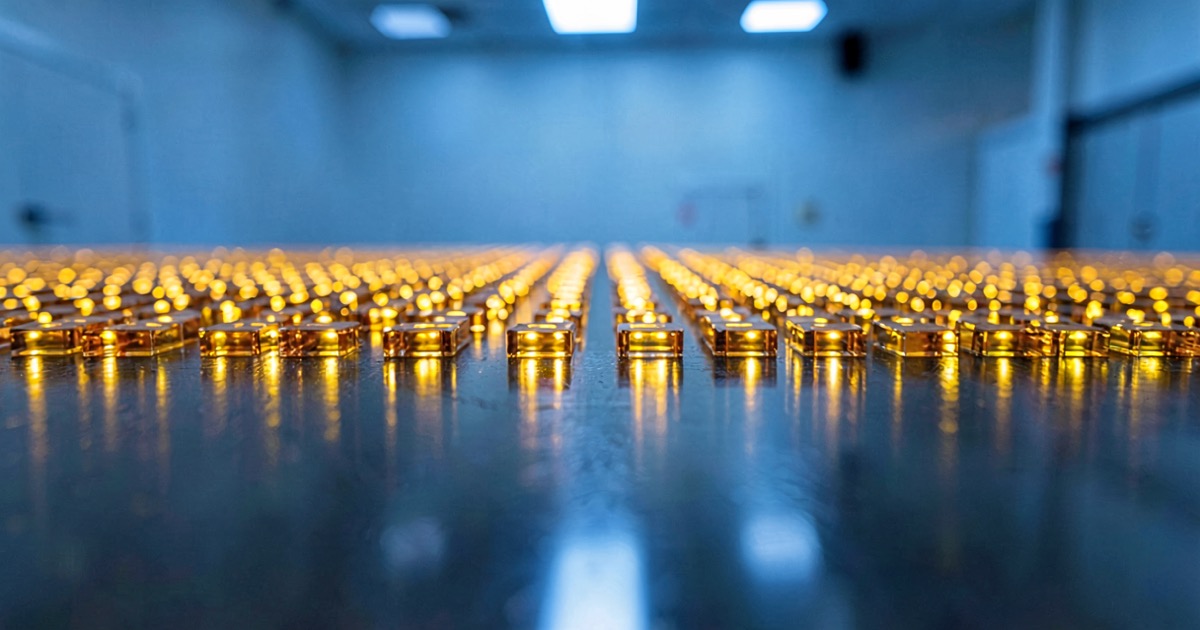
Germany’s Infineon opened a five-billion-euro ($5.7 billion) semiconductor plant in Dresden on Thursday — three months ahead of schedule and backed by one billion euros in EU Chips Act subsidies. It is the largest single investment in Infineon’s history, and a flagship for Europe’s push to double its share of global semiconductor production from 10 to 20 percent by 2030.
🔍 THE BOTTOM LINE
The “Smart Power Fab” is not a leading-edge fab — it makes power management chips, not the bleeding-edge GPUs that Nvidia designs. But power management chips are the unsung backbone of the AI economy: every data centre, every EV, every wind turbine and solar array needs them. Infineon’s Dresden plant is Europe’s bet that controlling the physical layer of the energy transition is as strategically important as controlling the compute layer of the AI transition. Chancellor Friedrich Merz called it “direct strategic significance for our digital sovereignty.”
What the Fab Actually Makes
The Dresden Smart Power Fab produces chips for intelligent power management — the semiconductor components that regulate and distribute electrical power in everything from electric vehicles to wind turbines, solar installations, and AI data centres. These are not the 2-nanometer chips that TSMC makes in Taiwan. They are mature-node chips on 200mm and 300mm wafers, manufactured at scale.
As Wolfgang Weber, head of the German electronics association ZVEI, told AFP via RFI: “The chip industry is a business driven by extreme economies of scale. The first chip is incredibly expensive because you have to build a factory first — an investment that can run into the billions of euros. Once production is up and running, unit costs drop sharply.”
The plant will run 24 hours a day, seven days a week, with employees working three shifts. The clean rooms are highly automated, with continuous air filtration and full contamination suits for all personnel.
Why Dresden — and Why “Silicon Saxony”
The plant is located in what Germans call “Silicon Saxony” — a semiconductor cluster in and around Dresden that traces its roots to chip investments by communist East Germany. The region now hosts roughly 2,500 companies in the microelectronics sector, nine universities, and a deep pool of trained engineers.
“One in three chips produced in Europe is made in Saxony,” Germany’s digital minister Karsten Wildberger noted at the opening ceremony. That statistic is more striking than the fab itself — it means a single German state produces a third of Europe’s entire semiconductor output. The Infineon investment deepens that concentration.
Dresden’s advantage is not cheap labour. It is accumulated expertise: decades of semiconductor manufacturing experience, a university pipeline, and the kind of industrial ecosystem where a fab’s suppliers and customers are in the same postcode. This is the same model that made Taiwan’s Hsinchu Science Park the centre of the global chip industry — just at a different scale and technology node.
The EU Chips Act Context
The Dresden fab received one billion euros in subsidies under the EU Chips Act, the bloc’s €43 billion initiative to double Europe’s global semiconductor market share from 10% to 20% by 2030. The Act was passed in 2023 after the pandemic-era chip shortage exposed how dependent Europe was on Asian supply chains.
Infineon CEO Jochen Hanebeck framed the opening in explicitly sovereignty-focused terms: “We all want to further strengthen Europe’s position as a semiconductor hub. And technological sovereignty does not begin with words, but with factories like this one.”
The framing matters. Europe’s sovereign AI push — which we’ve covered in stories on APAC’s sovereign AI race and Switzerland’s open sovereign model — has so far focused on compute, models, and regulation. The Dresden fab is the hardware layer of the same strategy: if you want sovereign AI, you need sovereign chips, and if you want sovereign chips, you need sovereign fabs.
The AI Demand Driver
Chancellor Merz, addressing the ceremony via video link from Berlin, explicitly connected the fab to AI demand: “Investment in data centres is breaking new records year on year. Because the foundations for the industries of the future are being laid today.”
This is the context that makes power management chips strategically important. AI data centres are not just compute-hungry — they are power-hungry. A single large AI training cluster can draw hundreds of megawatts, and the power conversion and distribution losses inside the data centre can account for 10-15% of total energy consumption. Better power management chips reduce those losses directly. Infineon’s Dresden fab is making the components that make AI data centres viable — not the GPUs, but the infrastructure that keeps them running.
The timing is deliberate. Infineon has moved away from being primarily an automotive supplier and is now targeting the AI investment boom. The Dresden fab is the physical expression of that pivot.
The Volatility Backdrop
The RFI/AFP report noted that the fab opening “comes amid significant volatility affecting AI-related stocks, driven by growing concerns over the difficulty of making these massive investments profitable.” This is the tension underlying every sovereign semiconductor story: the investments are enormous, the demand trajectory is steep but uncertain, and the payback period is measured in decades.
The SpaceX Terafab story we covered in May showed the same pattern at a different scale — $55 billion for a single Texas facility. The difference is that SpaceX’s bet is on leading-edge AI chips, while Infineon’s is on the power management layer. The latter is less glamorous but arguably more defensible: power management chips have broader markets, longer product lifecycles, and less exposure to the boom-bust cycle of frontier AI model training.
NZ Angle
New Zealand has no semiconductor manufacturing capacity and no plans to develop any. The EU Chips Act’s ambition to reach 20% of global production by 2030 is built on the kind of industrial policy that NZ has never attempted. But the Infineon opening is relevant to the NZ sovereign AI debate in one specific way: it shows that “sovereign AI” is not just about running models locally. It is about the entire supply chain — from the fab that makes the chips, to the data centre that houses them, to the model that runs on them. NZ’s sovereign AI blueprint doesn’t mention semiconductor supply chains at all. It doesn’t need to build fabs. But it does need to think about where its chips come from, and what happens if the supply narrows.
❓ FAQ
What kind of chips does the Dresden fab make? Power management chips — semiconductors that regulate and distribute electrical power in EVs, renewable energy installations, and AI data centres. These are mature-node chips, not the cutting-edge GPUs used for AI training.
How big is the investment? Five billion euros ($5.7 billion), making it the largest single investment in Infineon’s history. The EU Chips Act contributed one billion euros in subsidies.
Why was it built in Dresden? Dresden is the centre of “Silicon Saxony,” a semiconductor cluster with 2,500 companies, nine universities, and a legacy of chip manufacturing dating to East Germany. One in three chips produced in Europe is already made in Saxony.
Is this about AI? Indirectly but importantly. AI data centres are enormous power consumers, and power management chips are critical to their efficiency. Infineon explicitly pivoted from automotive to AI-driven demand. Chancellor Merz referenced record data centre investment at the opening.
Does this make Europe chip-independent? No. Europe still imports the vast majority of its advanced chips from TSMC in Taiwan. The Dresden fab addresses one layer of the supply chain — power management — but not the leading-edge logic chips that run AI models. The EU Chips Act targets 20% of global production by 2030, up from 10% today.
🔍 THE BOTTOM LINE
The Dresden megafab is Europe’s down payment on semiconductor sovereignty — not at the cutting edge, but at the infrastructure layer where power meets compute. It is the right bet: power management chips have broader markets, longer lifecycles, and less volatility than frontier AI accelerators. But one fab does not make a supply chain. The EU wants 20% of global chip production by 2030, and Infineon’s Dresden plant is one piece of a very large puzzle that includes TSMC’s planned ESMC fab in the same city, Intel’s Magdeburg project (now delayed), and a dozen smaller initiatives. The question is not whether Europe can build fabs — it clearly can, and ahead of schedule. The question is whether the demand will be there in 2030 to justify the bill. Infineon is betting it will.