Hadrian Automation, a four-year-old company based in Torrance, California, raised $1.37 billion in equity financing last week, reaching a valuation of $7.87 billion. The funding is aimed at building automated factories to produce US military, aerospace, and industrial systems — a direct response to China’s dominance in manufacturing capacity.
“Production is now the frontline of deterrence,” stated Hadrian founder and CEO Chris Power. “America’s ability to lead will depend on whether we can build, train, and scale faster.”
What Hadrian Actually Does
Hadrian operates highly automated factories that use process engineering, AI, machine learning, and robotics to produce precision parts and mission-critical systems. Its “factories-as-a-service” model lets defense and aerospace customers scale production across munitions, shipbuilding, and other high-priority programs without building their own facilities.
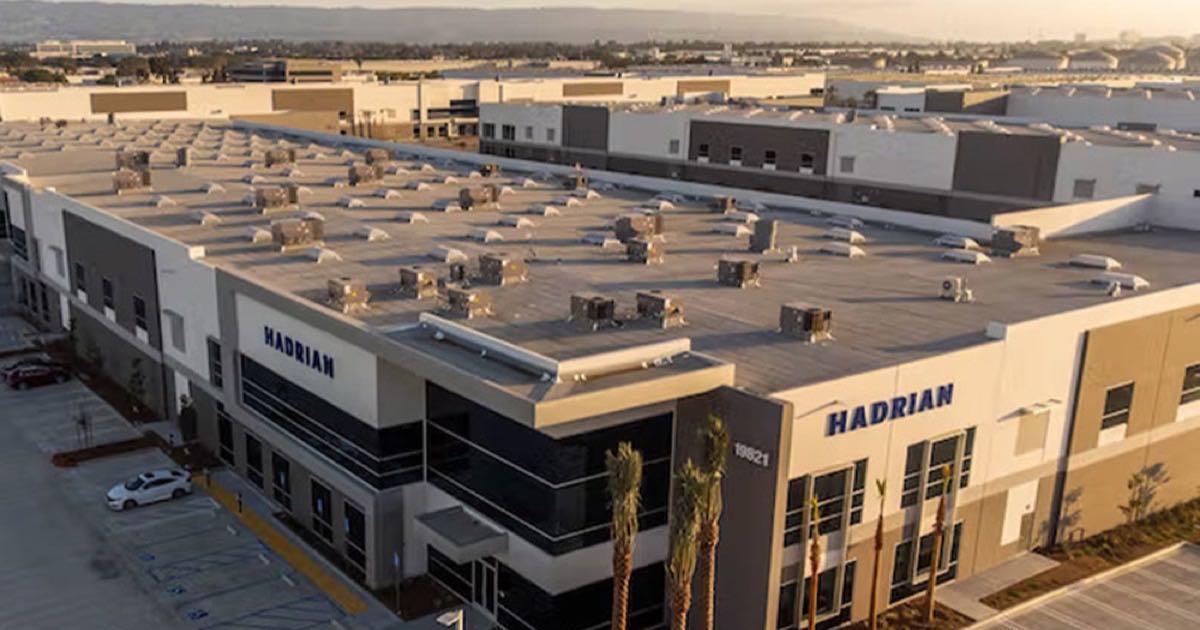
The company currently operates a 100,000-square-foot factory in Torrance and has opened additional sites in Mesa, Arizona, and Muscle Shoals, Alabama. Total capacity across four sites is just under 3 million square feet. Over the next year, Hadrian plans to expand into munitions and autonomous systems production for national security programs.
This is not humanoid robotics. Hadrian’s automation is industrial — CNC machines, robotic arms, and AI-driven process control rather than bipedal robots walking factory floors. But it addresses the same underlying question: who can manufacture at scale, and at what cost?
The Valuation Trajectory
Hadrian’s growth has been fast even by Silicon Valley standards. In January 2026, the company raised funding at a $1.6 billion valuation. Eight months later, this round brings it to $7.87 billion — a nearly fivefold increase. The investor roster reads like a who’s who of American institutional capital: WCM Investment Management, Valor Equity Partners, Baillie Gifford, T. Rowe Price, Andreessen Horowitz, Founders Fund, CapitalG, and JPMorgan’s Strategic Investment Group.
JPMorgan’s participation is notable. The bank’s Strategic Investment Group invested through its Security and Resiliency Initiative — a signal that financial institutions are treating manufacturing capacity as a national security asset.
The China Question
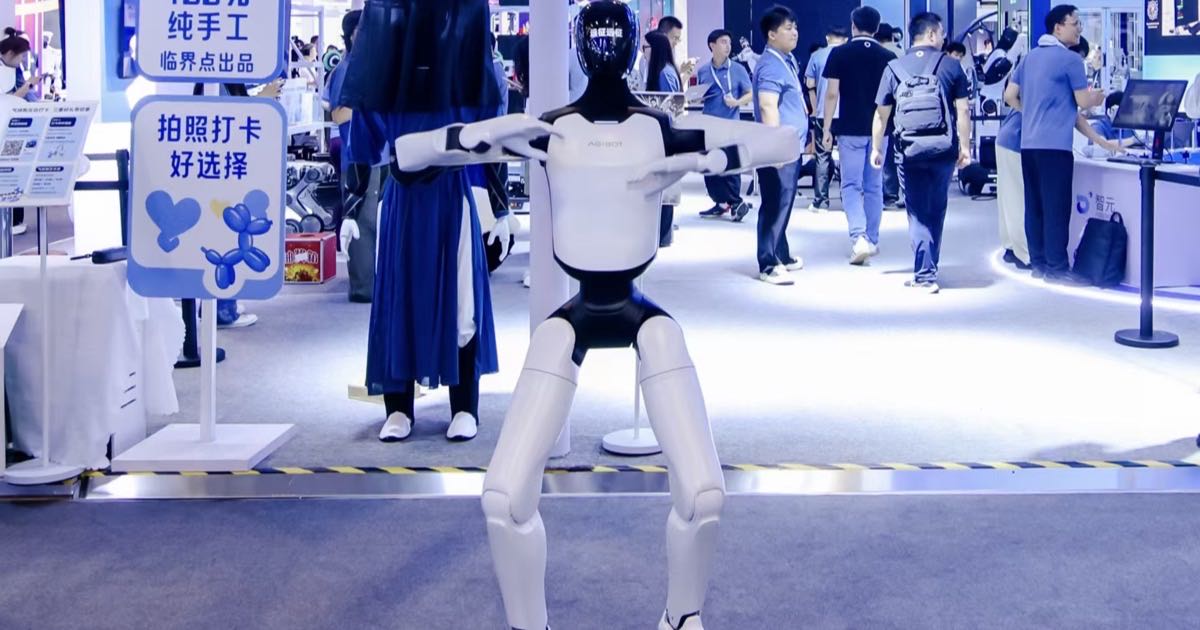
Hadrian’s stated goal is to “reindustrialize America and compete head to head with China’s industrial base.” This framing arrives at a moment when Chinese manufacturers supply 97 per cent of global humanoid robot shipments and dominate supply chains for precision components. The industrial capacity gap between the US and China is not abstract — it shows up in production lead times, component costs, and the ability to scale new technologies from prototype to deployment.
The FCC’s ban on Chinese humanoid robots is one response. Hadrian’s factory buildout is another — building domestic production capacity rather than restricting foreign imports. Whether automated factories can close the cost gap with China’s integrated manufacturing ecosystem remains an open question. Hadrian’s bet is that AI-driven process control can make up for the labor cost advantages and supply chain density that China has accumulated over decades.
NZ Angle
New Zealand faces a version of the same question Hadrian is answering, at a smaller scale. NZ manufacturers import most of their precision components and industrial automation equipment. If the US invests heavily in domestic manufacturing capacity — and restricts technology exports as part of that strategy — NZ’s access to advanced manufacturing tools could be affected.
The sovereign AI conversation in NZ has focused on software and compute infrastructure. Hadrian’s raise is a reminder that sovereignty extends to physical production. A country that cannot manufacture critical components depends on someone who can — and that dependency is the point Hadrian is raising $1.37 billion to exploit.
❓ FAQ
What does Hadrian manufacture? Precision parts and mission-critical systems for US defense, aerospace, and industrial customers. Its “factories-as-a-service” model lets customers scale production without building their own facilities.
How much has Hadrian raised total? The $1.37B round brings Hadrian’s valuation to $7.87B. The company raised a Series C roughly 12 months ago and received additional funding in January 2026 at a $1.6B valuation.
Is Hadrian building humanoid robots? No. Hadrian’s automation is industrial — robotic arms, CNC machines, and AI-driven process control. The company focuses on manufacturing capacity for defense and aerospace, not humanoid robotics.
How does this compare to Chinese manufacturing investment? China’s manufacturing advantage comes from integrated supply chains, component sourcing, and decades of accumulated production capacity. Hadrian’s approach — AI-powered automated factories — is an attempt to match that efficiency with technology rather than labor scale.
📰 Sources
- The Robot Report — Hadrian raises $1.37B to accelerate US manufacturing
- Hadrian — Company website
- Singularity.Kiwi — AgiBot overtakes Unitree: China’s 97% humanoid dominance
- Singularity.Kiwi — FCC bans Chinese humanoid robots
- Singularity.Kiwi — NZ sovereign AI: open models and renewable compute
— CJ Murden, editor of Singularity.Kiwi. Former digital technologies teacher, author of AI-focused books. Writing with a New Zealand focus.