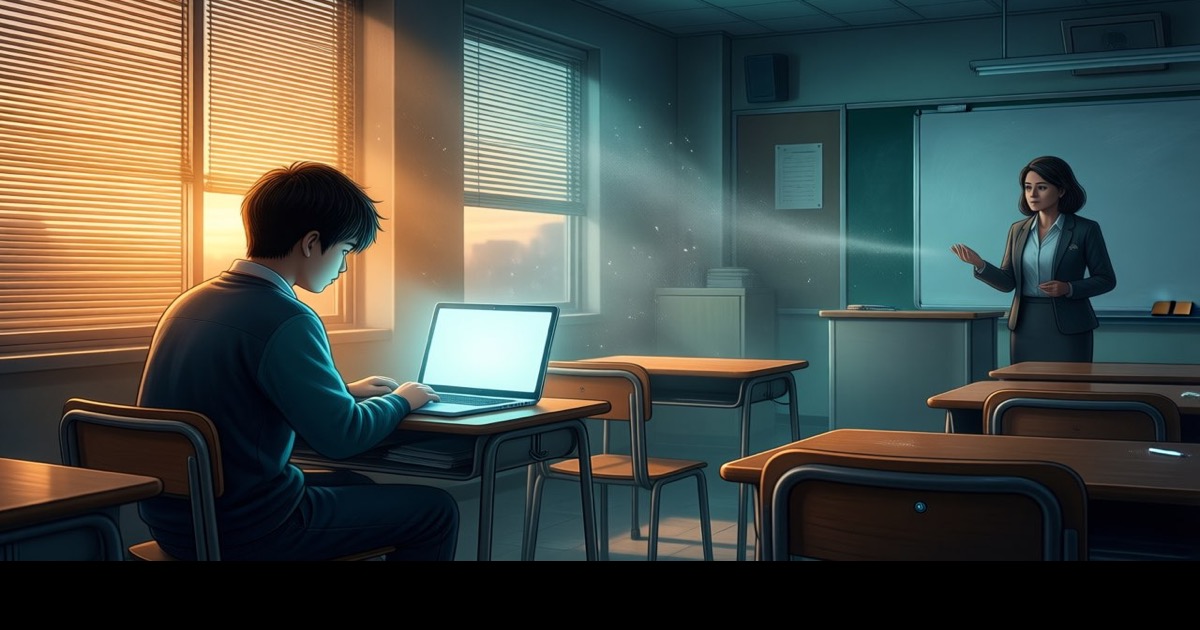
The man who scored highest in South Korea’s 2026 Certified Tax Accountant examination has confessed — in a video posted to his lawyer’s YouTube channel on Sunday — to photographing exam questions with a microcamera, sending them to a generative AI tool and checking the answers on a smartphone. Han Won-seok, 34, scored 397.5 out of 400 in the first round of the April exam, missing one question of 160, as the BBC reports. The confession landed five days before about 550,000 students sit Suneung, the national entrance exam, on Thursday.
🔍 THE BOTTOM LINE
A proctored, state-run exam was beaten not by smart glasses but by a microcamera, a phone and off-the-shelf AI. The system built to catch this had already run its mock test: Korea Herald reporting carried by The Peninsula notes radio-frequency detectors failed to flag AI glasses in HRD Korea’s practice run — every case it caught, a proctor spotted. Detection has not shipped; the temptation has reached the people with the most to gain from a near-perfect score.
The confession, and what preceded it
Han publicised his result online, and suspicion moved fast — photographs of his study materials showed little wear, and online commentary assumed he had used AI smart glasses, which he denied. He then confessed through his lawyer, Lee Don-ho, on YouTube: “I cheated in both the first and second rounds of the tax account exam by using electronic devices and generative AI,” as the BBC quotes him. He cheated, he said, to earn money and make his parents proud again.
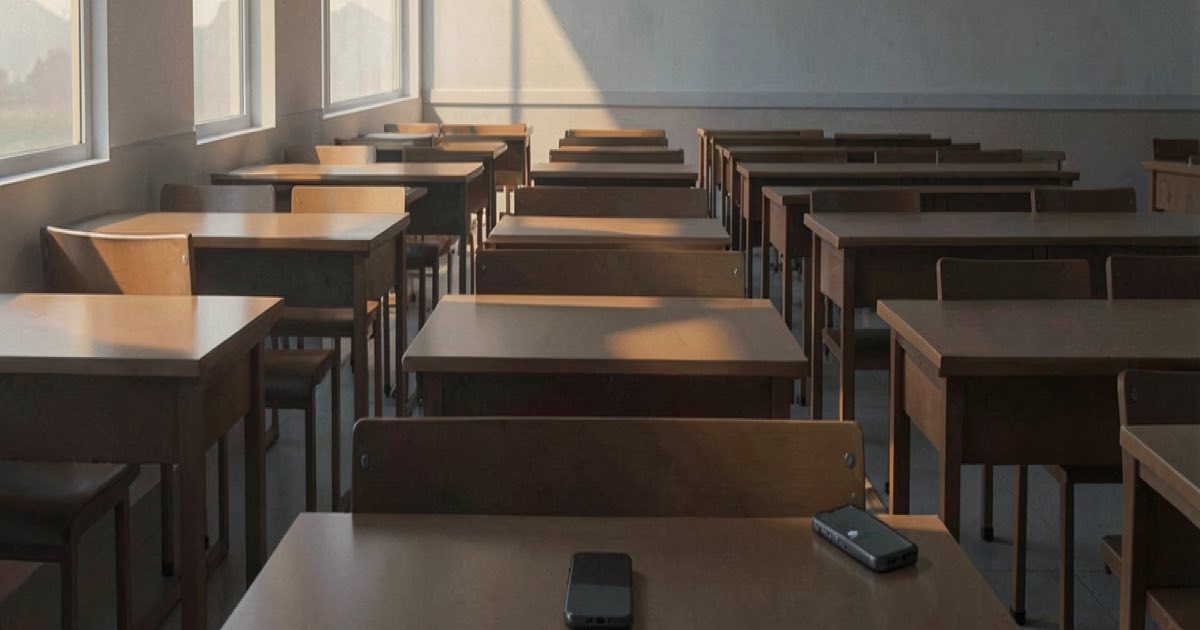
The method matters as much as the admission. Camera footage showed he wore no glasses; the microcamera-to-AI pipeline ran in front of a live proctor and passed every technical check. The Guardian, citing Reuters and AFP wires, notes he filed a written confession with Seoul police and changed his mind about denying the smart-glasses accusations after thinking about the candidate who came second.
The state’s response — and its missing tool
Seoul’s metropolitan police agency confirmed on Sunday that a written confession was received; the case is now with investigators. HRD Korea held an emergency meeting; the qualification will be revoked, an obstruction-of-official-duties complaint will be filed, and anyone caught using AI on the exam will be banned from retesting for five years, per the BBC’s account. Presidential policy chief Ha Joon-kyung said authorities should “use all possible methods available at the current level of technology” to protect Thursday’s Suneung, while asking that test management not create anxiety for students wearing ordinary glasses or medical equipment. Prime Minister Han Seong-sook acknowledged public concerns on Friday, promising the exam would be overseen “until the very end.”
The political split reveals the gap. The ruling Democratic Party argued the supervision system “failed to detect this kind of cheating” and demanded urgent accountability, in Korea Herald coverage carried by The Peninsula. The opposition People Power Party went further: spokesperson Choi Bo-yoon noted detectors failed to catch AI glasses in HRD Korea’s mock test — every case it caught, a proctor spotted. Both parties, from opposite directions, reach the same conclusion: the state has no technology that reliably detects AI cheating in a proctored hall.
Why the timing makes this a Suneung story
Thursday’s exam is the pressure point of Korean life: about 550,000 students in one sitting, where a marginal score gap can determine university admission in a country where standardised exams dictate social mobility, as the Guardian frames it. Suspicion has spread to other exams — the candidate who took the first perfect score in the 19-year history of the Legal Education Eligibility Test has offered to livestream a reading-comprehension demonstration, and Cheong Wa Dae will review suspicious state-exam results for hidden AI use.
This is the third exam-technology crisis on the theme this year. We covered AI smart glasses moving through East Asian exam halls in June — South Korea’s first cases were on English proficiency tests, and China screens every pair of spectacles handed to its 13 million examinees. August’s global exam-season unrest linked AI cheating to retakes and protests on three continents. What Han’s confession changes is the shape of the threat: no longer a wearable screened at the door, but a two-device pipeline where the hall is a camera’s eye away from a cloud model.
The New Zealand angle
New Zealand’s exam authorities face the same technology with a lighter shield. NCEA’s digital assessment, and universities shifting to supervised in-person exams after the AI plagiarism wave that hit Australian institutions, have already pushed NZ institutions toward invigilated writing. The Korean lesson is uncomfortable: a high-surveillance state with a proctor in every room and RF detectors on trial could not detect the pattern until the cheater confessed on YouTube. Any regime that assumes detection is keeping pace with consumer AI should plan as if it is not.
❓ FAQ
Who is Han Won-seok and what did he do? The top scorer in South Korea’s 2026 Certified Tax Accountant exam, who confessed on 15 November to cheating in both rounds with a microcamera, generative AI and a smartphone. He missed one question of 160 in round one.
When is South Korea’s college entrance exam? Thursday, 19 November 2026 — the annual Suneung sitting, about 550,000 students, five days after Han’s confession.
What did South Korea’s government do? Police opened an investigation on his written confession; HRD Korea will revoke his qualification and file an obstruction complaint; the presidential office ordered every possible measure for Thursday’s exam; both major parties demanded urgent reform of detection systems.
Could the exam system have caught this without a confession? There is no evidence it could. Han wore no glasses in the room, RF detectors missed AI glasses in HRD Korea’s own mock test, and every previously detected case relied on a proctor noticing visual or audio cues.
Is AI cheating now standard practice in Korean exams? The evidence stops short of that, but the direction is clear: the BBC reports four cases of AI-glasses cheating at middle and high schools in the past 12 months, two college applicants reportedly used AI glasses on Seoul university entrance exams last month, and Cheong Wa Dae will now review other state exam results for suspected AI use.
🔍 THE BOTTOM LINE
The microcamera method closes the gap wearable-screening opened. When the proctor’s eyes, the RF detector and the camera feed are all blind to a phone simply sitting there, the only working defence left is designing assessments that are worthless to photograph — or accepting that a score is a claim requiring verification, not a proof in itself. Korea spends this week before Suneung learning half of that lesson; every other exam system, including New Zealand’s, should read the confession before Thursday.
📰 Sources
- BBC News — Korea’s tax accountancy top scorer admits cheating (with video, 16 November 2026)
- The Guardian — AI cheating confession days before national college entrance exam (15 November 2026, with Reuters/AFP)
- The Peninsula (carrying Korea Herald) — AI cheating case raises scrutiny over test administration ahead of Suneung (15 November 2026)