Four current and former students at Kenwood High School in Baltimore County, Maryland have sued the company behind their school’s AI gun-detection system, along with county police, the school board, several officers and the school’s principal — thirteen months after an alert on a bag of Doritos ended with armed officers ordering students to the ground. As The Guardian reports, the complaint targets Omnilert, the vendor whose Gun Detect system scans school security footage and flagged the chips bag as a firearm, alongside the adults and agencies that responded to it.
What the complaint says happened
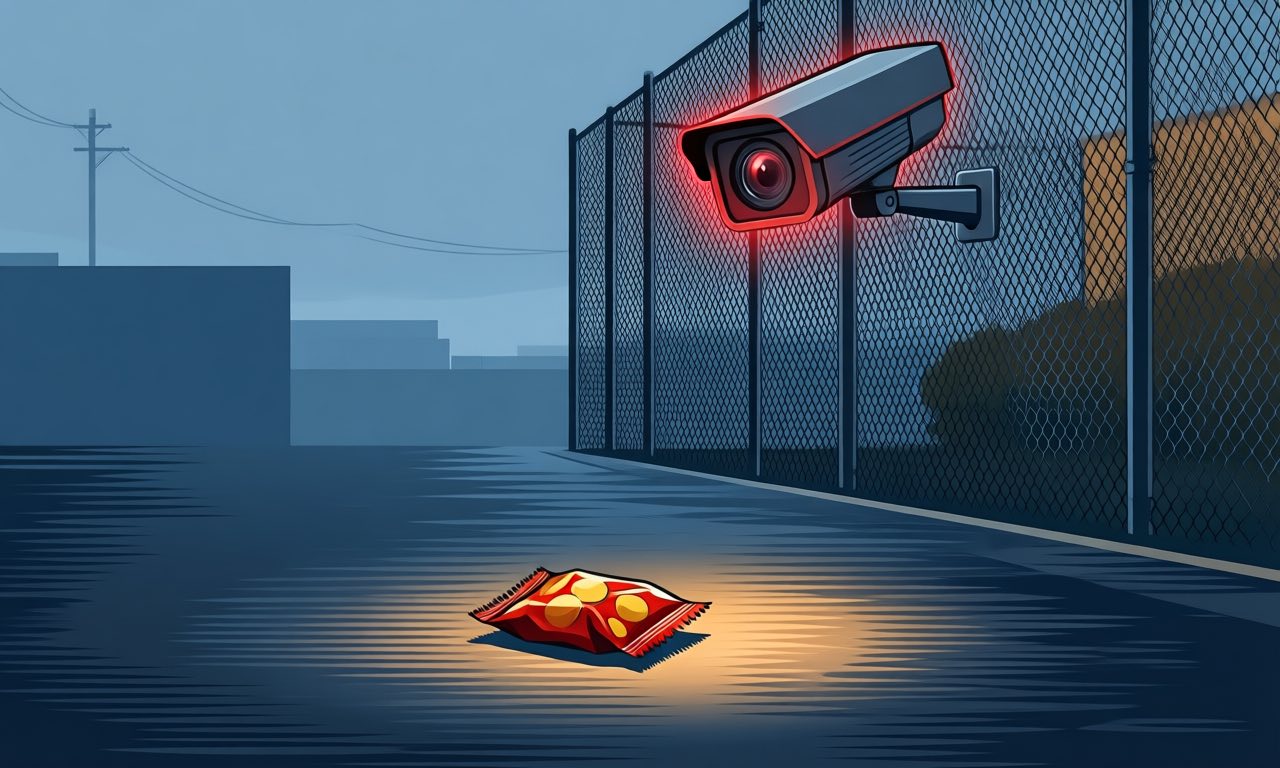
The incident itself is not new: it happened the evening of 20 October 2025, after football practice, when a coach handed out bags of Doritos to the team. According to the complaint, Taki Allen, a junior at the time, was waiting for a ride with classmates when six police cruisers arrived with lights and sirens; officers unholstered their weapons and ordered the students to their knees, handcuffed them, and searched them. One officer allegedly told the group as he left: “Hey, thanks for not running away, that would have been a real problem.”
The lawsuit frames the episode as a failure with two layers — machine and human. The machine layer: Omnilert’s system flagged the bag as a gun with 90 percent confidence, and per the complaint the alert “kept going even after school staff and local police reviewed the image and determined it was a mistake.” The human layer came after the review: the Baltimore County Public Schools safety department ruled the alert out quickly and, per protocol, did not call police. Instead, principal Kate Smith independently reported it to the school resource officer, who called the precinct — a chain confirmed in the principal’s own October 2025 letter to parents, quoted by the BBC, in which Smith says her safety team had “quickly reviewed and cancelled the initial alert after confirming there was no weapon” before she escalated it.
Baltimore County police told the BBC at the time that officers “responded appropriately and proportionally based on the information provided at the time,” and that Allen was handcuffed but not arrested.
The vendor’s claims are part of the case
A detail with consequences for the whole computer-vision security industry: the complaint contests Omnilert’s own marketing, which pitches the system as reliable and generating “fewer false positives.” The students’ lawyers at the Lawyers’ Committee for Civil Rights Under Law say the technology is prone to exactly the error here. “These students were failed not only by a technology that is prone to false alerts, but also by the very adults meant to keep them safe when we send them to school,” said Damon Hewitt, the committee’s president, per The Guardian.
The false-positive critique is not a fringe one. We have covered it on this site repeatedly: universities dropping AI detection tools over accuracy concerns, a Minnesota schools surveillance pilot drawing civil-liberties questions, and NYC’s attempt to grade school AI tools against a traffic-light framework before they reach students. What makes the Baltimore case notable is that the failure chain worked as vendors usually describe it — an alert raised, human reviewers engaged — and the harm happened anyway, one overridden protocol step downstream of the model.
Why this one matters beyond Maryland
First, the liability map is shifting. The defendants are not only the district and the police — the vendor is in the suit for what its model did, and how it was marketed. That matters for every procurement officer weighing these systems: the promise that a human always catches the machine is now, in this filing, a claim about process failure rather than model quality, and plaintiffs’ lawyers are naming both.
Second, the case is a data point on who gets asked to pay for the error. A 90 percent-confidence misfire that reviewers cleared could be argued over forever in a lab; a 16-year-old face-down on the asphalt cannot be argued over at all. The asymmetry is the story: the cost of a false positive falls on the person the model points at, and the cost of avoiding it falls on buyers who have to fund the boring parts — override discipline, alert-fatigue tuning, response protocols that cannot be deviated from by one well-meaning adult. New Zealand schools sit outside the American gun-detection market, but the procurement lesson travels: anyone buying computer-vision safety systems is buying a response chain, not a camera, and the chain is only as strong as its least optional step.
The students, per the complaint, were left “fearing for their lives,” and Allen told local outlet WMAR-2 days after the incident that he no longer waits outside after practice because he does not think it is “safe enough to go outside, especially eating a bag of chips or drinking something.” A year later, the answer to that fear is a courtroom asking who was responsible for it.