According to a Bloomberg investigation published on 18 September 2026, officials involved in an unreleased Pentagon review described a chain of preventable failures — flawed intelligence, outdated satellite imagery, and what the officials characterised as an overreliance on an AI targeting tool built by Palantir — behind one of the deadliest single strikes of the February air campaign against Iran.
Two Tomahawk missiles hit Shajarah Tayyebeh Elementary School in the southern Iranian town of Minab on the opening day of the war, killing more than 150 people, including at least 123 children. The UN’s Independent International Fact-Finding Mission on Iran had already concluded on 17 September that there were reasonable grounds to believe the strike was an indiscriminate attack that may constitute a war crime. What Bloomberg’s reporting adds is the account of where the kill chain broke — and the role AI played in it.
What the officials described
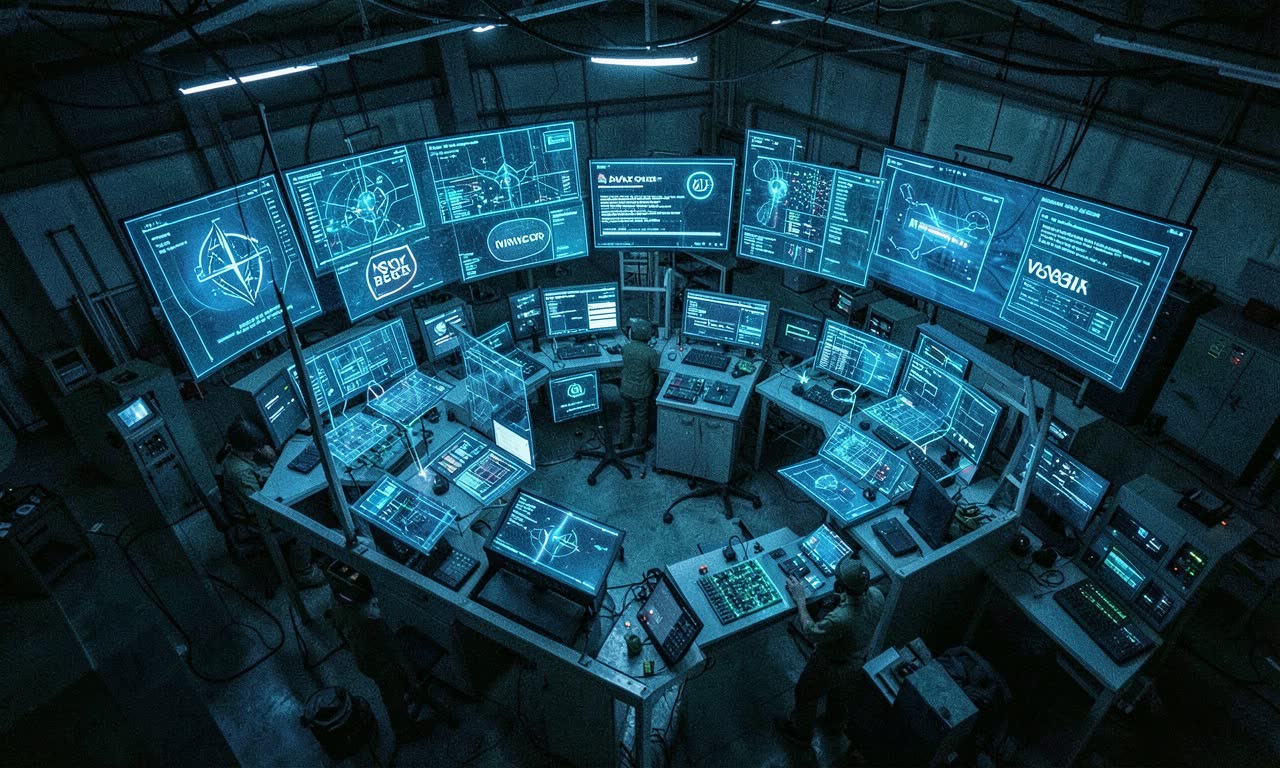
Citing officials familiar with the internal Pentagon review, Bloomberg reports that some personnel at US Central Command leaned heavily on the Maven Smart System — an AI-powered data integration and targeting platform developed by Palantir that the Defense Department has made a cornerstone of military operations over the past year. The Minab site, catalogued in US databases as an Islamic Revolutionary Guard Corps facility due to outdated data, was fed into Maven with other candidates and came out as a recommended day-one target. Target-list work that once took hours was condensed into minutes.
Officials said some users expected Maven to flag stale records or contradictions in the intelligence assembled for potential targets — though, as Bloomberg’s write-up notes, it is not clear why they thought the system would do that. Maven is a data integration and targeting platform; the officials’ expectation that it would double as a fact-checker for the intelligence fed into it was, on this account, the critical human error in the loop.
Palantir pushed back on any attribution of fault. A company spokesperson told Bloomberg that Palantir “is not responsible for the underlying data nor identifying intelligence deficiencies” and that there is no evidence its software was at fault. Two people familiar with Palantir’s Pentagon contracts told the outlet the government keeps primary responsibility for the quality of information fed into the system. After the strike, per Bloomberg, Palantir added features that re-review underlying intelligence to disqualify targets and flag inconsistencies — functionality the company says has already caught anomalies.
The other two failures were human and older
The AI overreliance was one of three failures in the kill chain described to Bloomberg. The others were bad intelligence and stale imagery. US databases had listed the Minab compound as a military site for years, but commercial satellite images told a different story: construction separating the school from the adjacent base appears to have been finished by 2017, and a 2018 image shows brightly painted walls, a soccer pitch, assembly rows and playground markings. One analyst reportedly spotted the changes as early as 2019 and logged remarks in a system that was not connected to the primary military intelligence database used for targeting. Those notes never reached the people who built the strike package.
The school had its own website and appeared on Google Maps. Human intelligence from southern Iran was thin. And the pace of the campaign itself compressed what checking there was: more than 1,000 Iranian targets were hit in the first 24 hours, and officials told Bloomberg that pace squeezed the time available for additional confirmations. Staffing on civilian harm mitigation teams across the Defense Department had fallen by roughly 90% in recent years, to fewer than 20 people overall; Centcom’s team shrank from ten to one. No member of those teams reviewed the Minab site before the missiles were up.
The UN finding the strike sits behind
A separate UN inquiry had already weighed in days earlier. The Independent International Fact-Finding Mission on Iran, in a report released on 17 September, found there were reasonable grounds to believe the United States committed the war crime of launching an indiscriminate attack — that it “failed in its obligation to do everything feasible to verify” the school was a military objective, and that the failure “went beyond mere negligence”, per the mission’s findings as reported by Time. Washington has not accepted the finding; a senior administration official told Bloomberg “the United States does not target civilians”, and the Pentagon declined to comment on the UN report. President Trump has previously said the strike was carried out by Iran, telling reporters in March: “based on what I’ve seen, that was done by Iran. We think it was done by Iran, because they’re very inaccurate, as you know, with their munitions.”
The Pentagon probe itself remains unreleased. Officials told Bloomberg the full report has been all but complete for months. A Pentagon spokesperson said the incident remains under investigation and declined further comment.
The pattern the Pentagon keeps meeting
This is the second US military AI failure reported in a week, and the two incidents rhyme in a specific way. As Gizmodo’s write-up of the Bloomberg investigation notes, a separate episode published on 18 September described a special operations analyst using a chatbot that hallucinated that a Chinese-flagged ship was carrying nuclear weapon components bound for Iran — the US military prepared to board the vessel before the error surfaced. In the Minab case the failure mode was different — not hallucination but automation bias, human operators trusting a system to catch problems it was never built to catch — but the pattern is the same: speed as the operating metric, the AI’s output treated as verification rather than input, and a verification layer that had been quietly defunded years earlier.
That is the structural question the unreleased Pentagon report will have to answer when it surfaces. Maven compresses target-list work from hours to minutes; the civilian-harm teams that might have caught the error had their staffing cut by 90%. The tool made the kill chain faster, and every point downstream of it was thinned. The allegation the Bloomberg sources make is not that Maven made a mistake — Palantir is right that the software integrates whatever data it is given — but that the humans in the loop treated its speed as a substitute for the verification the software does not do. Whether that is a Palantir problem, a doctrine problem, or a resourcing problem is precisely what the unreleased report is expected to settle.
❓ FAQ
What is the Maven Smart System?
An AI-powered data integration and targeting platform developed by Palantir, used by the Defense Department to accelerate intelligence analysis and targeting decisions. According to Bloomberg’s reporting, it has become a cornerstone of US military operations over the past year.
Did the AI cause the strike on the school?
The officials cited by Bloomberg attributed the strike to three compounding failures — flawed intelligence, outdated imagery, and overreliance on Maven. The Minab site entered the system as an IRGC facility because of outdated database entries, and came out as a recommended target. Palantir says there is no evidence its software was at fault and that responsibility for data quality sits with the government. The Pentagon says the matter is still under investigation.
What did the UN find?
The UN’s Independent International Fact-Finding Mission on Iran reported on 17 September 2026 that there were reasonable grounds to believe the US committed the war crime of launching an indiscriminate attack, citing failures to verify the target. The US has not accepted the finding.
Has the Pentagon’s own report been published?
No. Officials told Bloomberg it has been all but complete for months; the Pentagon says the incident remains under investigation and declined further comment.
📰 Sources
- Bloomberg — Inside the US ‘Kill Chain’ That Destroyed an Iranian School (18 September 2026)
- Gizmodo — Pentagon investigators say overreliance on Palantir AI tech contributed to U.S. strike (20 September 2026)
- Anadolu Agency — US strike on Iranian school stemmed from stale intelligence, AI overreliance: Report (19 September 2026)
- Time — The U.S. May Have Committed War Crimes in Iran Strikes, U.N. Finds (18 September 2026)