A Taiwanese analyst writing as Leonard (@Leoskie_L) pulled 117,000 views over the weekend with a thread that does something rare in the Terafab discourse: it ignores the question everyone is arguing about — will Musk steal TSMC’s lunch? — and grades the question that actually pays the bills this decade. His argument, delivered through a bento-shop analogy that has travelled across Taiwanese tech circles: Musk says he visited fabs at Intel, Samsung and TSMC and saw almost no custom equipment — the machines all come from the same few vendors. Like a bento shop where every store in the country buys its stoves and fridges from the same three suppliers. Whoever opens the new shop, the stove sellers get paid first. We ran the thread’s claims against the primary record. The framing holds up remarkably well — and one of its most colourful details checked out completely.
🔍 THE BOTTOM LINE
The Terafab story everyone is telling — Musk versus TSMC, a challenger to Asian foundry dominance — is a story about 2029. The story that pays between now and then is construction and equipment: phase one is $16.8 billion of spending before a single wafer ships in 2028, on a site that will consume $119 billion across all phases, powered by its own gas turbines and Tesla batteries because the grid cannot carry the load. Musk has now settled the ownership question — Tesla and SpaceX build and run the fab, with Intel’s 14A process inside and TSMC, at most, subleasing space — which means the foundry-competition question is deferred and the equipment-vendor question is opened. The Taiwanese analyst’s supplier map is directionally right, with one correction: the strongest confirmations so far sit with Intel (partner, process owner) and the equipment majors, while nothing has been signed with any vendor in public.
The thread, translated
Leonard’s post (in Traditional Chinese, aimed at Taiwan’s investor crowd) makes three factual claims worth grading. First: Musk, touring fabs at Intel, Samsung and TSMC, observed that “there’s not a ton of customized equipment here” — the machines come from the same small set of vendors worldwide. We pulled the video; the clip is genuine Musk footage with Traditional Chinese subtitles burned in (including the on-screen line “I had no idea how to make cars” for the audience), consistent with his October commentary around the October 7 TSMC announcement. The claim is a version of what he has said repeatedly about Terafab vertically integrating logic, memory, packaging and testing under one roof.
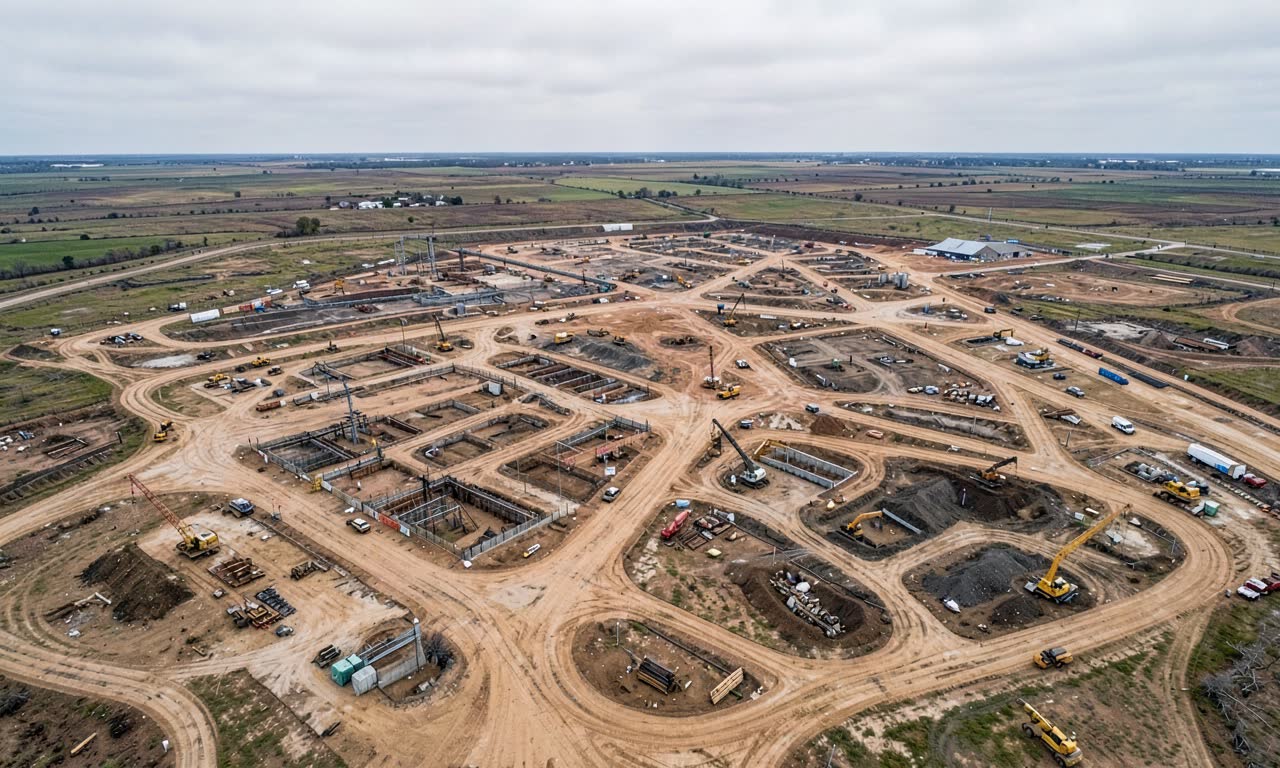
Second claim: Terafab Texas is a $16.8 billion first phase, mass production in 2028, and the first money flows to cleanroom contractors and equipment vendors — not from winning orders away from TSMC. That matches the project’s confirmed facts: Grimes County, Texas, on the site of the former Gibbons Creek coal plant, 6,166 acres, announced August 6 with an initial $16.8 billion and at least 3,000 permanent jobs, with full buildout estimated at up to $119 billion. Wikipedia’s summary of the venture tracks the same arc: announced March 21 in Austin — “We either build the Terafab, or we don’t have the chips” — Intel joined April 7 with a design-fabricate-package remit, and Musk confirmed in April that the full-scale Terafab runs on Intel’s 14A process, which he called not-yet-complete but “fairly mature or ready for prime time” by the time Terafab hits volume.
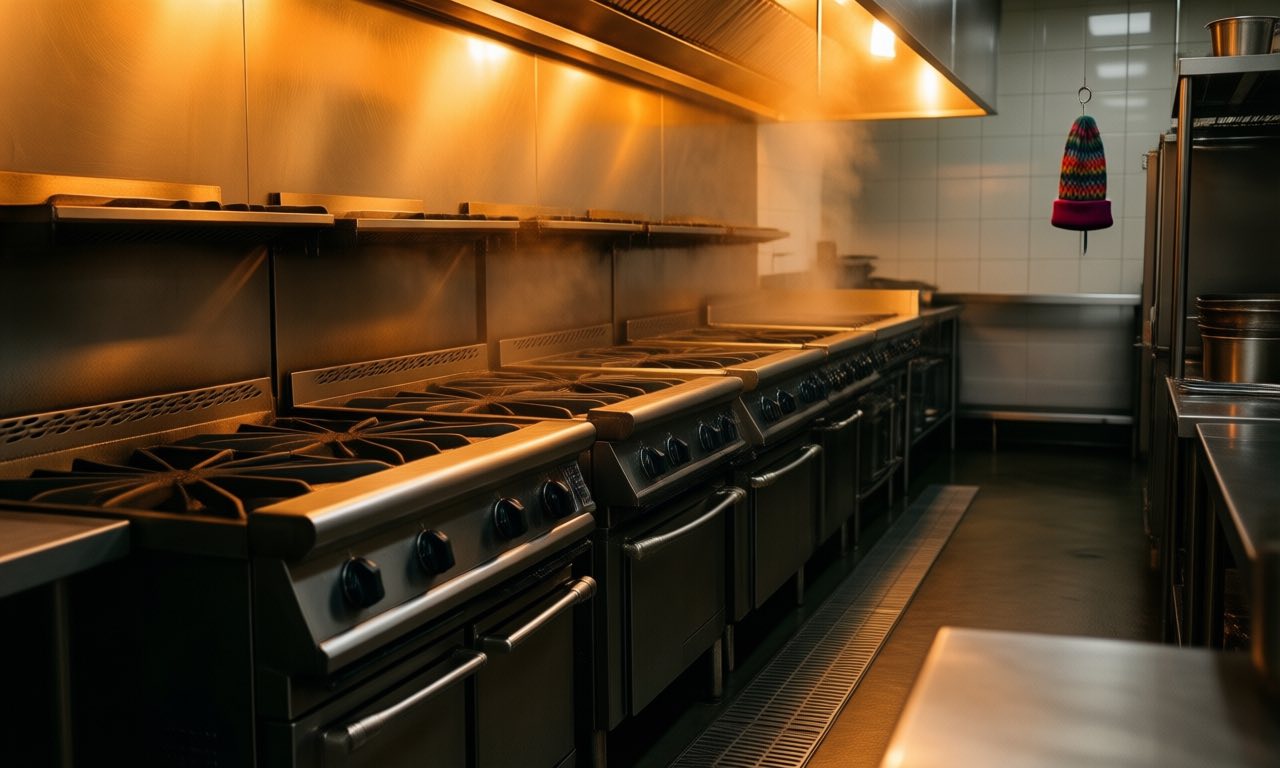
Third claim — the one that changes how a NZ reader should read the story: the kitchen metaphor. Anyone can study the menu (chip design); only a few firms on Earth sell the stoves (lithography, deposition, etch, metrology) and build the kitchen (the cleanroom). New entrants do not threaten the incumbent chefs; they are new customers of the incumbent kitchen-fitters.
What checks out, what is inference, and what is wrong
Leonard flags his own evidence tiers, which is more than most viral finance threads do. The well-sourced layer: Bloomberg reported in April (as he cites) that Musk’s team approached Applied Materials, Lam Research and Tokyo Electron for quotes and lead times, willing to pay premiums for priority shipment — and Applied Materials’ reported Terafab involvement has since been reported. The plausible-inference layer, clearly labelled as his own reasoning: ASML (no 2nm-class fab without EUV — and our own June coverage caught ASML’s CEO calling Terafab an “upside opportunity” the company was actively tracking); KLA, Onto, Advantest and Teradyne for the yield-ramp metrology burden; Taiwan’s facility-engineering trio (帆宣, 漢唐 and 亞翔 — cleanroom and plant-services engineering firms listed in Taiwanese media coverage but, as the thread discloses, absent from confirmed order books).
Where the thread is strongest is the power layer, which it gets right in detail: Terafab will run on its own natural gas plants and “very large battery arrays” — no grid connection, no Tesla solar, on the bones of a coal plant. And Musk did personally buy a gas-turbine company: APR Energy, roughly $1 billion, in July, reported at the time as power for Grok’s datacentres — the same turbines a 1-TW-per-year fab complex will consume. The thread’s conclusion that Delta Electronics and Lite-On lose that business follows; its guess that Tesla Megapack supplies most storage is consistent with Electrek’s reporting.
One correction to the thread’s framing matters for the foundry argument: Leonard’s frame assumes “晶片誰做還早” — who makes the chips is a question for later. After October 7, it is less open than that: Musk has declared “we will build and run the fab… ZERO doubt,” with Intel confirmed as the manufacturing partner running 14A and TSMC explicitly limited to a possible sublease. Industry analysts like Yole Group’s Adrien Sánchez read the structure as “an Intel fab expansion with Tesla, SpaceX and xAI as anchor customers.” The chips question, in other words, has a first answer: Intel’s process, Intel’s yield engineers, Musk’s money and building. Intel foundry remains the weak link — its foundry lost $2.1 billion in Q2 on just $293 million of external revenue against TSMC’s $35 billion quarterly external sales — which is precisely why the equipment-and-construction layer, where capabilities are proven, is where near-term certainty lives.
Why the equipment layer is the tell
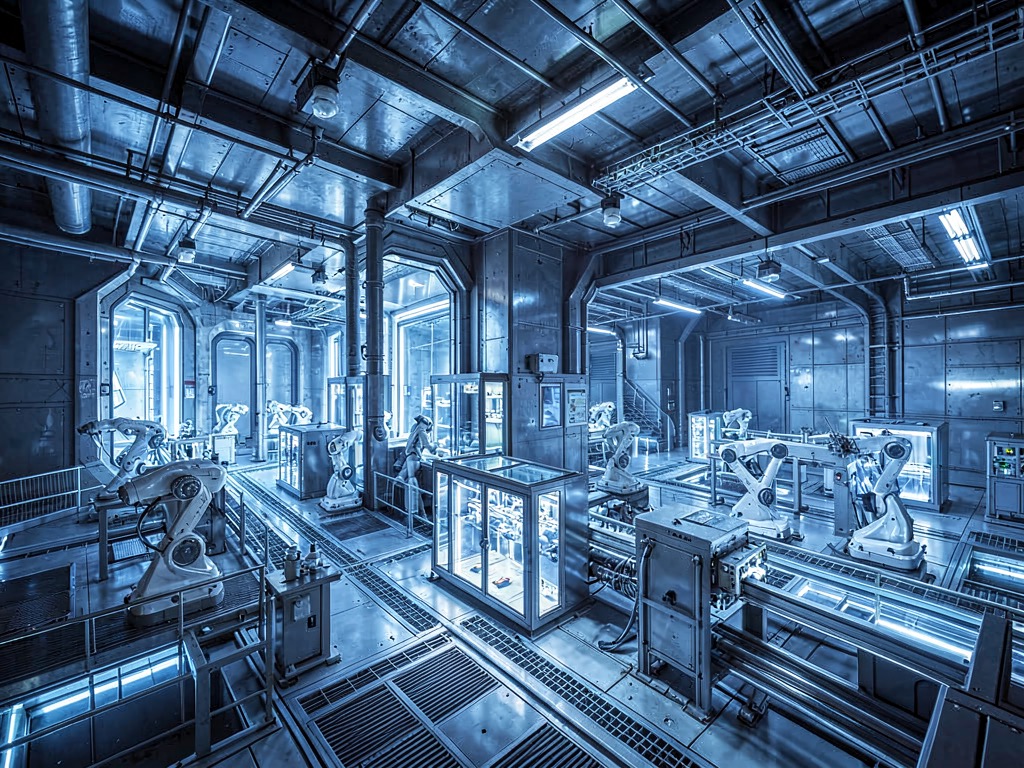
The semi-equipment market is the AI buildout’s quiet monopolies. ASML is the only EUV lithography supplier on Earth — we covered its raised 2026 forecast of €45 billion and plans for 30% more EUV machines in 2027 — and its High-NA fleet (circa US$380 million per twin-scan unit) is booked years out by Samsung, SK hynix and the leading logic makers. Applied Materials, Lam Research and Tokyo Electron dominate deposition and etch; KLA owns process control. A new fab does not renegotiate this supply chain; it queues in it. Length of queue is why the Taiwanese analyst’s EUV observation — lead times stretching toward 2028 — lands harder than any foundry-rivalry narrative: Terafab’s chip output date is effectively set in Veldhoven, not Texas.
This is also why the kitchen framing is honest where most Terafab coverage is not. The project’s real risks — Intel’s 14A maturity, a SpaceX IPO filing that calls Terafab “a general framework” with no binding commitments, county-tax backlash, a $38 billion gap between first-phase and full-buildout figures — all live in the 2027–2029 window. The revenue story for the supply chain lives now. For New Zealand investors and tech workers reading the thread: the lesson generalises past Texas. When a hyperscale project is announced, audit who gets paid before the flagship product exists — the equipment makers, the power builders, the construction engineers. The menu gets the headlines; the ovens get the cash.
❓ FAQ
What is Terafab, in one paragraph? A joint Tesla–SpaceX (with xAI and Intel as partners) semiconductor complex in Grimes County, Texas, announced March 2026: up to US$119 billion across all phases, $16.8 billion confirmed for phase one, targeting over one terawatt of AI compute per year by vertically integrating logic, memory, advanced packaging and testing on one site, running Intel’s 14A process, with production targeted from 2028.
Is Musk really trying to replace TSMC? No — and he has said so bluntly. On October 7 he wrote that Tesla and SpaceX “will build and run the fab… ZERO doubt,” that TSMC might “sublease part of the Terafab… but nothing more than that,” and Intel’s CEO simultaneously confirmed Intel remains the manufacturing partner. TSMC’s involvement, if it happens, is as a tenant, not an operator.
Is the “no custom equipment” claim true? Effectively yes, with nuance. Musk’s clip (verified) says fabs he toured carry little custom equipment — machines come from the same small vendor set. That matches the industry’s structure: a handful of firms (ASML, Applied Materials, Lam Research, Tokyo Electron, KLA) supply the critical tools to every advanced fab on Earth. The April Bloomberg report of Musk’s team shopping for equipment with premium-priority offers, and Applied Materials’ subsequently reported Terafab involvement, support the vendor thesis.
Who gets paid first? Cleanroom and facility engineering contractors, then the equipment majors, then their suppliers. Chip-level revenue — and any challenge to TSMC — belongs to 2028 and beyond. The Taiwanese thread’s tiered list (confirmed vs reported vs inferred) is a fair map, though as it honestly discloses, no vendor has publicly confirmed a Terafab order as of October 12.
What about power? Did Musk really buy a turbine company? Yes — APR Energy, roughly US$1 billion, personal purchase in July 2026, followed by Terafab’s confirmation that the site will run self-generated gas power plus large battery arrays rather than grid or Tesla solar. The thread’s power-supplier conclusion (Taiwanese PSU vendors need not apply) follows from the project’s own disclosures.
🔍 THE BOTTOM LINE
The most useful thing about the bento-shop thread is that it prices Terafab correctly. The foundry-war frame asks who wins in 2029 and answers with hopes. The kitchen-first frame asks who gets paid in 2026 and 2027, and the answer is boring, verifiable and profitable: the firms that sell stoves and install kitchens — the same vendors every fab on Earth already queues behind, from ASML’s EUV backlog to Applied Materials’ already-reported Terafab involvement. The thread’s one blind spot is that it still frames Intel as a question, when Musk and Intel’s CEO have since closed it: this is an Intel-process fab wearing a Musk hat, with TSMC offered a sublease as a courtesy. Watch the equipment orders, not the chip rivalry — the stove sellers tell you when the kitchen is real.
📰 Sources
- X (Leonard @Leoskie_L thread, 451 likes / 117K views, with Musk clip)
- Reuters / Bloomberg via TIKR (Intel stays in Terafab; Musk “ZERO doubt” post, 7 Oct)
- TechTimes (Musk ends Terafab uncertainty: Intel runs fab, TSMC limited to sublease, 7 Oct)
- Quartz (Tesla and SpaceX to invest $16.8B in Terafab, 6 Aug)
- Electrek (Terafab gas power, 10 Aug; Musk buys APR Energy, 14 Jul)
- Wikipedia (Terafab, compilated project history)
- singularity.kiwi archive (ASML CEO on Terafab, June; ASML Q2 2026 forecast)