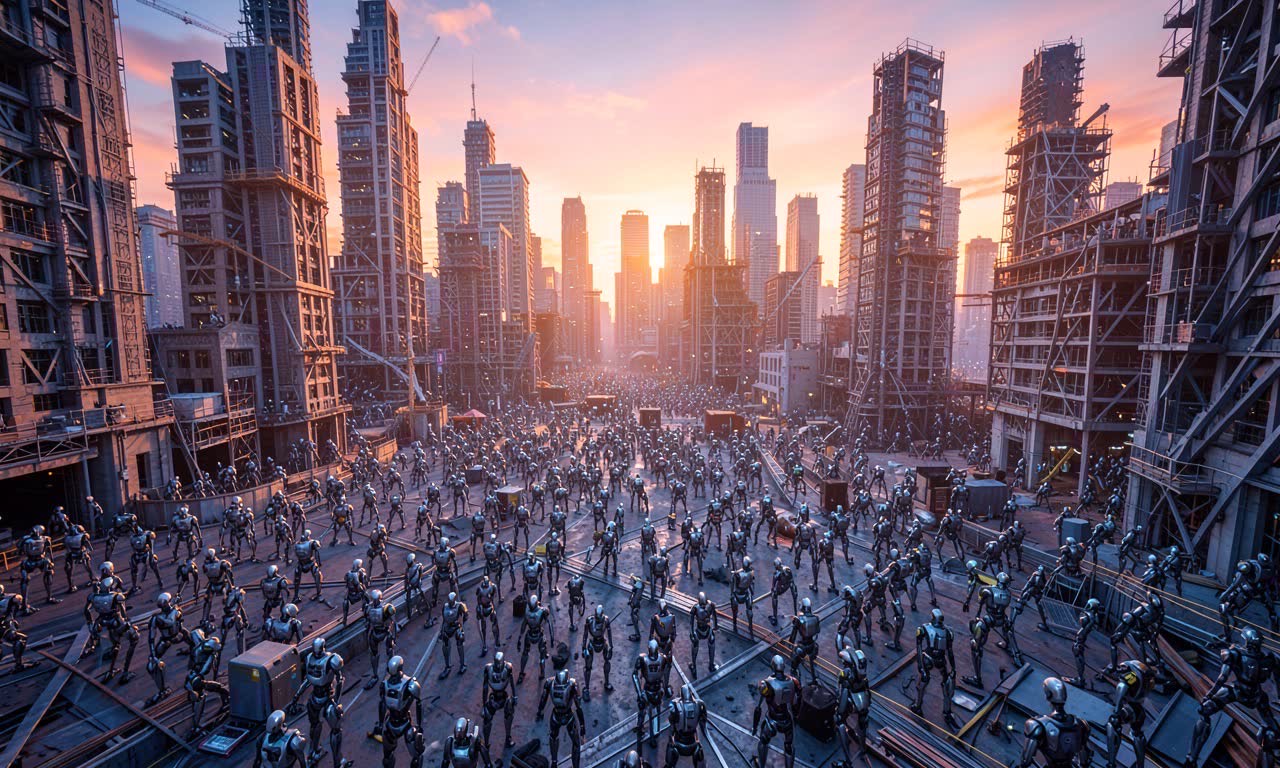
David Holz — founder of Midjourney, formerly of NASA and Leap Motion — posted a thought experiment that deserves more than a retweet: five million humanoid robots working around the clock could rebuild Manhattan in roughly six months. Then he scaled it up. Ten billion by 2045. Then he asked you to imagine the year 2100.
The math is rough. The direction is not.
🔍 THE BOTTOM LINE
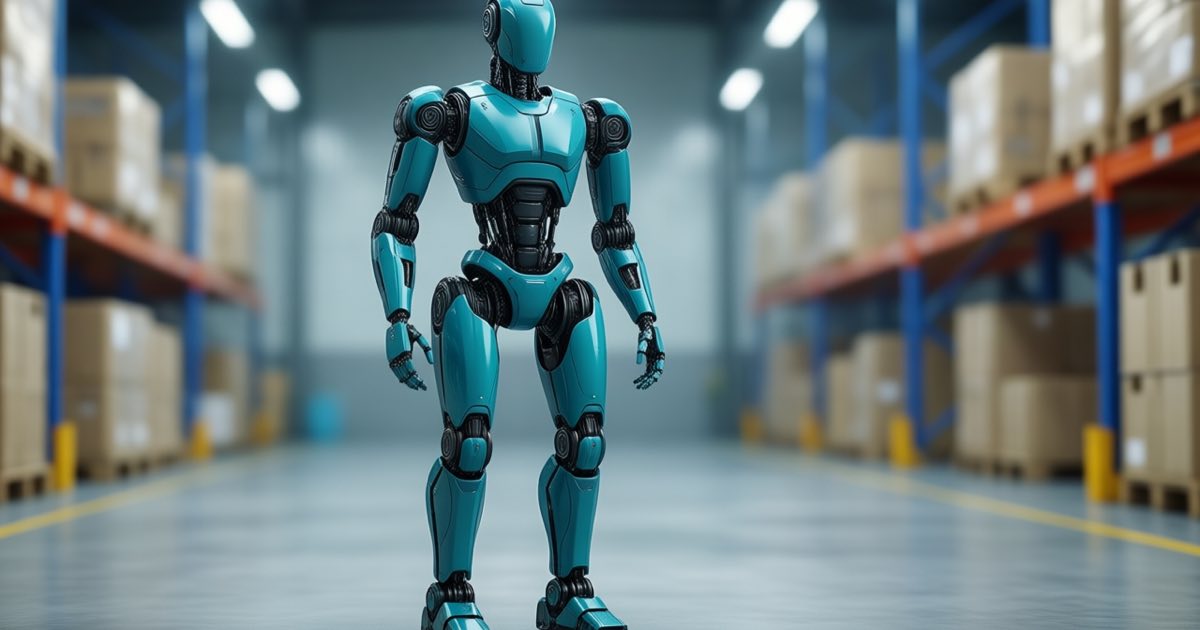
We are entering the phase where humanoid robot production curves stop being theoretical. Tesla is targeting one million Optimus units annually. China’s RobotEra has already deployed 1,000 humanoids commercially at 85% human efficiency in logistics. Figure AI, Agility Robotics, and Unitree are all scaling. The question isn’t whether we’ll hit millions of humanoids. It’s what happens when we do.
The Manhattan Math
Holz’s post on X doesn’t show his work, but the back-of-envelope is approachable. Manhattan’s built environment — roughly 1.6 million buildings, 100+ skyscrapers, 400 years of incremental construction — took millions of human workers centuries. A humanoid robot works 24/7 without breaks, fatigue, or shifts. Five million robots working continuously would have the labor equivalent of roughly 15-20 million human workers (accounting for 8-hour shifts, weekends, fatigue, and inefficiency).
That’s a labor force larger than the entire construction workforce of the United States, concentrated on a single project, never sleeping. Six months is plausible. It might be conservative.
But Manhattan is the easy case. It’s a fixed geography, well-understood engineering, and a known blueprint. The harder question is what happens at scale.
The Production Curve
To get to 5 million humanoid robots, you need production capacity that doesn’t exist yet. Here’s where we are:
- Tesla has deployed over 1,000 Optimus Gen 3 robots in its own factories and targets 1 million units annually.
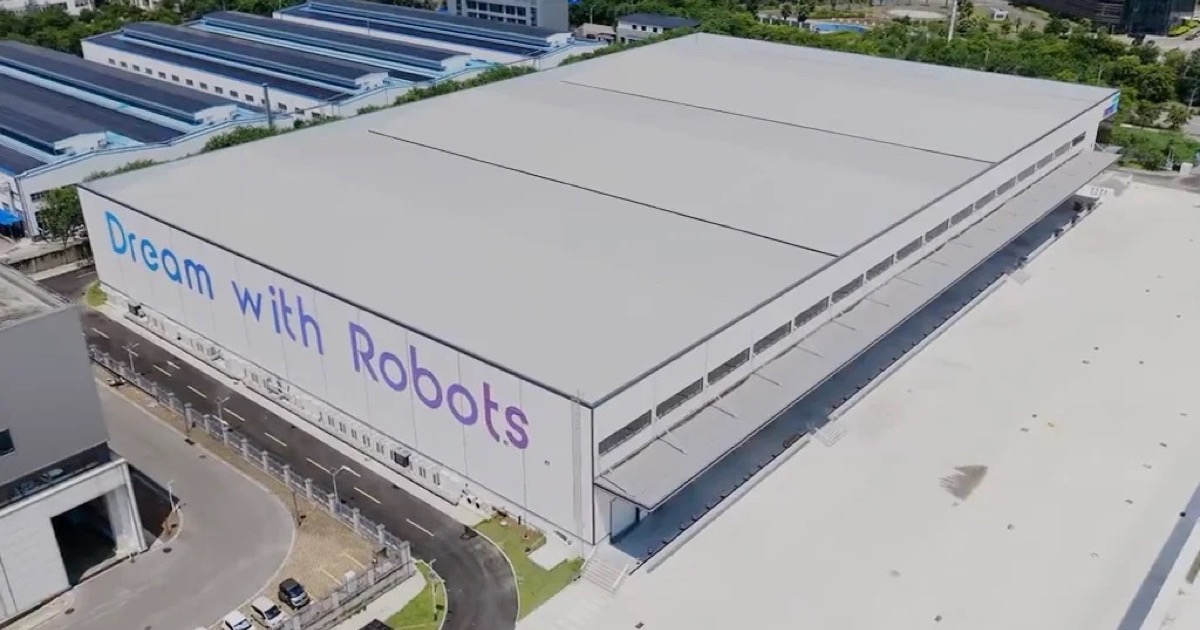
- China’s RobotEra has 1,000+ L7 humanoids in commercial logistics operations across China Post and SF Express.
- Agility Robotics is expanding Digit deployments across manufacturing facilities.
- Unitree is selling humanoid robots to consumers on AliExpress.
- Figure AI is working with BMW on factory deployments, though a Fortune investigation questioned the scale of actual deployment versus PR claims.
The global humanoid robot population today is in the low thousands. Getting to 5 million requires a 1,000x increase. That sounds absurd until you remember that’s exactly what happened with automobiles — from a few thousand in 1900 to a billion today.
What 10 Billion Looks Like
Ten billion humanoid robots by 2045 is the projection that makes people nervous. It should. That’s more robots than humans on Earth today.
At that scale, the labor calculation inverts. Today, human labor is scarce and capital is abundant. In a world with 10 billion robots, labor is effectively infinite and the constraint shifts to energy, raw materials, and compute. The bottleneck moves from “can we find workers” to “can we find enough lithium, enough steel, enough electricity.”
This is the scenario where post-scarcity economics stop being theoretical. If a robot can mine, refine, manufacture, construct, farm, and deliver — and there are 10 billion of them — the marginal cost of physical goods approaches the cost of energy and materials. That’s a fundamentally different civilization.
The 2100 Question
Holz asks you to imagine 2100. This is where the thought experiment gets uncomfortable because the trajectory compounds.
If the humanoid robot population follows anything like a Wright’s Law cost curve — where each doubling of production reduces unit cost by a fixed percentage — then by 2100 we’re not talking about 10 billion robots. We’re talking about a world where humanoid labor is as ubiquitous as electricity. Where construction, agriculture, manufacturing, and logistics are almost entirely automated. Where the concept of “employment” in physical labor has no meaning.
That sounds utopian until you ask who owns the robots. The political economy of infinite labor is the defining question of the 21st century. If 10 billion robots can rebuild Manhattan in six months, they can also rebuild it for whoever owns them.
Where We Are Now
The robots section of this site exists because this trajectory is already visible. The articles we’ve been covering — Tesla’s Optimus production targets, China’s commercial deployments, Figure’s factory pilots, Nvidia’s humanoid foundation models, Meta’s physical AI acquisition — are not isolated stories. They’re data points on a curve.
Holz’s tweet is valuable because it forces the scale question. Not “will humanoid robots be useful” but “what happens when there are more of them than us.” We don’t have a good answer. But we should start working on one.
❓ FAQ
Is the Manhattan calculation realistic? It’s a rough order-of-magnitude estimate. Five million robots working 24/7 would have the labor capacity of 15-20 million human construction workers — larger than the entire US construction workforce. The engineering is well-understood. Six months is plausible for a rough reconstruction, though finishing work would take longer.
Is 10 billion humanoid robots by 2045 realistic? It requires sustained exponential production growth for 20 years. That’s aggressive but not impossible — it mirrors the adoption curve of automobiles, which went from thousands to a billion in a century. Robots could scale faster because the infrastructure to build them already exists.
Who owns the robots? This is the political question. If robot labor replaces human labor at scale, the distribution of robot ownership becomes the distribution of economic power. No country has a serious policy framework for this yet.
What about New Zealand? NZ’s construction sector is labor-constrained — the government has been trying to import workers for years. A fleet of construction humanoids could solve the housing crisis. But it also means the construction workforce — 200,000+ Kiwis — would need to transition. The country has no plan for that.
🔍 THE BOTTOM LINE
David Holz’s thought experiment isn’t really about Manhattan. It’s about the inflection point we’re approaching — where humanoid robot production goes from thousands to millions to billions. The math is rough, but the trajectory is real. The question isn’t whether we’ll get there. It’s whether we’ll be ready when we do.