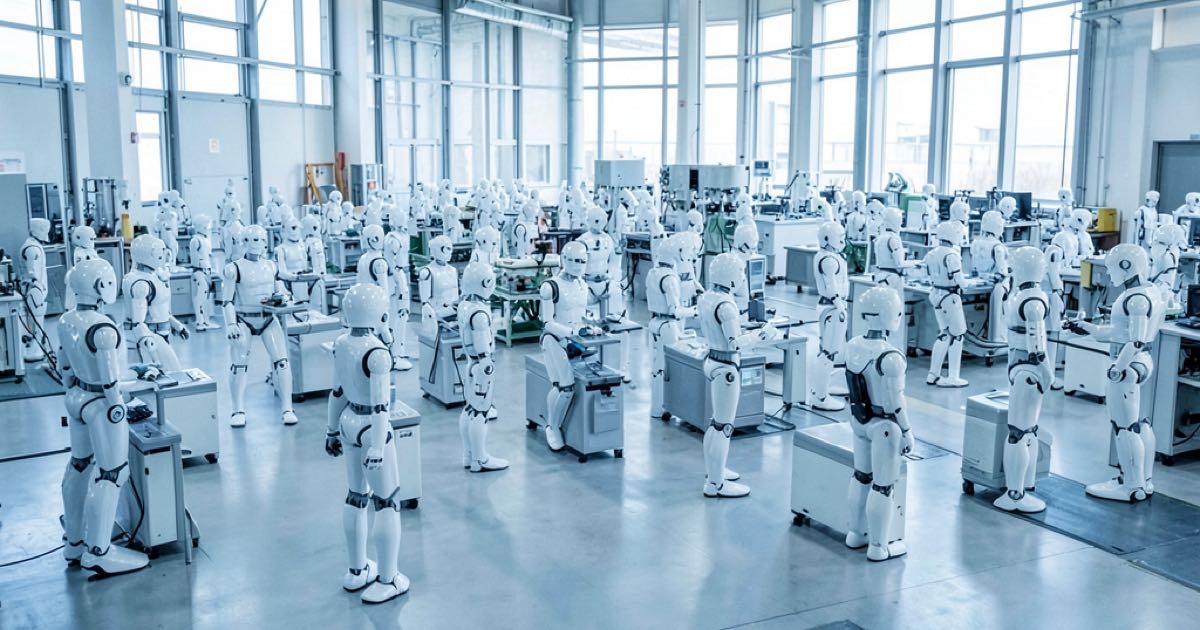
Global shipments of humanoid robots came close to 25,000 units in the first half of 2026, up 432.1% year on year, according to market research firm IDC — and Shanghai’s AGIBOT ranked first with more than 8,600 shipped, about 35% of the total. Those numbers come from AGIBOT’s 30 September press release citing IDC and from IDC’s own analysis published on 29 September, and they arrive attached to a forecast that the market will exceed 750,000 shipments by 2030. Trade outlet Humanoids Daily’s write-up adds the caveat that matters: these are new estimates for a already-counted period, not a fresh six months of growth.
That caveat is doing real work. Counterpoint Research counted the same January–June window back in August and got over 22,000 units with AGIBOT at 9,700 and a 43.1% share. IDC’s tally says nearly 25,000 and 35%. Both put AGIBOT first; neither reconciles with the other, and Humanoids Daily explicitly warns against reading the gap as AGIBOT’s share collapsing from 43.1% to 35% in a few weeks — the two firms count different product taxonomies in a market spanning full-size bipeds, smaller humanoids and wheeled systems. Without the underlying definitions, the discrepancy can’t be assigned to any one cause, which is analyst-speak for “nobody outside the spreadsheet knows.”
What the robots are actually doing
The more important number in IDC’s analysis is not the headline count. Research and education, performances and displays, and government data-centre applications together represented 69% of H1 shipments — down from 83.8% across full-year 2025, though IDC notes those are different reporting periods rather than a clean year-on-year comparison. Either way: the majority of humanoid “shipments” are robots bound for labs, trade-show stages and state showcase projects, not production lines. IDC’s own framing supports the shift — the market is expanding into industrial manufacturing, retail, logistics, tourism and consumer applications, with competition moving from individual hardware specs toward broader embodied-AI capability. Counterpoint’s finer cut agrees: entertainment-plus-data-production still above 60% of shipments, intelligent manufacturing risen to 13%, warehousing and logistics at 5%. The direction is real. The proportions still are not “industrial.”
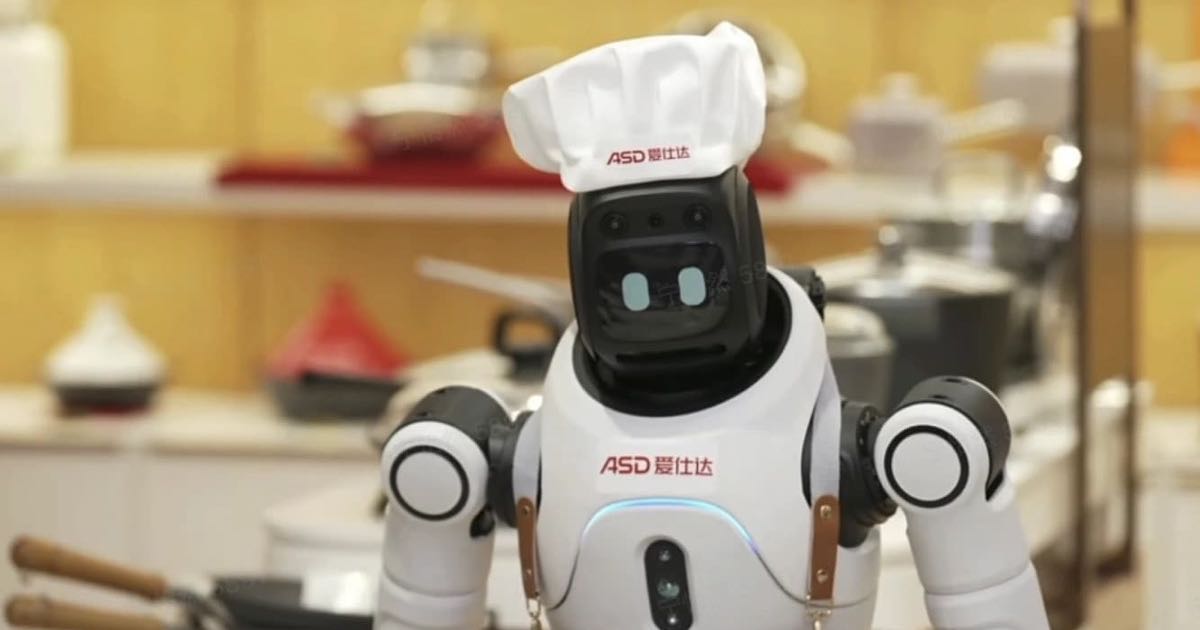
AGIBOT’s supporting numbers deserve the same separation. The company says it reached 20,000 cumulative robots produced in September — cumulative production across its product lines, not H1 deliveries, and not a measure of customer utilisation or revenue. Its deployment evidence is concrete but consumer-leaning: more than 300 robots at Chimelong Spaceship Park in Hengqin, and the 100 X2 humanoids in ASD cookware stores we covered last week. The company has been public about heading toward a Hong Kong IPO since July, and China’s securities regulator has since written deployment tests into its humanoid IPO criteria — a listed humanoid maker needs deployment stories, and an IDC No. 1 badge is one.
Reading the leaderboard honestly
Put the two research firms side by side and the honest summary is: rapid, real, explosive growth from almost nothing, measured through instruments that disagree. Counterpoint projects over 50,000 shipments for full-year 2026; IDC looks past that to more than 750,000 by 2030 — an outlook, not an order book, as Humanoids Daily correctly labels it. Whoever you believe, humanoids outsold the robots-that-matter metric: units moving is not units working.
Our take: treat every shipment leaderboard the way you’d treat an app-store download chart — big numbers, unknown engagement. The 69% non-industrial share is the datum that keeps this market honest, and it is improving at exactly the pace you’d expect of a hardware category still auditioning for a job. What would convince us the “deployment stage” is real: vendors publishing unassisted-completion rates and robot-hours-per-shift from named customers, the way AGIBOT’s own ASD retail rollout conspicuously didn’t. Until those metrics show up, 25,000 or 22,000 or 9,700 are all the same story told at different margins of error — and the NZ angle is a quiet one: every forecast of sub-US$30,000 mass-produced humanoids depends on Chinese volume like this, which is how the machines eventually get cheap enough for a Tauranga small business to rent one for the weekend.