AGIBOT has open-sourced the fourth release of its AGIBOT WORLD 2026 dataset, and this one has a thesis: robots fail at tasks not because their movements are clumsy, but because they don’t decide well. The release, branded Physical Reasoning, is the first installment of the company’s “AI WAVE” series and shifts dataset design from manipulation difficulty to decision difficulty. AGIBOT date the announcement to October 22, with Humanoids Daily, unite.ai and RoboHot all covering it independently.
The flagship example is a hotel minibar. To leave three full bottles, a robot must spot which are empty, count the full ones, and decide what to remove or add. The correct sequence changes with the starting state — a fixed script that works on a full minibar fails on a half-empty one. Release 4 therefore records multiple real-world action paths for the same goal under varying conditions: different object quantities, obstructions, available space and task progress.
Two tasks that encode memory and state
The task design rewards exactly the skills scripted demos avoid. A drawer-search task requires the robot to remember which drawers it has already checked even when the camera view looks identical between attempts — a memory test dressed as a search test. The minibar task is a state-tracking test: what matters is not how the robot grips a bottle but whether it can infer what the world needs next.
The annotations are built to feed that kind of learning. According to Humanoids Daily, high-level question-answer pairs link an instruction to subtasks and individual actions, while low-level labels specify the target object, the manipulation site, how the two arms divide work, gripper state and the expected result. Spatial labels tie descriptions to image locations. Tasks span nine reasoning categories — selection, manipulation feasibility, action preconditions, search, state tracking, planning, memory and subtask ordering — across three difficulty levels.
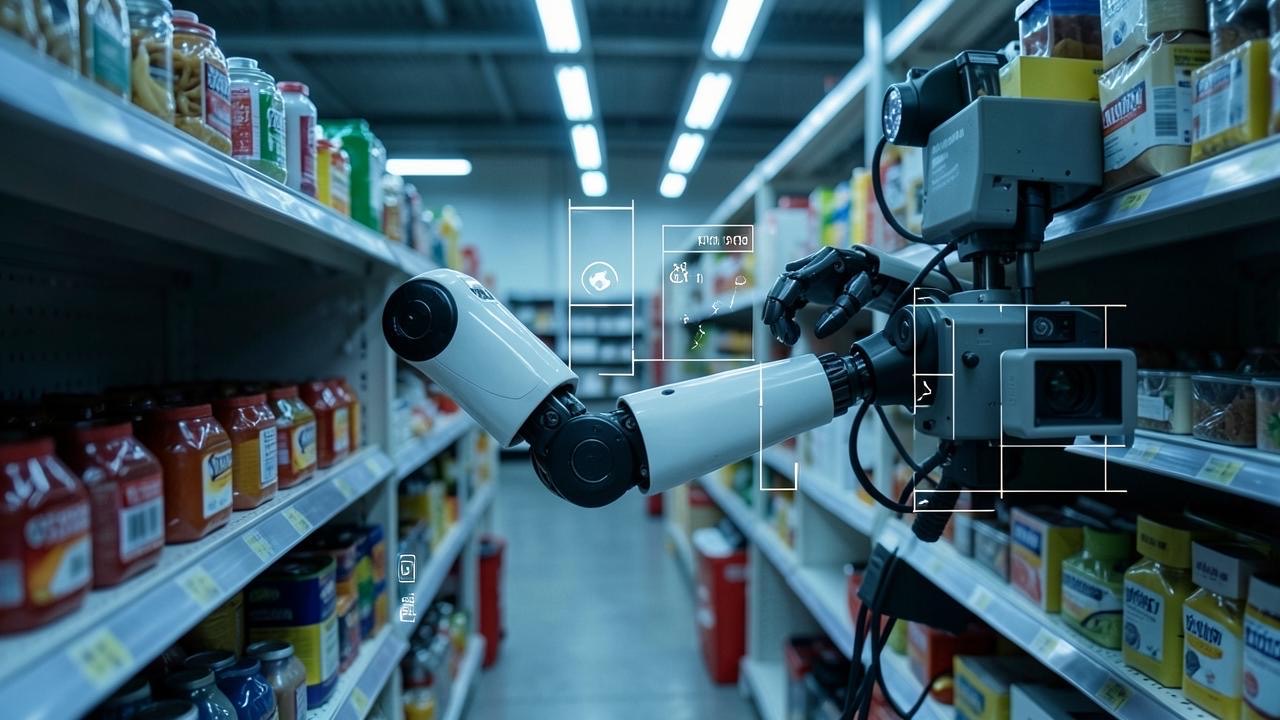
AGIBOT says the data is already training an upcoming agent framework and its next-generation foundation model, with future AI WAVE releases covering convenience-store deployment.
Why open reasoning data matters more than open motion data
We reported on Phase 1 of this same dataset series back in April, and the arc between the two releases tells the industry’s story better than any single announcement: Phase 1 was about breadth of embodied data; Release 4 is about structure of decision-making inside that data. Six months apart, the questions dataset builders ask have moved from “how many trajectories do we have?” to “do our trajectories contain reasons?”
That matters because physical AI is hitting exactly the wall this release names. A robot can pick up a bottle perfectly and still fail at restocking a minibar — the framing unite.ai uses, and the correct one. Motion data scales with robots; the judgment data — what to do when the starting state changes — has to be annotated by someone who understands the task. Open-sourcing it means every lab training a policy model, from Shanghai startups to the NVIDIA Cosmos physical-AI pipeline and NVIDIA’s Seoul training-data deal with LG, can fold decision-labelled trajectories into training without duplicating the annotation cost. It also fits AGIBOT’s competitive posture: as the current humanoid shipment leader, giving away reasoning data raises the floor for the whole market while AGIBOT’s own models train on the richer internal versions first.
For New Zealand, the practical relevance is quieter but real: open reasoning datasets lower the entry cost for local research groups and integrators who want to fine-tune robots for specific environments — orchard sorting, cold-chain handling, hospital logistics — without funding a data-collection program of their own.
The dataset is available through AGIBOT’s WORLD project site.
Sources: Humanoids Daily, unite.ai, RoboHot.