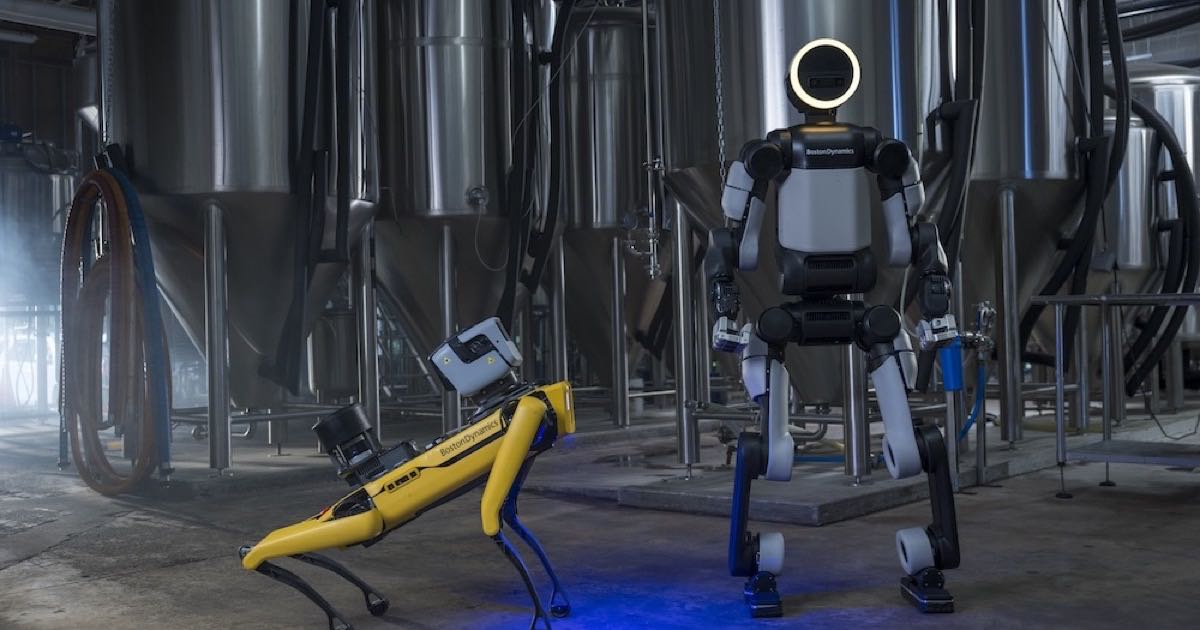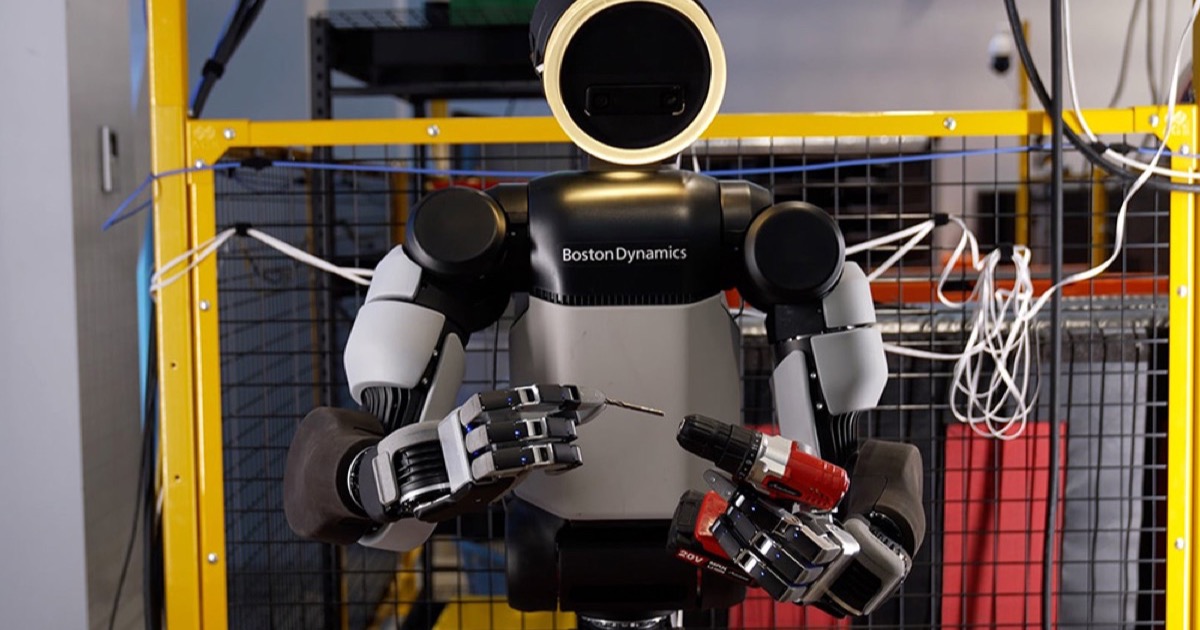
Boston Dynamics’ Atlas humanoid has its first customer that doesn’t build cars. GlobalFoundries — the semiconductor foundry with fabs in Malta, New York; Burlington, Vermont; Dresden and Singapore — will begin testing Atlas onsite at its facilities in early 2027, making GF the first company outside the automotive industry to take part in Atlas’s early-adopter program. The announcement came from Boston Dynamics on November 17, 2026, alongside an expansion of the pair’s existing Spot inspection collaboration across all four GF manufacturing sites.
As The Robot Report notes, this is a commercialisation milestone the company has been signalling since CES 2026, when it revealed the product version of the electric Atlas with an initial production run already fully committed to Hyundai and Google DeepMind. GF was always positioned as the next domino: Boston Dynamics said in September it was in talks with existing Spot and Stretch customers across aerospace, semiconductors, logistics and life sciences.
Why a chip fab is a different test than a car plant
The relationship is not a cold start. GF has run Spot quadrupeds at its Burlington site for more than four years, and since April 2026 two Spot units in Singapore have travelled nearly 900 kilometres and completed over 90,000 sub-fab inspections with a 99% mission success rate — including redeploying 875 routine inspections in two weeks on the latest hardware. “Scaling Spot and testing Atlas are the next steps in our journey to AI-enabled manufacturing,” said Pradip Singh, GF’s chief manufacturing officer.
What’s genuinely new is the environment. Automotive humanoids work on factory floors built for people; a semiconductor sub-fab is a different world — constrained access, ESD sensitivity, uptime-critical process tools and tolerances measured in microns. Neither company has said which tasks Atlas will train for at GF, how many units are involved, or which sites will host them; the early-2027 program starts with evaluating use cases and integration needs. That honesty about unknowns matters — the trial is a skills-development workshop first, a deployment second.
The pattern this confirms
The humanoid industry’s first revenue wave has run almost entirely through automotive: Hyundai’s Metaplant, where Atlas trains at the RMAC facility, Figure’s work with BMW, Agility’s logistics deals. A foundry customer breaks the frame in two ways. First, semiconductors are a much bigger market than car assembly — and they face an acute, well-documented technician shortage. Second, it signals that humanoid vendors can sell on the strength of an installed inspection base: GF is buying Atlas because four years of Spot data already proved the concept of autonomous robots inside its fabs.
For Boston Dynamics the deal also derisks a hard question: what happens to Atlas demand if Hyundai’s 25,000-robot ambition takes longer to materialise than planned. A multi-industry customer list, starting with the most precision-driven manufacturing sector there is, is the strongest available answer. The next year will show whether Atlas can pass a cleanroom’s definition of reliable — a far higher bar than any car plant has set.