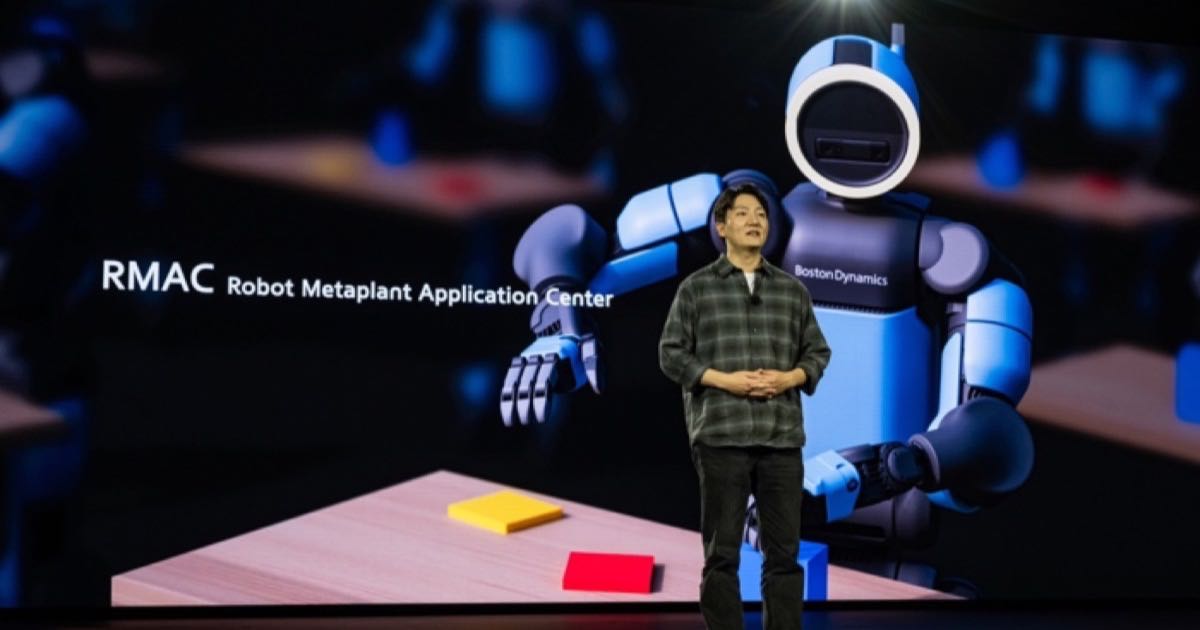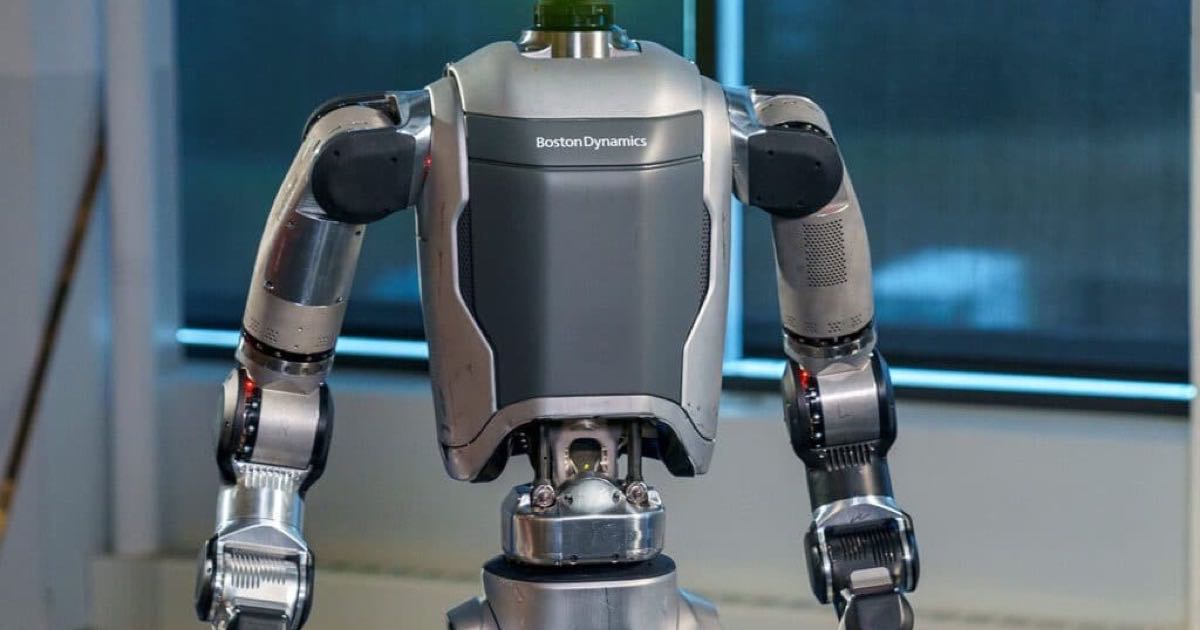
Boston Dynamics has opened the Robotics Metaplant Application Center (RMAC), a permanent training and testing facility for its Atlas humanoid robot, inside Hyundai Motor Group Metaplant America (HMGMA) near Savannah, Georgia. The announcement was made on September 21, 2026, and the facility is already in full operation.
What RMAC Actually Is
The framing Boston Dynamics keeps using is telling: chief product and technology officer Zack Jackowski calls it a “Robot Behavior Factory.” The facility takes real automotive parts, real fixtures, and real work cells, adds Atlas robots and human pilots, and produces the output that actually matters — diverse, high-quality training data for robot behavior.
That distinguishes RMAC from what came before. Jackowski told The Robot Report that previous Atlas trials were “time-boxed deployments” — small-scale, hands-on engineering exercises focused on lessons for scaling up. RMAC is the permanent version: a facility that operates in continuous coordination with a working auto plant, collecting data from teleoperation, reinforcement learning in simulation, and Universal Manipulation Interface devices.
Atlas’s first curriculum is logistics: preparing and sequencing automotive parts so they arrive at assembly in the correct order. That task demands the dexterity that has historically separated humanoid demos from humanoid deployment. According to The AI Insider, the roadmap expands to parts assembly by 2030, then to high-intensity work involving repetitive motion and heavy loads.
The Deployment Math Behind It
RMAC is not a research gesture — it is the training infrastructure for a number Hyundai has already committed to: 25,000 Atlas robots planned for deployment across Hyundai Motor and Kia plants worldwide over the coming years, starting with on-site deployments within two years. Hyundai is also establishing a U.S. production facility capable of manufacturing 30,000 robots annually.
The economics of that plan lean on the same supply-chain play we covered when Hyundai mobilised 200 first-tier suppliers toward a $20,000 humanoid: Atlas only makes sense at automotive scale if automotive economics apply. A training center embedded in a working plant is how you generate the task data that makes deployment real — the same data-fleet logic Figure described when it argued its growing robot fleet unlocks next-generation autonomy, and the approach Toyota is taking with its own in-house factory robot push.
Scale-Up Timeline
RMAC began pilot operations in June 2026. In 2027, Boston Dynamics moves the program into a new building at the Georgia complex roughly ten times the current size. The company also plans to start exploring Atlas applications beyond automotive next year, and says it is already in discussions with existing Spot and Stretch customers in aerospace, semiconductors, logistics, food and beverage, and life sciences.
The competitive context is worth noting: Chinese humanoid makers are scaling fast, with UBTech shipping humanoids to private homes and its Liuzhou factory reportedly building a robot every ten minutes. The Western answer to that volume story is increasingly “enterprise integration first” — Atlas is not being sold as a general helper, it is being trained for one company’s factory floors, with a parent that owns both the robot and the deployment site. Whether that produces more reliable robots than the volume-first approach is the question the next two years will answer.
A documentary on the Atlas program, produced with Bloomberg Media Studios, is scheduled for release on September 30.