NVIDIA released Isaac ROS 5.0 on Tuesday at the ROSCon conference in Toronto, and the interesting part is not the version number. It is who the release is aimed at: not robots, but the software agents that increasingly assemble and tune the robots. Isaac ROS is NVIDIA’s family of GPU-accelerated packages built on the Robot Operating System, the open framework whose user base NVIDIA puts at nearly 1.3 million developers — and version 5.0 is the first to hand a chunk of the developer’s job to AI agents.
What’s actually new
The headline feature is Isaac Skills. These are packaged tasks that an AI agent can perform on the developer’s behalf: getting scripts ready, setting up the environment, doing the repetitive fine-tuning that eats the first weeks of any robotics project.
“You can release your agents and have them do all the work of getting the scripts ready, setting up the environment,” Katie Washabaugh, NVIDIA’s product marketing manager for robotics simulation, told The Robot Report at ROSCon.
Her framing of why is refreshingly blunt: “There’s really a lot of friction in robotics development. There’s so much friction in piecing the plumbing together.” Anyone who has wired a ROS workspace to a new arm, camera and GPU knows exactly which plumbing she means — and knows that none of it makes the robot smarter.
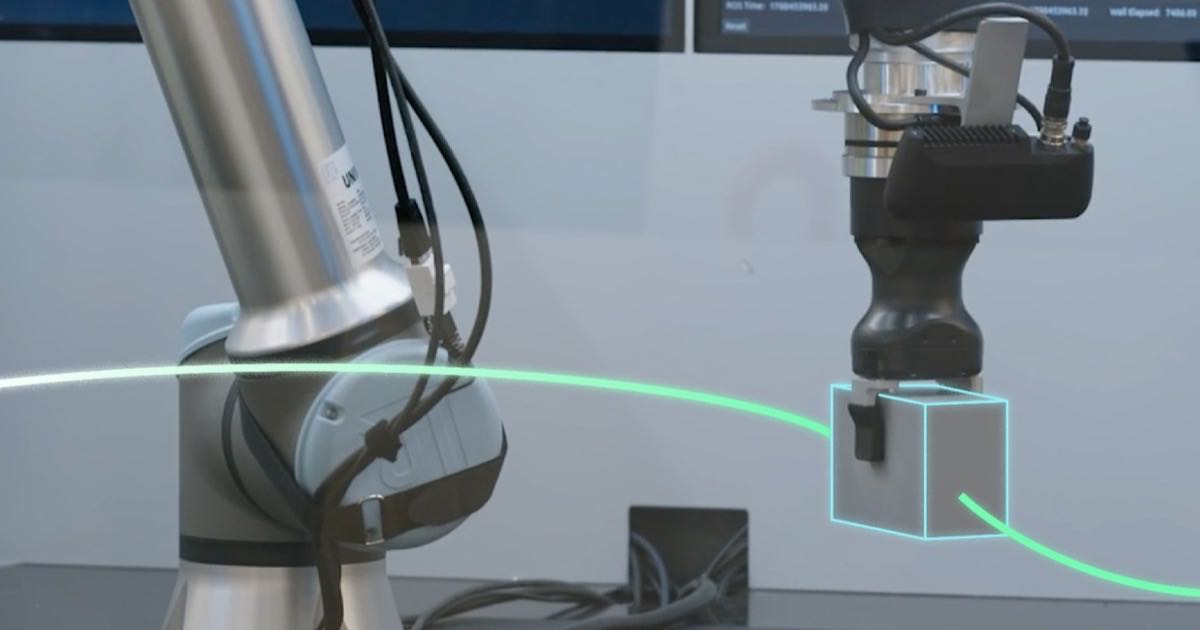
The second piece is perception. FoundationPose, NVIDIA’s pose-estimation model, now ships with an agent-ready inference library that NVIDIA says tracks an object’s position and orientation up to 5.5 times faster. And pick-and-place — the task that anchors a thousand robotics demos — is now a standalone, agent-ready skill rather than a pile of example code. “Setup seemed like low hanging fruit,” Washabaugh said. “With manipulation, that seemed like a greenfield area of robotics development.”
Under the hood, the release adds support for ROS 2 Lyrical and Ubuntu 24.04, with NVIDIA contributing a standard data-handling interface to Lyrical itself so GPU and CUDA acceleration behaves consistently across different hardware.
Why agents, and why now
The strategic read is that NVIDIA has decided robotics’ bottleneck is integration time, not model quality. Perception models keep improving; the pain is that every lab and factory still glues them to hardware by hand. If agents can absorb that glue work inside NVIDIA’s own tooling, the platform becomes stickier at exactly the layer where teams get locked in.
It also sharpens the platform contest we covered in August, when Google’s Intrinsic and NVIDIA’s Isaac stacks were circling the same customers with different philosophies. Intrinsic answered within hours of this release by open-sourcing its own core — more on that in the companion piece. The two moves are not coincidental; ROSCon week has become the venue where each side plants a flag on developer ergonomics.
There is a naming tangle worth noting for readers who follow this space: Isaac ROS 5.0 is unrelated to the open-weight Isaac 0.5 robotics model from Perceptron AI we covered earlier this year — a collision of names, not companies.
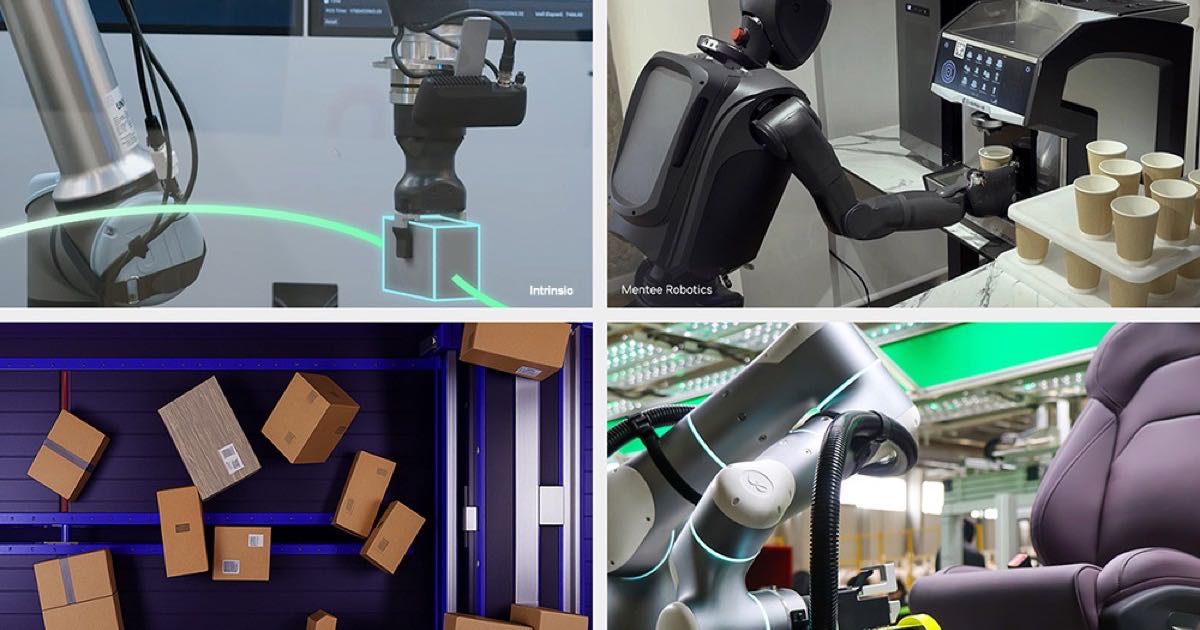
Adoption gives the release some weight beyond slideware. NVIDIA says Isaac ROS is already used by Intrinsic, Mentee Robotics, EKUMEN and Flexiv — a list that happens to include the company it is competing with, which tells you something about how central the ROS ecosystem has become.
What to watch
The claim to test over the next year is whether “agent-ready skill” becomes a standard that robot vendors build against, the way drivers target operating systems. If it does, NVIDIA repeats in robotics what it did in machine learning generally: own the integration layer, monetise the GPUs underneath. If agents turn out to be good at setup but mediocre at the judgement calls in manipulation, the greenfield stays green a while longer.
FAQ
What is Isaac ROS? NVIDIA’s collection of GPU-accelerated packages built on the Robot Operating System (ROS), the open robotics framework with roughly 1.3 million users. Version 5.0, released 22 September 2026 at ROSCon Toronto, adds agent-driven setup tools and faster pose estimation.
Do the new AI agents write robot behaviour for you? No. NVIDIA positions Isaac Skills as handling setup, scripts, environment configuration and repetitive fine-tuning — the plumbing around robot development. Pick-and-place is offered as an agent-ready skill, but teams still own the application logic.
Does Isaac ROS 5.0 work with the latest ROS version? Yes — the release adds support for ROS 2 Lyrical and Ubuntu 24.04, and NVIDIA contributed a standard data-handling interface to Lyrical for consistent GPU/CUDA acceleration across hardware.