The most useful signal in humanoid robotics this week didn’t come from a demo video. It came from a company that builds other companies’ products and has no robot of its own to sell. Jabil — the multi-billion-dollar contract manufacturer that helped Apptronik move its Apollo humanoid into real production — has told The Robot Report that the industry is crossing from hand-built pilots into volume manufacturing.
“A lot of customers have gotten humanoids out in low volumes, but we are entering a phase of tens of thousands,” said Thomas Brown, Jabil’s senior director for engineering and technology, in a Q&A published Thursday. “It’s no longer something that’s assembled by hand on site. You’re starting to get to where you need a cost structure, manufacturability, and to improve quality.”
The Q&A has drawn a same-day writeup from QUE.com, but as of publication no other outlet has independently covered the interview. That’s worth stating plainly — the sourcing here is one conversation, though the speaker’s role makes it a decent proxy for what the manufacturing layer is actually seeing.
Who’s on the ramp
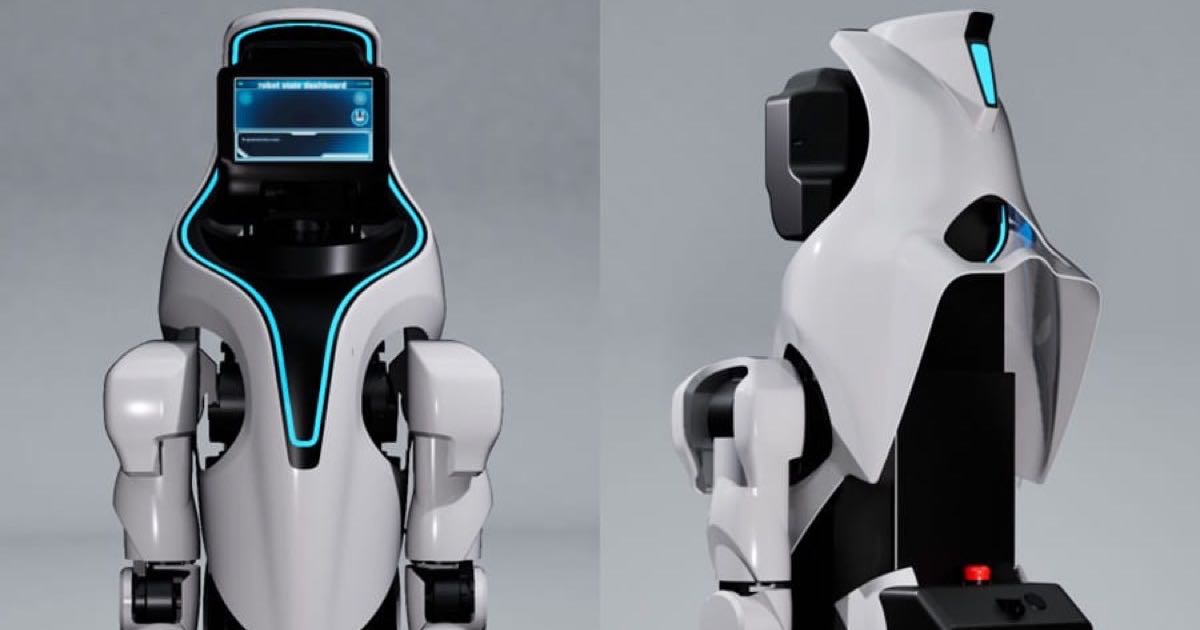
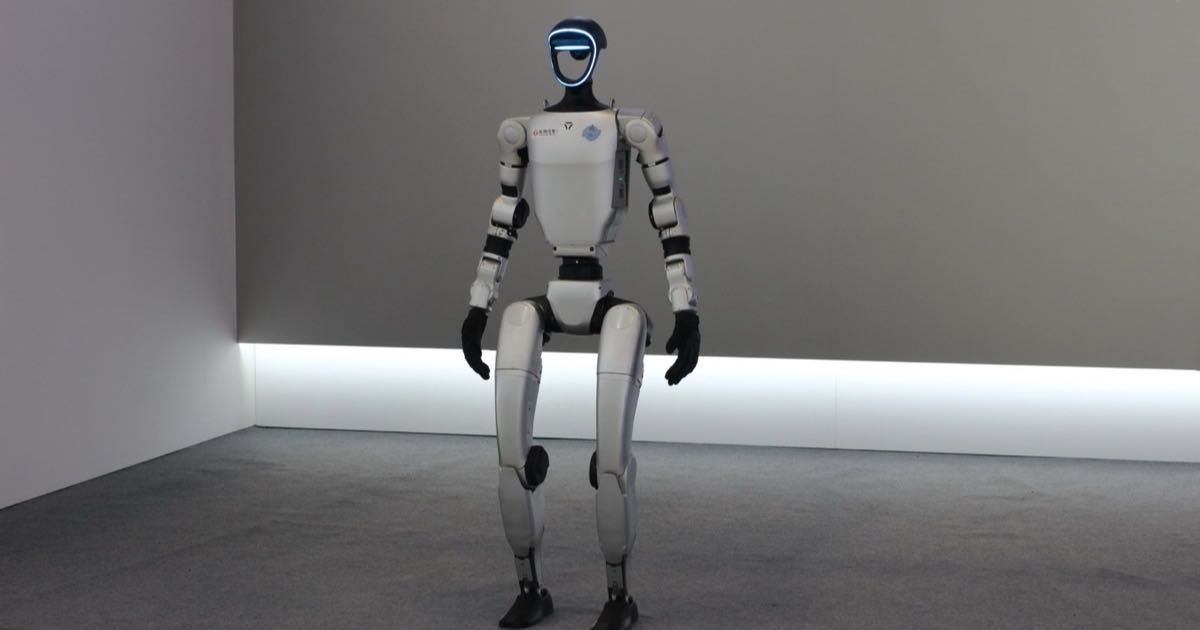
Jabil named the companies it expects to ramp humanoid production: Tesla, 1X Technologies, XPeng and UBTECH. It confirmed it works with major humanoid developers in the US and abroad that it cannot yet name. Its own track record here is concrete — the company partnered with Apptronik on bringing Apollo into active manufacturing environments, one of the few humanoid programmes that has touched a genuine production line rather than a staged pilot.
The volume framing tracks with the shipment data reported through the year. China’s humanoid market alone was tracking toward tens of thousands of units by year-end in the IDC-based shipment reporting we covered in August, and AgiBot’s claim to the domestic volume crown was itself a symptom of the same shift — robots moving from labs to fleets. What’s new in Jabil’s account is the manufacturing-side confirmation: the bottleneck is no longer whether the robots work well enough, but whether anyone can build them at a cost structure that survives contact with a CFO.
The unglamorous specifics
The interview’s real value is where it refuses to generalise. Three details stand out:
Wiring harnesses are harder than they sound. Humanoid looms need, in Brown’s words, “a hybrid of automotive-type robustness with an extremely small form factor like high-grade consumer electronics” — two worlds with opposite design rules. Nobody romanticises wiring, which is precisely why it’s a good proxy for the thousand unphotogenic decisions standing between a viral demo and a shippable product.
Compute is sufficient; price is not. Brown says NVIDIA’s Jetson line is the popular choice and current compute handles most demo-level experiences, but memory and compute pricing remains “an ongoing pain point for scale” — foundation models are already outgrowing what edge hardware affords. Bosch’s decision to build its own humanoid production line in Germany pointed at the same equation from the buyer’s side: the robots only make sense when the unit economics close.
Consumer humanoids: “maybe in five-ish years. It could be 20.” That range — from the executive whose factory timelines matter most — is a more honest spread than anything in a launch keynote.
The part Jabil is quietly worried about
Buried near the end of the Q&A is the passage that matters most, and it connects directly to the safety-simulation funding news this week: certification. Brown notes that conventional robot arms carry safety certifications built on norms for cages and standoff distances, and then concedes the industry has no equivalent for humanoids: “How do we certify these things in new environments? How do we understand what the model is going to do in certain conditions? There’s a tremendous amount of work that’s going to have to go into these systems.”
When the contract-manufacturing layer starts flagging certification as unsolved, the problem has crossed from academic concern to production blocker — the stage where problems attract money and standards bodies. The same tension runs through our earlier reporting on humanoids moving out of the cage and into open floors: the hardware is arriving faster than the frameworks meant to govern it.
Brown’s own summary is the useful counterweight to a hype cycle that mostly runs on footage: the humanoid is “a supremely flexible device, but it’s not always the right device. Traditional high-speed automation will still have a big play for the foreseeable future.” After two years of robots-take-everything headlines, the man whose factories would have to build them is telling the industry to calm down — and to cost down. The demo phase is ending. The boring, decisive phase is starting.
Sources: The Robot Report, QUE.com