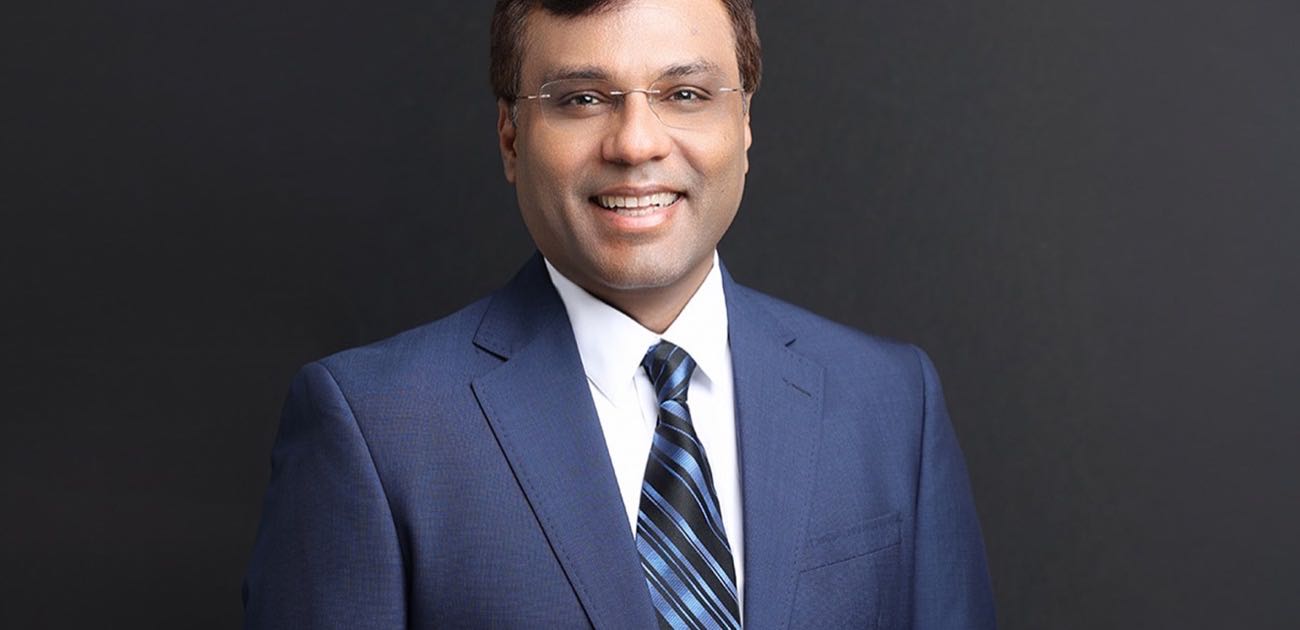
Boston Dynamics has named Rohit Prasad as its new chief executive, effective today, replacing CFO Amanda McMaster, who has run the company on an interim basis since Robert Playter stepped down in February. Prasad arrives from Amazon, where he spent twelve years as senior vice president and head scientist for Alexa and artificial general intelligence, most recently leading the Nova foundation model family. The appointment was reported by The Robot Report and confirmed by The Boston Globe.
Why an AI scientist, and why now
Prasad becomes only the third chief executive in the company’s history, after founder Marc Raibert (1992–2020) and Playter. Both of his predecessors were lifer roboticists. Prasad is not — before Amazon he spent nearly fourteen years at Raytheon BBN Technologies running machine-learning research for US government and commercial applications, and his career has been about turning AI research into shipping products at scale. Boston Dynamics put that framing front and centre, saying the hire “accelerates its physical AI strategy by combining robotics with advanced AI capabilities to commercialize intelligent machines at scale.”
“Boston Dynamics is uniquely positioned to advance physical AI through its world-class robotics expertise,” Prasad said in a statement quoted by The Robot Report. “By bringing together advanced AI and robotics, we can build intelligent systems that create meaningful value in real-world environments, expand the reach of robotics across industries, and shape the next era of physical AI.” He told the outlet he plans to productise intelligent robotic systems for industrial and commercial environments, and Hyundai vice chairman Jaehoon Chang, who chairs the Boston Dynamics board, pointed to Prasad’s “proven ability to turn AI into products at global scale.” He is also expected to join the board, subject to the relevant approval process.
The timing is not subtle
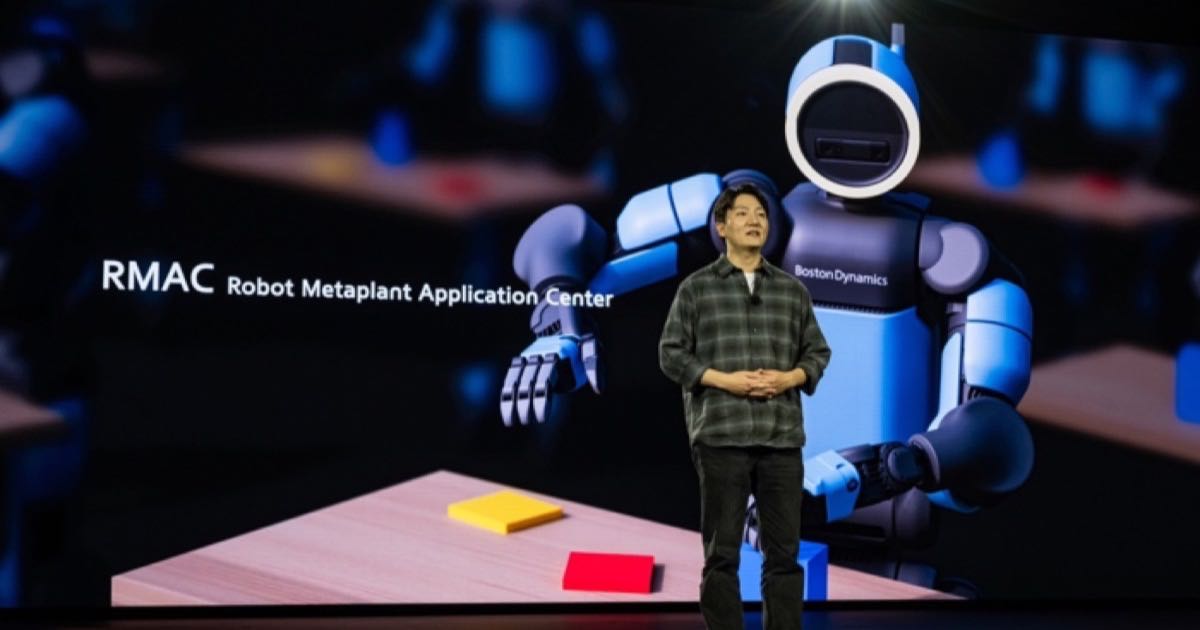
Look at what the company did in the five weeks before this announcement. It unveiled a four-fingered hand for Atlas built for high-fidelity simulation, designed so reinforcement learning can transfer from simulation to the real robot. A week earlier it opened the Robotics Metaplant Application Center at Hyundai’s Georgia metaplant to train Atlas for car manufacturing. The Globe notes the company has announced a factory capable of building 30,000 Atlas robots a year. Then the AI product executive walks in the door.
That sequence reads less like a routine leadership appointment and more like a repositioning. The hard part of the humanoid business in 2026 is no longer making a robot move impressively — every serious player can do that. The hard part is the intelligence layer: perception, task generalisation, the ability to work without a teleoperator or a pre-scripted routine. Sites covering the industry keeps finding the same gap, from choreographed park performances passing as autonomy to the generalisation bottleneck throttling global humanoid shipments.
Hiring the person who built Alexa — a consumer AI service deployed in hundreds of millions of households — is a statement about which side of that gap Boston Dynamics intends to be on. So is who it hired from: Prasad ran the failed attempt to give Amazon a general-purpose assistant and lived the gap between a polished demo and a product that works in messy real-world conditions. That scar tissue is arguably the résumé line.
What it means for the humanoid race
The practical question is whether Boston Dynamics can now close the same loop its competitors are chasing: robots that earn revenue at industrial scale, not just wins at demo events. Hyundai’s manufacturing floor is the testBed, and the appointment suggests the 30,000-unit factory is meant to ship intelligence, not just hardware. Competitors such as Agility, whose cage-free Digit fleet is already working in warehouses, and the wave of China-backed makers with cheaper units, will not pause to admire the transition.
There is a risk in the opposite direction: robotics companies that hire software-era leaders sometimes discover that hardware refuses to move at software speed. Playter’s departure in February already marked a break with the Raibert era; Prasad’s arrival completes it. Whether the company’s famously world-class engineering culture accepts an AI-first product cadence is the unglamorous variable that will decide whether this works.
❓ FAQ
Who is Rohit Prasad? He was Amazon’s senior vice president and head scientist for Alexa and artificial general intelligence, per The Boston Globe, where he worked for twelve years and led the Amazon Nova foundation model family. Before that he spent nearly fourteen years at Raytheon BBN Technologies on machine learning and speech recognition.
When did he become Boston Dynamics CEO? The appointment was announced 6 October 2026 US time and takes effect today, 7 October. He takes over from interim CEO Amanda McMaster, the company’s CFO, who has led it since Robert Playter stepped down in February 2026.
How many CEOs has Boston Dynamics had? Three, The Robot Report reports: founder Marc Raibert (1992 to 2020), Robert Playter (2020 to 2026), and now Prasad.
What does this mean for the Atlas humanoid? The company is testing Atlas at Hyundai’s Georgia manufacturing facility and has announced plans for a factory able to build 30,000 Atlas robots a year. The new CEO’s mandate, as the company frames it, is combining robotics with advanced AI to commercialise intelligent machines at scale.
🔍 THE BOTTOM LINE
Boston Dynamics just hired the AI half of “physical AI” — an executive whose career is proof he can ship intelligence at scale, not just robots at trade shows. If the humanoid race in 2027 is decided by who closes the demo-to-deployment gap first, this is the loudest possible signal Boston Dynamics plans to win it. The counterweight: eleven months without a permanent CEO is a long time in a race this fast, and cultural fit between AI product speed and world-class robotics engineering is unproven.
📰 Sources
- The Robot Report — Boston Dynamics appoints former Amazon exec Rohit Prasad as new CEO
- The Boston Globe — Boston Dynamics taps Prasad as CEO (Hiawatha Bray)
- Bloomberg — Boston Dynamics Names Former Amazon Alexa Leader Rohit Prasad as CEO (paywalled)
- Business Wire — Boston Dynamics Appoints Rohit Prasad as Chief Executive Officer (company statement, paywalled)