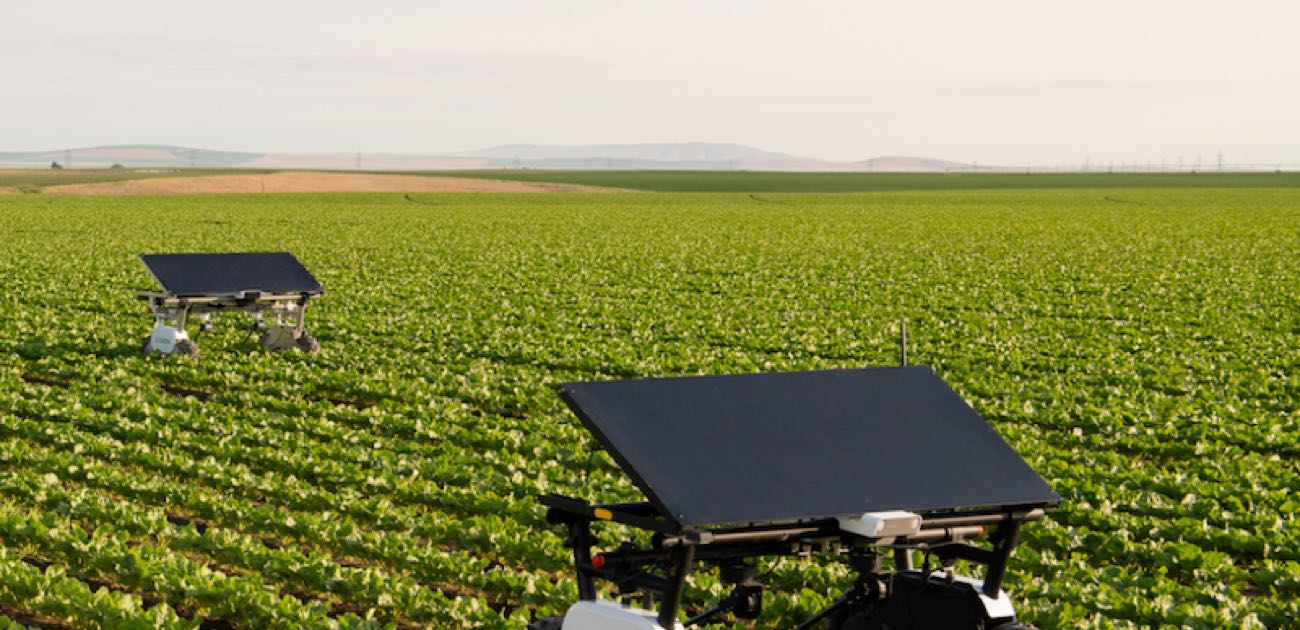
Aigen says its Alchemy simulation and world-model platform can train its solar-powered Element farm robots to work a new crop in under a week — and that Element recently went from learning lettuce in simulation to working a real field in less than seven days. The claim, reported by Robotics & Automation News on 6 October, matters less as a press release than as a data point in the argument now running through robotics: that world models, not more hardware, are the cheap way to teach machines physical work.
How you train a robot without a field
Alchemy generates synthetic, pixel-level annotated training imagery — every plant labelled — grounded in data collected from Aigen’s real operations. The company says datasets can be up to 100 percent synthetic while still reflecting actual field conditions; its own Alchemy page puts it at “99-100% synthetic.” That is the standard sim-to-real bet: if your simulated crops look enough like the real thing, a policy trained entirely in simulation can survive contact with a real farm.
Once deployed, Element runs onboard AI and cameras to distinguish crops from weeds, with independently controlled robotic arms that pull weeds at the root — no herbicides, no diesel for the weeding pass. The robots can handle weeds with foliage up to six inches across, including under crop canopies, and they feed back crop counts, plant health and weed pressure as they work. Aigen says it has built more than 100 robots with over 15,000 autonomous operating hours across California, Minnesota and North Dakota, across soybeans, tomatoes, sugarbeets, lettuce and cotton — the kind of numbers that at least suggest these are working machines, not demos standing in for autonomy.
Why “under a week” is the number to watch
Traditional automation economics treat each new crop as a custom-engineering problem: new vision pipeline, new end-effector behaviour, months of integration. If Aigen’s seven-day crop-switch holds, the marginal cost of adding a crop collapses, and with it the oldest objection to agricultural robotics — that farms are too varied to automate affordably. Co-founder and CEO Kenny Lee’s framing to RAN is fleet economics: “Growers get the precision of a hand crew at the scale of a sprayer, at a per-acre cost they know before the season starts.”
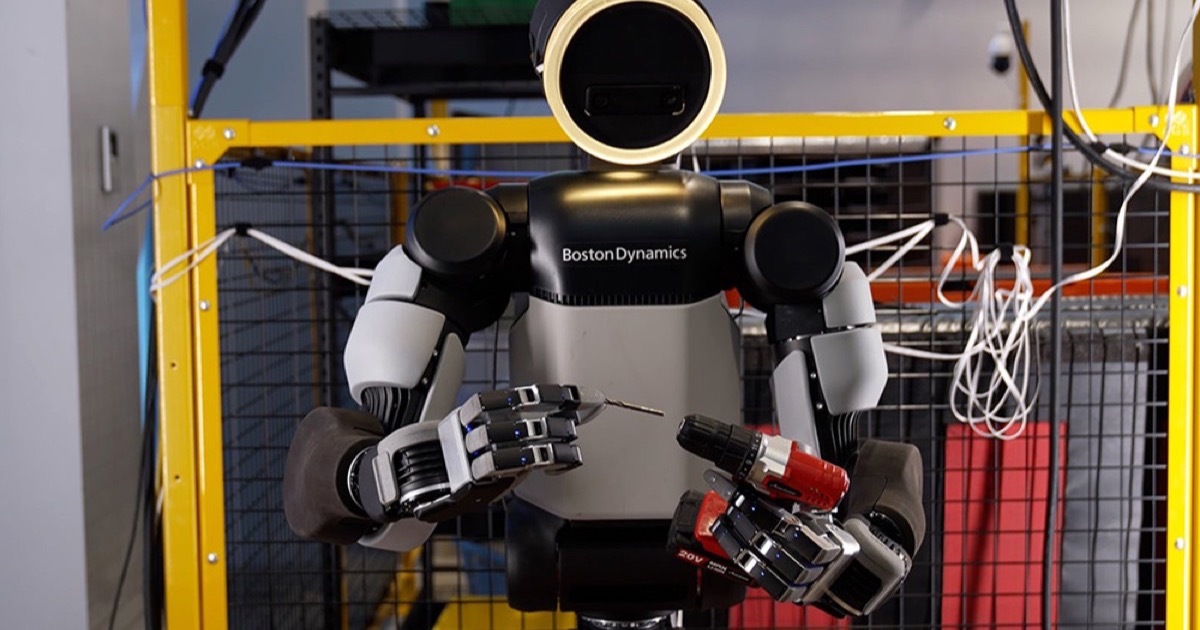
It is also a quietly significant moment for world models as a category. The same architecture debate is playing out across physical AI — from Agibot’s open embodied-AI dataset in China to driving simulators — and claims like “we no longer need real field data for 99% of training” are the kind of thing other robotics verticals will be pressure-tested against. Robots that learn tasks in simulation and only touch reality for validation are the model everyone is converging on; whether Aigen’s version is genuinely ahead or just first to market with the claim is the part to watch.
The caveat, stated plainly
Here is the honest part: beyond Robotics & Automation News, we could not find independent coverage of the “new crop in under a week” claim as of publication. The performance numbers trace back to the company — as does nearly everything in agricultural robotics. What exists beyond the press release: NVIDIA’s case study documents the company’s training pipeline, CNBC profiled the company in 2023 when co-founder Richard Wurden, a former Tesla engineer, started building solar weeders, and Fortune 500 customers are reportedly using the Element Gen 2 X4. The company will demo Element at FIRA USA in Yakima, Washington, 20–22 October — the first chance for independent eyes on whether lettuce-in-six-days survives contact with the field.
Wurden’s pitch to RAN: “Growers can’t control what diesel will cost next month, but they can run their weed control on sunlight.” Fuel-price hedging as a robotics value proposition is a genuinely fresh angle, diesel prices being what they are. Aigen is a United States company, but the pitch maps cleanly onto New Zealand’s horticulture sectors, where seasonal labour cost and availability — not enthusiasm for technology — is the binding constraint on growers.
❓ FAQ
What is Aigen’s Alchemy? It is Aigen’s simulation and world-model platform that generates synthetic, pixel-annotated training data for its Element farm robots. The company says datasets can be up to 100% synthetic while grounded in real operational data, per Robotics & Automation News.
How fast can Element learn a new crop? Aigen says the robot recently learned lettuce in simulation and was deployed in a real field in under a week. The claim is currently company-sourced and will be on show at FIRA USA in Yakima, Washington, October 20-22.
Do the robots use herbicides or fuel? No — Element uses solar power with battery backup for propulsion and its arms mechanically remove weeds at the root. Aigen positions this as both a chemical-reduction and fuel-cost play.
What crops does Aigen operate in? Per the company: soybeans, tomatoes, sugarbeets, lettuce and cotton across California, Minnesota and North Dakota, with more than 100 robots built and 15,000+ autonomous operating hours.
🔍 THE BOTTOM LINE
The under-a-week crop switch is a bold claim resting on company data, and this article says so because the distinction matters. But the underlying bet — that synthetic data from world models, not months of field engineering, is how robots become cheap to deploy across varied environments — is the same one reshaping humanoids and driving vehicles. If Aigen’s numbers survive independent scrutiny, farm robotics stops being a custom-integration business and starts being a software one.
📰 Sources
- Robotics & Automation News — Aigen trains solar-powered farming robots for new crops in under a week
- Aigen — Alchemy: World Model for Outdoor Physical AI (company page)
- NVIDIA — Aigen Advances Chemical-Free Farming (case study)
- CNBC — Ex-Tesla engineer builds Aigen robots to get weeds without pesticides (2023)