“Today’s robots are numb. Their software is smart, but most of their bodies can’t feel what they touch.” That is how Silica Machines — a startup out of the Founders, Inc. stable, backed by Y Combinator, Founders Inc. and UP.Partners, with a founding team that came from Apple — pitches itself. It is a good line, and unlike most robotics marketing copy, it points at a real and under-served layer of the stack.
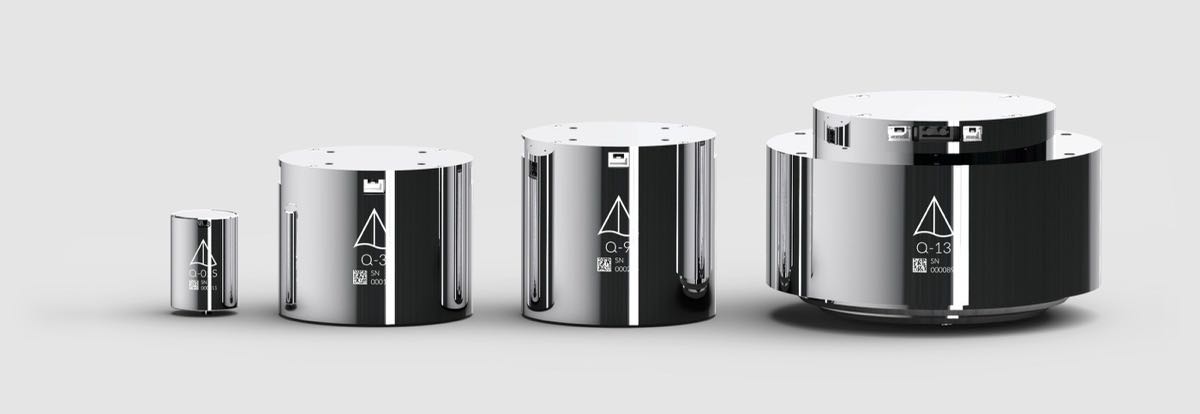
The product: a Q Series of actuators — Q-01, Q-3, Q-9 and Q-13 — with force sensors baked directly into the joint’s internal architecture. The company’s claim is that today’s robots mostly estimate how hard they are gripping by watching motor current, an indirect method Silica compares unfavourably to performing surgery in oven mitts (that particular jab comes from RoboHorizon’s October 3 write-up by Mate Benyovszky, and it is editorial colour rather than company language). Silica’s joints instead measure torque at the output, where the joint actually meets the load. The company puts the gap at roughly ten-fold accuracy over the status quo, and its demo line is the paperclip: current motor-current methods can reliably feel “things as light as a tennis ball”; Silica claims to feel a paperclip.
Three things about the commercial set-up are worth noting alongside the physics. The design is a machined-aluminium drop-in form factor — the pitch is upgrade without redesigning the robot. Pre-orders are open now. And production is slated for January 2027, which means every early deployment between now and then runs on pilot hardware.
The honest caveats come next. Every capability number here — the ten-fold figure, the paperclip, the tennis ball — is the company’s own demo claim, not an independent benchmark. No third-party lab has published measurements of these joints, and “force measured at the output” describes the design goal; how it performs over temperature shifts, gear wear and millions of cycles is exactly the kind of thing only time answers. As of publication, RoboHorizon appears to be the only independent outlet covering Silica Machines — this has not been independently verified beyond the company’s own materials.
The thesis, though, is sound and increasingly crowded. The hand-and-touch layer of robotics has been getting attention all year: Boston Dynamics added a four-fingered hand to Atlas this month, China’s top-4 dexterous-hand makers are pushing into mass production, Honda is building a dexterous robot hand factory, and Robotis’ actuator demand blew its profit up 723%. What distinguishes Silica is where it sits in that stack — not the hand, the joint — and the argument that proprioception belongs in the actuator itself rather than bolted on downstream.
Our read: the tactile-sensing layer is following the same arc dexterous hands did 18 months ago — a handful of startups, demo-grade claims, real money circling — and the winner will be decided by who can prove their sensing survives industrial duty cycles, not by who has the best landing page. A drop-in form factor is the right commercial wedge because retrofit beats rip-and-replace for every operator with a fleet. January 2027 production is the date that matters; treat everything before it as a promise.
Sources: RoboHorizon (Mate Benyovszky, Oct 3, 2026); Silica Machines official site (silicamachines.com). Company claims are unverified by third parties — flagged in body.