The deal announcement was buried under ROSCon Toronto booth demos this week, but it may matter more than most of the flashy hardware on the floor: Qualcomm Technologies said on 23 September 2026 it has agreed to acquire PickNik Inc., the Boulder, Colorado company that has stewarded MoveIt — the open-source motion planning framework behind a very large share of the world’s robot arm projects — since its beginnings inside the ROS ecosystem at Willow Garage.
Qualcomm did not disclose the purchase price, and closing is subject to customary conditions. The company’s stated intent is to streamline MoveIt integration with its Dragonwing platforms — the edge-compute stack it has been positioning as the brain for industrial and humanoid robots — so developers get “an easier path from AI models to planning, manipulation, and real-time control.”
Why MoveIt matters more than its name suggests
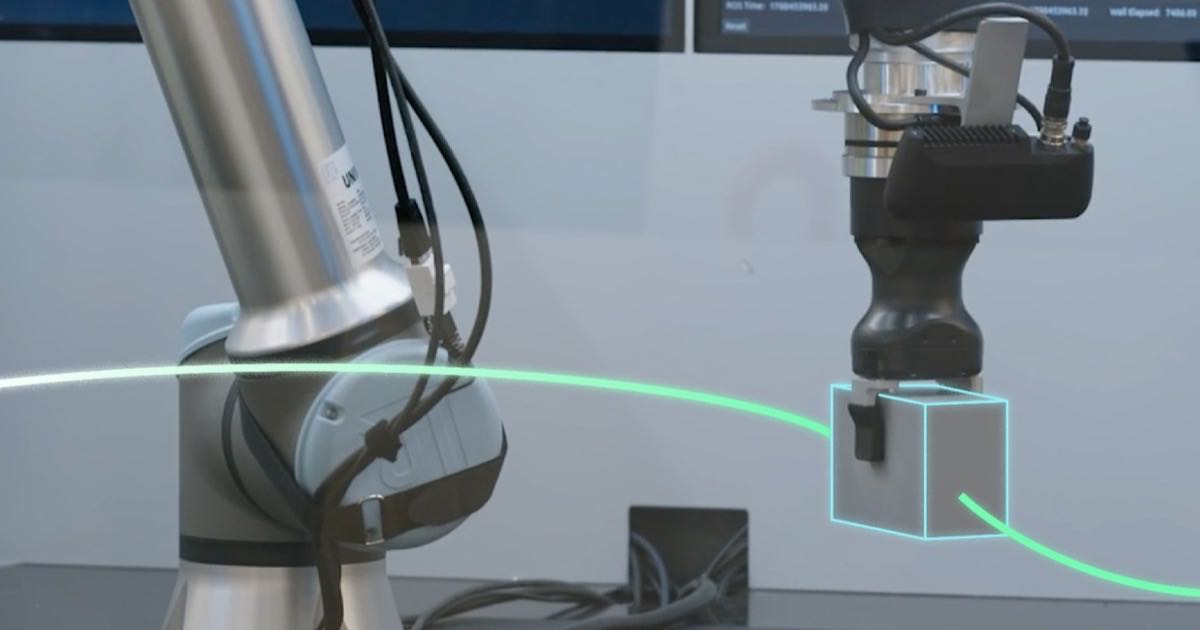
If you have watched a robot arm pour coffee on YouTube, there is a good chance MoveIt generated the trajectory. The framework handles the unglamorous geometry of manipulation: generating high-degree-of-freedom trajectories through cluttered spaces, solving inverse kinematics, grasp generation, and connecting to depth cameras and controllers through common interfaces. It is taught in university robotics courses, and it has been the default starting point for ROS-based manipulation for over a decade.
PickNik’s own history runs through the field’s history. Founded in 2015, the company worked the Amazon Picking Challenge, landed Google as its first customer, and matured MoveIt Studio into MoveIt Pro, a commercial-grade product with runtime orchestration and decision-making layers. This year it shipped MoveIt Pro 9.0 with perception-to-motion capabilities and a training data collection system — the same trajectory from demos to data collection that physical AI investors keep funding.
The open-source promise, and the catch
Qualcomm says MoveIt 1 and MoveIt 2 will stay open source under their existing licenses, with community-driven roadmaps, support across third-party hardware, and continued work on Space ROS. Both companies are founding members of the Open Source Robotics Alliance, which gives the pledge more credibility than the average acquisition FAQ.
But the commercial logic is visible too. Qualcomm bought Arduino in October 2025 and now plans to integrate MoveIt with Arduino’s VENTUNO Q boards, targeting “millions of developers” on the path from prototype to production. The Dragonwing stack already supports vision-language and vision-language-action models, and Qualcomm’s robotics general manager Nakul Duggal framed software as “the connective tissue that turns great hardware into great robots.” In other words: the free framework remains free, and the commercial pull — better benchmarks, supported integrations, priority features on Dragonwing silicon — slowly tilts toward the new owner’s hardware. That is not a betrayal; it is the standard playbook. It is also worth watching.
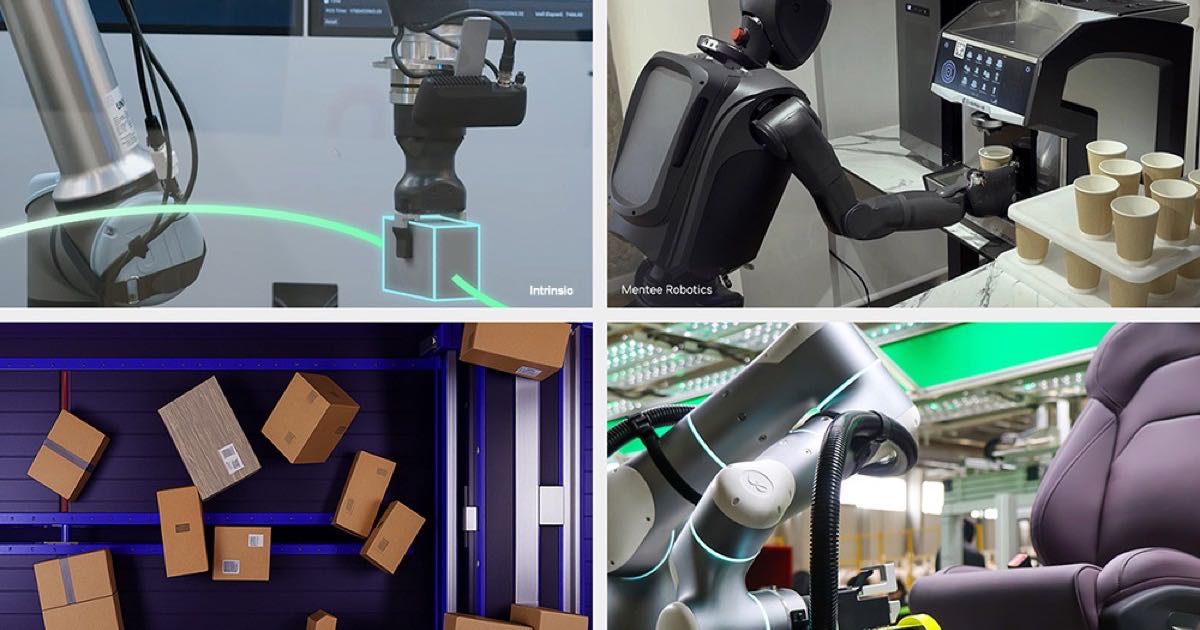
The robotics industry has seen this movie from the other direction this week. Google’s Intrinsic open-sourced the core of its own robotics stack at ROSCon, explicitly courting the community Qualcomm just invested in. NVIDIA’s Isaac ROS 5.0 handed robotics’ plumbing to AI agents a day earlier. The integration layer for robots is now a three-way race between GPU vendor, search giant, and phone chipmaker, and the open-source community is the territory all three are competing to hold.
Part of a consolidation wave
The PickNik deal is the latest in a run of physical AI acquisitions that reads like a land grab: Mobileye paid $900 million for Mentee Robotics in January, Bear Robotics bought Kinisi in June, and Cognex agreed this week to buy Intel spinout RealSense — the depth-camera maker whose sensors feed many of the same robot arms MoveIt moves — for $500 million. Meta, Hyundai and SoftBank have all paid up for humanoid or robotics assets this year, deals we have tracked as they landed.
Chipmakers buying software companies is the tell. The hardware for humanoid robots is racing ahead — Toyota wants 400,000 factory robots and Agility’s Digit wants 20-hour shifts without a cage — but the software that turns hardware into useful workers is still mostly hand-built, project by project. Whoever owns the developer’s first day owns the ecosystem. Qualcomm just bought a lot of first days.
FAQ
What did Qualcomm acquire? PickNik Inc., the Boulder, Colorado robotics software company founded in 2015. It maintains MoveIt, the open-source manipulation and motion planning framework for ROS, and sells MoveIt Pro, a commercial manipulation platform. The deal was announced 23 September 2026; the price was not disclosed.
Will MoveIt stay open source? Qualcomm says MoveIt 1 and 2 remain open source under their existing licenses with community-driven roadmaps, and it commits to supporting MoveIt on third-party hardware and continuing Space ROS work. Both companies are founding members of the Open Source Robotics Alliance.
What is Dragonwing? Qualcomm’s edge AI platform family for robotics and embedded systems, announced in January 2026, which supports vision-language and vision-language-action models. Qualcomm plans to integrate MoveIt Pro with Dragonwing and with Arduino VENTUNO Q boards, which it gained when it acquired Arduino in October 2025.