Lightwheel AI and Hugging Face have released EgoSuite-Open100K — 100,000 hours of annotated egocentric video showing human hands performing real work across more than 15,000 tasks. The dataset, now openly available on Hugging Face Hub, is the largest of its kind and targets the single biggest bottleneck in robotics: teaching machines to interact physically with the world.
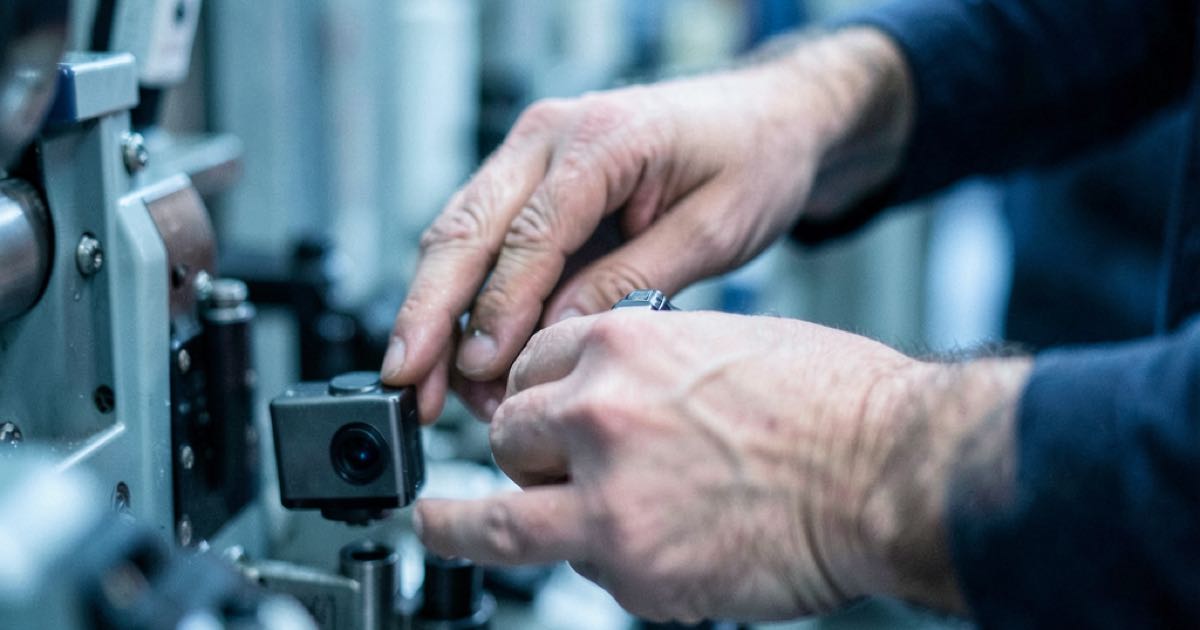
What is egocentric data? It is video recorded from the wearer’s perspective — typically via head-mounted cameras and wrist-mounted cameras — capturing exactly what a person sees and does as they pick up tools, open containers, assemble parts, or sort items. The “egocentric” framing matters because it mirrors the camera placement on a humanoid robot, making the data directly transferable to robot learning pipelines.
Why this matters
Robot foundation models are advancing fast. Vision-language-action systems can already interpret instructions and plan movements. What they cannot do reliably is the last centimetre — making contact with an object, adjusting grip force, feeling whether a grasp is secure. Unitree founder Wang Xingxing identified this exact gap at the World Robot Conference last week, calling tactile feedback “the biggest challenge facing embodied AI worldwide.”
The problem is data. Real-robot teleoperation data — where a human drives a robot arm to perform tasks — is expensive, slow, and does not scale. You need physical hardware, controlled environments, and trained operators. Synthetic simulation data is cheaper but suffers from the sim-to-real gap: behaviour that works in simulation often fails on a real robot.
Egocentric human data sits between these two. It captures real human interaction from a first-person perspective, including the contact-rich manipulation signals that web video lacks. And it scales, because it does not require a robot in the loop. Lightwheel has already collected over 300,000 hours across homes, factories, warehouses, and public environments in seven countries.
What is in the dataset
EgoSuite-Open100K covers 15,000-plus tasks across diverse environments — kitchens, warehouses, assembly lines, outdoor settings. Each recording includes:
- 3D hand pose tracking with millimetre-level accuracy, stable under self-occlusion and close-range object interaction
- 3D full-body pose tracking
- Frame-accurate semantic labels — scene context, action segments, and manipulated objects
- Wrist camera feeds that mirror what a robot’s end-effector cameras would see
The annotation pipeline converts raw video into structured, learning-ready data. Hand pose and body pose are tracked in 3D. Semantic annotations provide frame-accurate action segmentation with explicit language descriptions, enabling precise alignment between visual observation, physical motion, and task semantics.
The data pyramid
Lightwheel frames this within what the industry calls the “embodied AI data pyramid.” At the base sits web data and human video — massive in scale and diversity, but missing the first-person contact signals robots need. At the top sits real-robot teleoperation data — rich in action trajectories, but unscalable. Egocentric human data occupies a middle layer that captures real interaction at scale, without requiring physical robots.
According to Lightwheel’s technical documentation, the company operates a global field network running 10,000-plus tasks across 500-plus environments in parallel across seven countries, producing more than 20,000 hours of demonstrations every week. The capture stack uses VR-based head units, exoskeleton interfaces for dexterous manipulation, and UMI-aligned gripper interfaces that mirror robot end-effector kinematics.
The open-source bet
Releasing 100,000 hours openly on Hugging Face is a strategic move. The embodied AI community has been converging on open data as the path forward — Hugging Face and NVIDIA launched an open data initiative for AI agent training trajectories in July. The LeRobot project on Hugging Face has been building open robot learning tooling. EgoSuite-Open100K fits the same pattern: make the data freely available so researchers and companies can train better models without each having to build their own data collection pipeline.
Lightwheel’s commercial model sells the full EgoSuite platform — capture devices, global field operations, and data management — to enterprise robotics teams. The open 100K-hour subset serves as both a contribution to the research community and a demonstration of what the commercial product can produce.
The real question
Datasets do not solve problems by themselves. The question is whether 100,000 hours of human hand video, no matter how well annotated, can close the gap between demonstration and deployment. Robot learning has been stuck on a fundamental issue: a robot can watch a human hand pick up a cup a million times, but the physical dynamics of a metal gripper contacting a ceramic surface are different from a human hand. Transfer learning from human demonstration to robot execution is not straightforward.
That said, more data is better than less data, and 100,000 hours of contact-rich, multi-modal, annotated human interaction is a genuinely significant contribution. If the embodied AI scaling hypothesis holds — that more data, like more compute, produces better models — then EgoSuite-Open100K could be a meaningful step toward the humanoid robot “ChatGPT moment” that Unitree’s founder says is still years away.
The data is available now on Hugging Face Hub. The robots that learn from it will tell us whether he is right.
❓ FAQ
Can anyone use this dataset? Yes. EgoSuite-Open100K is openly available on Hugging Face Hub for both academic and commercial robot training.
How does this compare to existing robot datasets? Most existing open datasets focus on teleoperated robot demonstrations, which are expensive to collect and limited in scale. EgoSuite-Open100K captures human hands performing real tasks from a first-person perspective, making it far more scalable while still providing the contact-rich interaction data that web video lacks.
What is the NZ connection? New Zealand robotics researchers and companies working on embodied AI can access this dataset freely. The open-source release lowers the barrier for smaller economies and institutions to participate in robot learning research without building their own multi-million-dollar data collection infrastructure.