The US Navy and the General Services Administration have quadrupled the ceiling on Gecko Robotics’ ship-inspection robot contract, adding $300 million on top of the $71 million award the Pittsburgh company won just six months ago — the largest single commitment yet to robots that crawl over warships looking for corrosion.
🔍 THE BOTTOM LINE
A fourfold ceiling increase six months into a first contract is not an experiment being graded; it is a budget line being scaled. The Navy’s claim — that Gecko’s climbing robots cut inspection from months to days and save up to $8 million per ship in repair costs — matters less than the procurement behaviour itself: the fleet-readiness math now runs through inspection robots.
What quadrupling actually buys
The contract structure matters here. This is an IDIQ — indefinite delivery, indefinite quantity — vehicle, meaning the $300 million is a ceiling the Navy has authorised itself to spend, not money committed today. Actual orders will land incrementally. But ceilings are choice architecture: a four-times increase six months after the first award means the buying agencies have signalled to planners that this is now core tooling, as The Robot Report’s coverage lays out.
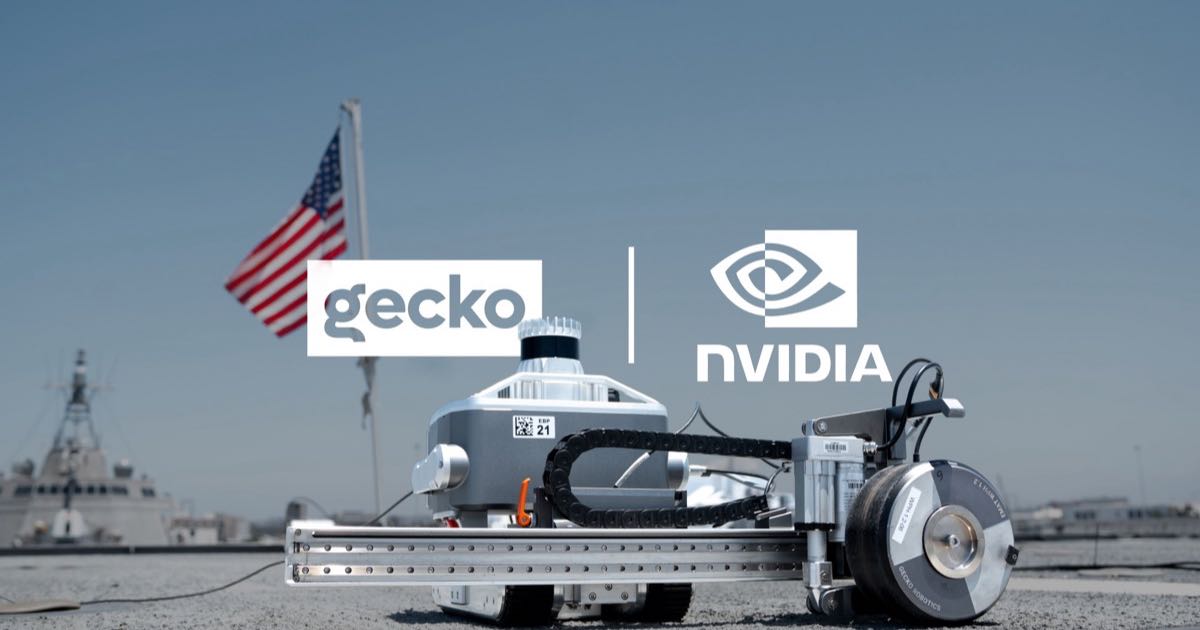
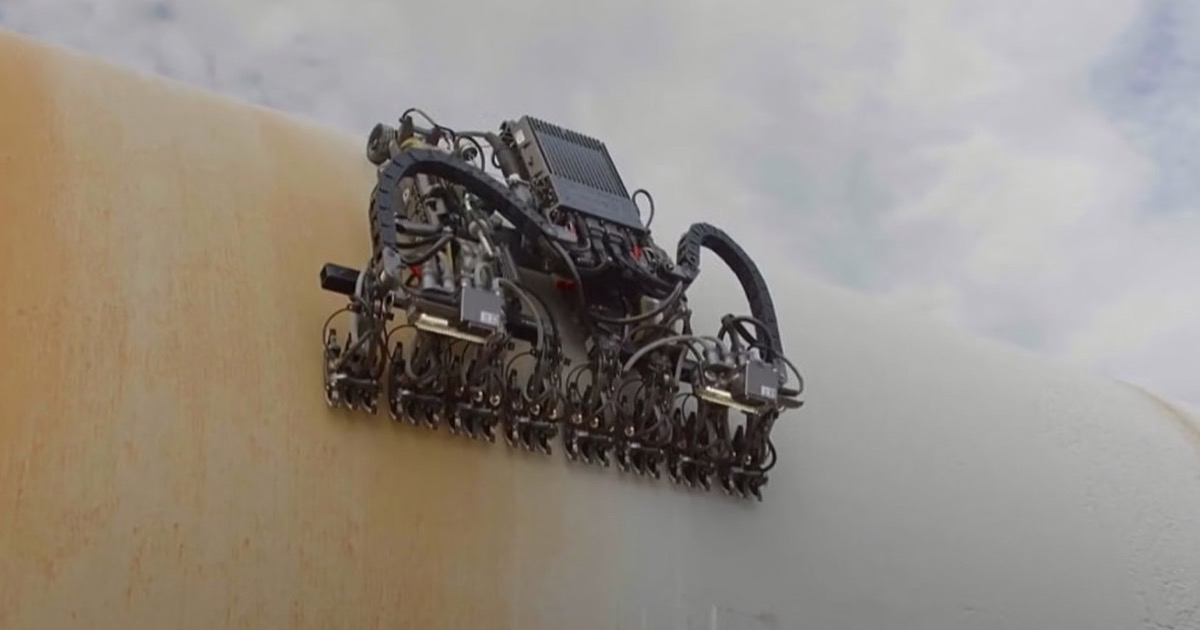
What the robots do is unglamorous by design. Gecko’s climbers — including the Komodo platform — carry scanning payloads across hulls, decks and welds, collecting corrosion and material-thickness data layer by layer. The Komodo crawler can scan straight through thick non-skid deck coating without stripping it first, producing a full-deck heatmap of corrosion before the ship ever enters drydock. Repair teams plan the job from the map instead of discovering the damage after the water is gone.
The company’s stated economics: up to $8 million in repair savings per ship, structural issues identified up to 50x faster than traditional methods, and inspections compressed from months to days. Treat all three as vendor claims — Gecko wrote them — but the Navy is the party acting on them, which in procurement is the more honest endorsement.
The readiness math behind the money
Fox News’ framing of the deal puts the China race front and centre: a bigger fleet fraction deployed at sea versus a competitor that is laying hulls down fast. Strip the hawkish gloss and the arithmetic underneath holds up. The Chief of Naval Operations has set an 80 percent fleet-readiness target, and every extra day a warship spends in maintenance is a day it projects nothing.
That is the actual product Gecko sells. Not inspection data — calendar time. A drydock window planned around a full-deck heatmap, generated before the ship’s arrival, is a shorter drydock window. Multiply across a fleet with a maintenance backlog and the savings compound.
Why the Navy buys robots before drydock
Here is the part worth generalising. Inspection is the least glamorous job in the industrial robotics catalogue — no payload arm, no manipulation, no video-ready demo. It is also the highest-leverage one, because inspection data sits at the top of the maintenance decision tree: everything downstream (planning, parts ordering, dock scheduling) inherits its accuracy or its errors.
New Zealand’s Navy, which fields a pair of Anzac-class frigates, would feel every one of those maintenance days even harder — a two-ship combat fleet loses a fifth of its punch when one hull is in drydock. The same pattern Gecko serves with the US fleet applies anywhere hulls are expensive and surveys are slow: merchant shipping, ferries, port infrastructure. The buyer differs; the calendar economics do not.
From demo to budget line
2026 has been the year robotics claims started getting tested against procurement rather than demo reels. Gecko itself crossed from safety-tech novelty to deployed capability this year — it bolted NVIDIA’s agent-safety runtime onto the same climbing robots that inspect nuclear submarines. Elsewhere in the same market, the first humanoid job with a concrete business case may be welding ships, and Fincantieri is spending close to $100 million putting physical AI on the shipyard floor. The pattern: money is arriving after capability demos, attached to specific fleet problems, and follow-on contract size is the tell that a capability has graduated.
Whether the Navy actually draws down that $300 million — and whether drydock windows measurably shrink — will be the real verdict. Ceilings are promissory; orders are the audited truth.
❓ FAQ
What exactly did Gecko Robotics win? A ceiling increase from $71 million to $300 million on its existing US Navy/GSA IDIQ contract for robotic inspection services, according to The Robot Report. IDIQ ceilings authorise spending; actual funds flow via task orders.
Is the Navy actually spending $300 million? Not on day one. A ceiling is spending capacity that gets drawn down through individual delivery orders. The quadrupling signals expected scale, not a committed sum.
Why does inspection matter for warship readiness? Because it gates everything. The Navy’s 80 percent readiness target and Gecko’s claims — up to $8 million saved per ship, inspections in days not months — both resolve to the same variable: how long a hull sits out of action.
Is this about countering China? Outlets including Fox News framed it that way, with readiness at sea as the stated stake. The underlying economics — fleet availability versus maintenance time — hold regardless of which navy you support or fear.
🔍 THE BOTTOM LINE
The dollars are the story’s headline; the sequencing is its meaning. Six months from first award to a four-times ceiling is the procurement system voting that inspection robotics has graduated from promising to load-bearing. Watch the task-order pace now — that is where the $300 million stops being a promise and becomes the fleet’s calendar.
📰 Sources
- The Robot Report
- Fox News
- TechAmerica.ai
- Gecko Robotics (company claims via the above coverage)