Wall Street has put a production number on the humanoid robot boom. J.P. Morgan expects US humanoid robot production to reach 300,000–400,000 units annually by 2030 and roughly 1.5 million units by 2035, as Reuters first reported — the bank’s first large-scale production forecast for an industry that, until recently, was measured in demonstration videos rather than units shipped. The forecast covers manufacturing, logistics and warehousing, where J.P. Morgan identifies labor shortages, improving economics and rising production capacity as the adoption drivers.
The labor math sits at the centre of the note. J.P. Morgan estimates humanoid robot costs are nearing parity with labor costs, and that multi-shift deployment — running robots across more than one work shift — could generate about $100,000 in annual savings per customer, per the bank’s research summary carried by Unite.AI. That framing matters: the savings only appear when the robot actually works, around the clock, at a utilisation rate human workers cannot match. A robot sitting idle between shifts has no savings to offer.
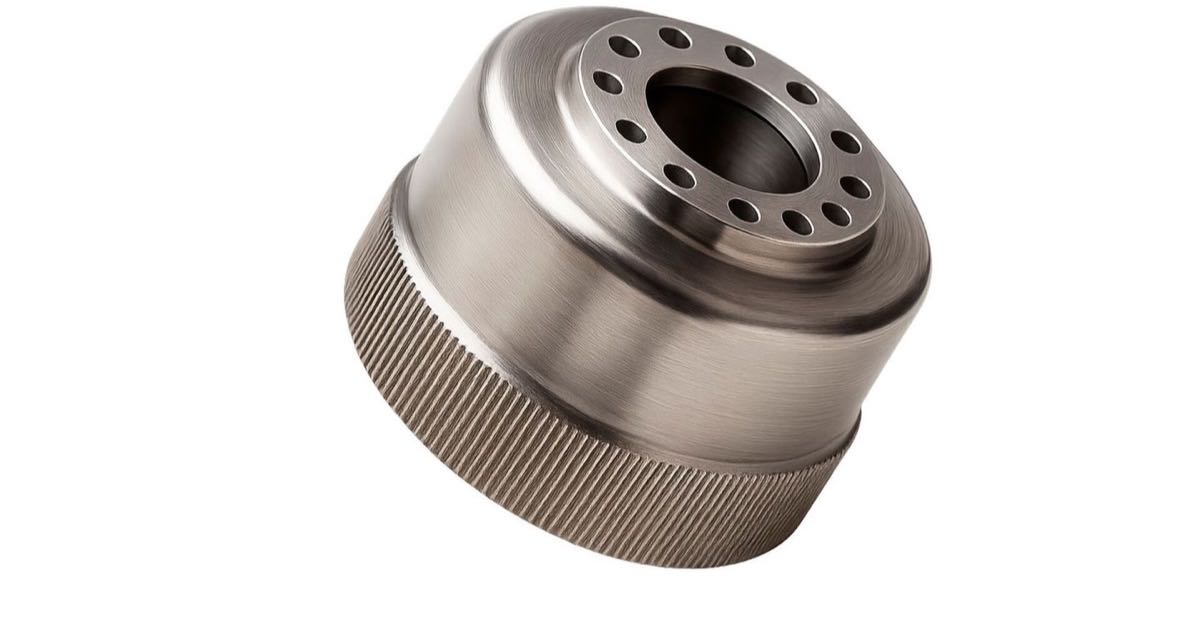
The parts list is the real story. The forecast’s most quoted line is its bottleneck list: “Near-term progress remains supply constrained, with a few binding bottlenecks: hands, actuators, the brain, and production capacity,” per the JPM note. The bank expects the market for key components — actuators, motors, vision systems — to approach $30 billion by 2035, and names its favoured suppliers as Timken, Robotis, Leader Drive, Orbbec and Cognex. In other words: the money is not in the robots; it is in the parts that make robots possible, at least for the next several years. Most US humanoid manufacturers other than Tesla are targeting annual production of just 10,000–30,000 units — numbers that make the headline 400,000 forecast look like a bet on an entire supply chain standing up, not on any single company’s factory.
The policy layer is doing quiet work in the forecast too. J.P. Morgan notes that the Trump administration’s finding that imported robotics and industrial machinery pose national security risks could lead to tariffs or other measures boosting US production — a signal that the humanoid boom is as much an industrial-policy story as a technology one. That is the same logic behind the FCC’s restrictions on Chinese humanoid robots, and it is reshaping who gets to build the supply chain.
Context: this forecast lands amid a genuinely unusual week for the sector. On the same day the note circulated, SoftBank and Nvidia led a $500 million round into Europe’s Agile Robots at an $8.5 billion valuation — a cheque explicitly aimed at production capacity, which reads like a direct response to the supply bottleneck JPM identifies. It also comes with US deployments entering production-scale: Agility’s Digit robots are expanding across GXO warehouses, and the site has tracked AGIBOT’s publicly cited 9,700+ shipments as China scales faster than US rivals. JPM’s named US players: Tesla’s Optimus, Agility’s Digit, Boston Dynamics’ Atlas, Figure AI’s robots and Apptronik’s Apollo.
A note of caution on the numbers themselves — and this is where the forecast deserves scepticism regardless of how it is framed. Production forecasts for a technology with no widely proven at-scale deployment yet are, functionally, venture memos with a bank’s letterhead. The same week JPM published its 400,000 figure, AOL and other outlets covering Agility’s Nasdaq listing noted that its own securities filing describes humanoid robots as “unproven at scale” with no widespread commercialisation. The honest reading of both documents together: the market sees 2030 as the year humanoids hit real volume, but the industry’s own risk disclosures say the technology is not yet proven to work at that volume. Both can be true — the forecast describes where the capital is pointed, not necessarily where the robots will end up.
For New Zealand’s manufacturing sector, the direct relevance is modest — a 400,000-unit US production run by 2030 still means humanoid robots remain rare and expensive relative to the niche automation NZ factories and coolstores already use. The transferable lesson is the bank’s supply-chain focus: if the parts market alone approaches $30 billion by 2035, precision component suppliers — including NZ’s advanced-manufacturing firms — are looking at the closest thing robotics has to a picks-and-shovels play, and the customers ordering those parts are likely to be in China and the US long before they are in Tauranga.
Sources: Reuters via Unite.AI (12 November 2026); AOL/Reuters (12 November 2026); Ars Technica (5 November 2026); Unite.AI coverage of GXO-Agility deployments (November 2026). J.P. Morgan research figures as summarised in published coverage — the bank’s note itself is client-restricted.