Germany’s most valuable robotics startup just closed one of Europe’s largest robotics cheques. Agile Robots has raised $500 million in a funding round led by SoftBank at an $8.5 billion valuation, with Nvidia and Hitachi also taking part, the Munich company said Thursday in remarks carried by Reuters via AOL and Bloomberg. The New York Times’ coverage of the round calls the investor trio a striking combination: Japan’s biggest tech bet-maker, the company whose silicon sits inside most of the world’s AI training clusters, and the industrial conglomerate whose name is on agile’s factory heritage.
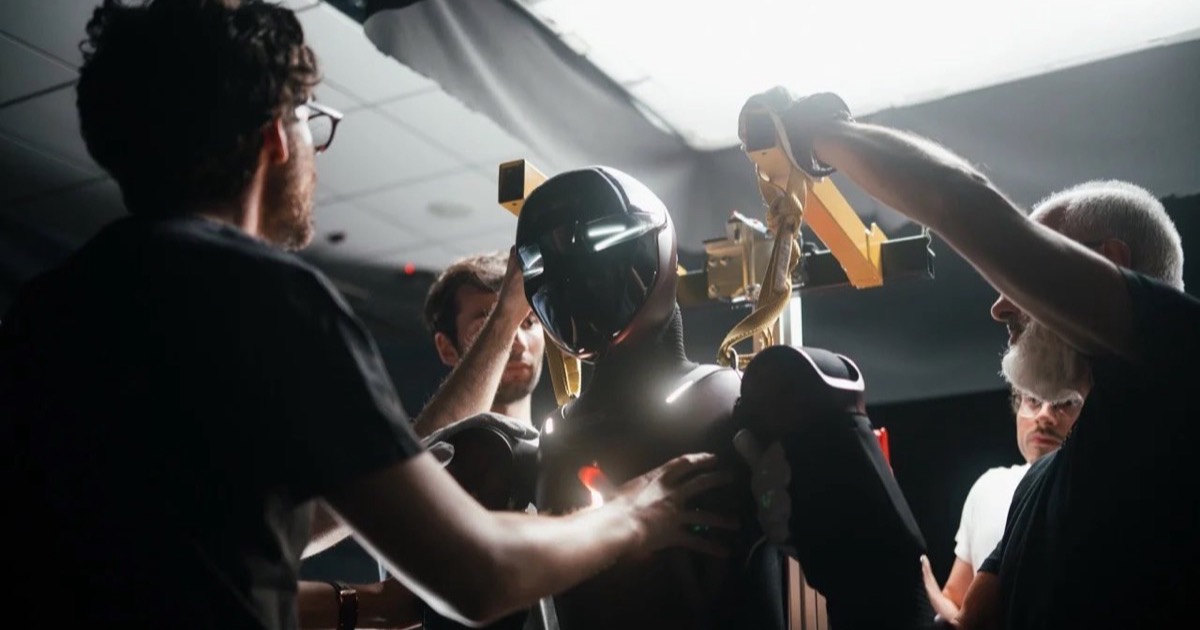
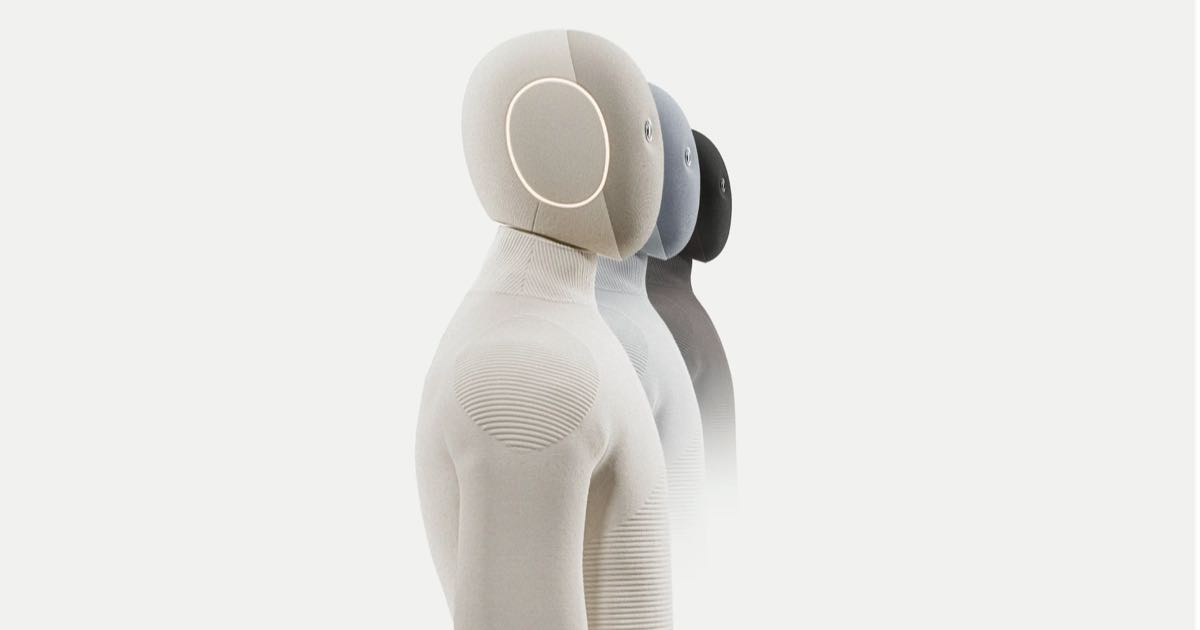
The money has a specific job. Agile Robots said it would use the round to expand in the US and add production capacity, including in Germany — where it opened a factory in Fürstenfeldbruck, near Munich, earlier this year that it says can produce up to 10,000 legged and wheeled humanoid robots a year, per Reuters. Founded in 2018 as a spin-off from the German Aerospace Center, the company employs more than 2,000 R&D specialists and holds over 650 patents. The investor mix is not accidental either: Nvidia’s Gemini-era partnership with the firm goes back to the Agile ONE humanoid built on Isaac GR00T, unveiled at Nvidia’s GTC Berlin event, with company plans of 1,000 to 2,000 humanoids produced in 2027.
Why a European humanoid champion, and why now. The timing is not subtle. On the same day, Reuters reported J.P. Morgan’s forecast that US humanoid robot production could reach 300,000–400,000 units by 2030 — and that forecast explicitly framed supply, not demand, as the binding constraint, citing bottlenecks in “hands, actuators, the brain, and production capacity.” A $500M cheque earmarked for factory capacity is a direct answer to that diagnosis. SoftBank, in particular, has been assembling exactly this portfolio: the firm put $1.4 billion into Skild AI and is reportedly the force behind Agile Robots’ earlier funding talks, which began as discussions about an even larger $800 million round.
The company profile explains why the price holds up. Agile Robots is not a lab-stage bet: it sells industrial force-torque sensing robot arms — the tech that grew out of German Aerospace Center research — into automotive factories, and publicly announced an Audi logistics pilot running mobile humanoids alongside the smaller Agile ONE SN lab humanoid. That mix of arms (revenue now) and humanoids (revenue later) has been the standard playbook for robotics companies trying to survive the valley between prototypes and mass production, and it is the same structure that got Unitree and AGIBOT to their humanoid shipment milestones.
The gap SoftBank is underwriting. There is a real question about whether Europe can close the loop on humanoid manufacturing. China’s AGIBOT has already publicly cited 9,700+ humanoid shipments, and Unitree’s IPO made it the first public humanoid pure-play on any exchange. Europe’s industrial robotics giants — KUKA, FANUC’s European operations, ABB — have largely watched the humanoid wave from the sidelines. Agile Robots is effectively the continent’s answer, and SoftBank’s cheque is a wager that a German aerospace spin-off can convert Nvidia silicon into factory output faster than US rivals can convert venture capital into the same. The 10,000-a-year Fürstenfeldbruck rating is a plausible answer to J.P. Morgan’s supply-constraint thesis, but it is a rating, not a volume — the track record of robotics companies translating stated capacity into shipped units is, charitably, uneven.
For New Zealand, the interesting part is the supply chain beneath the headlines: an $8.5B valuation for a company whose core products are sensors, arms and humanoid platforms implies demand for precision components — force-torque sensors, actuators, harmonic drives — that is exactly where J.P. Morgan sees the near-term $30 billion parts market moving. NZ’s precision engineering sector sells into aerospace and medical suppliers today; the robotics component boom is a different customer list with similar quality requirements.
Sources: Reuters (via AOL, 12 November 2026); Bloomberg (12 November 2026); The New York Times (12 November 2026); Crypto Briefing (October 2026, GTC Berlin coverage); Humanoids Daily (June 2026, funding talks). J.P. Morgan forecast covered separately on this site.