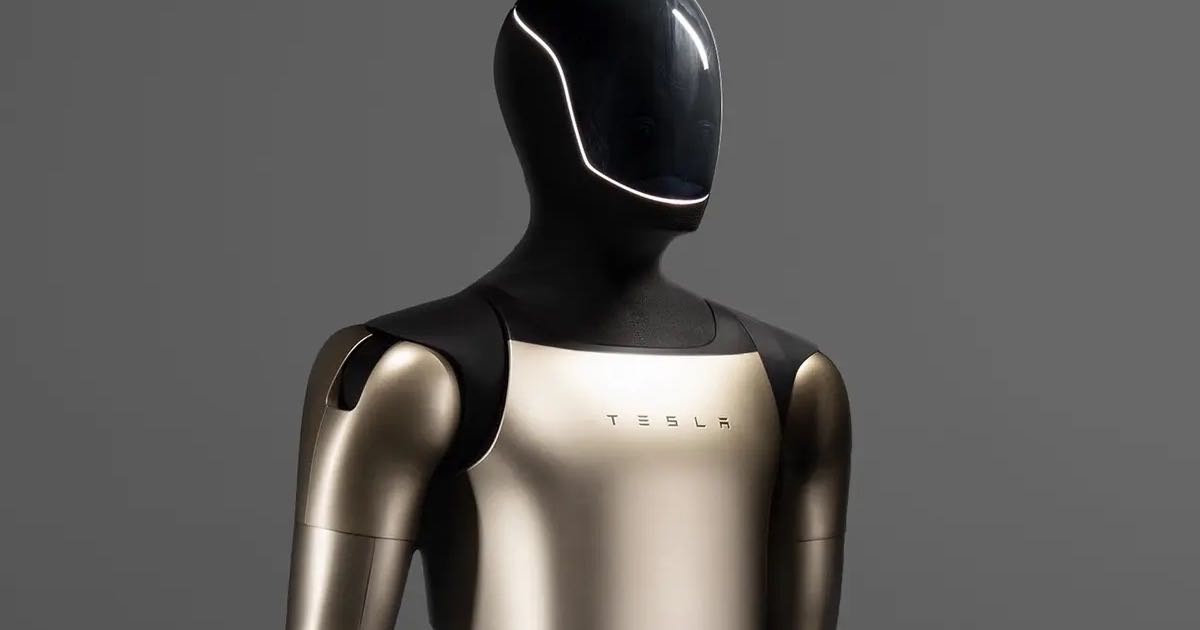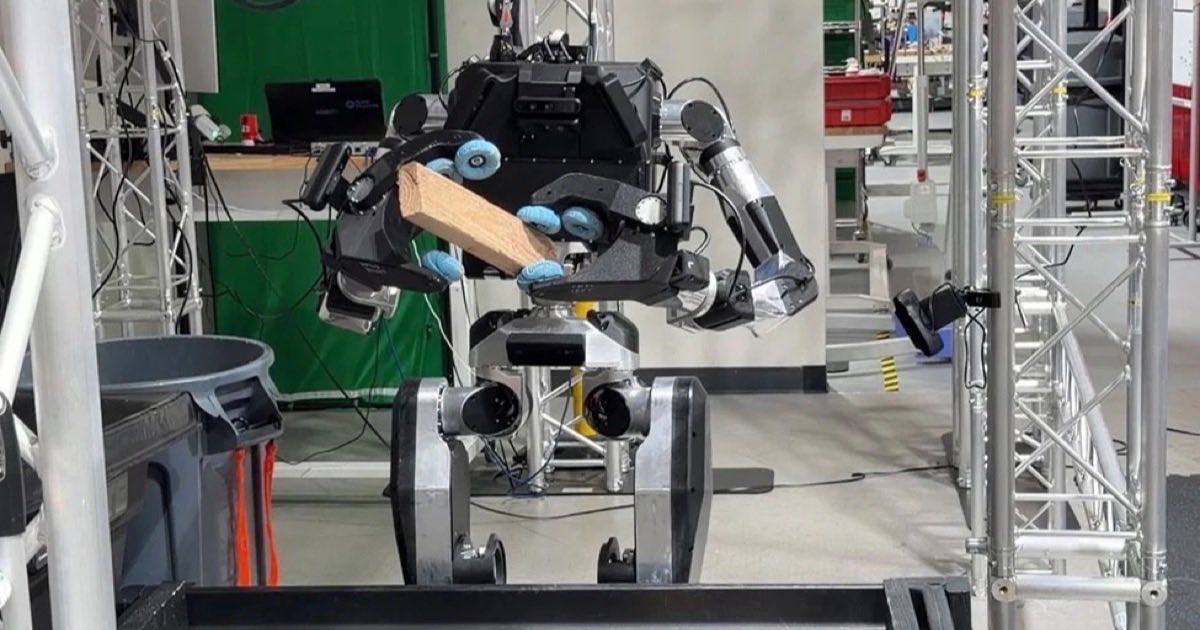
Generative Bionics, the Milan-based maker of the GENE.01 industrial humanoid, says it will build what it calls Europe’s largest Physical AI Data Factory: a three-node network starting with a 5,000-square-metre hub in Italy that the company targets for operation by the fourth quarter of 2027. The announcement, made in a press release on 21 October 2026, pairs the build-out with a bigger role for AMD, which will supply rack-scale Helios AI systems to power the network’s robot training workloads.
The pitch is physical AI’s now-standard loop: GENE.01 robots learn industrial work in real environments, skills are stress-tested across thousands of digital-twin scenario variations in simulation, and the validated models — Generative Bionics calls them World Action Models — go back out to the fleet. According to the company, the datasets will include vision and motion data plus signals from GENE.01’s full-body multimodal skin. A second European node and a third serving global markets are planned, with no locations or dates disclosed.
The AMD arrangement is deeper than a chip deal. AMD Ventures participated in Generative Bionics’ EUR 70 million seed round — led by CDP Venture Capital with Duferco, Eni Next, RoboIT and Tether — and GENE.01 already runs AMD compute onboard. In the press release, AMD’s SVP for global AI markets, Keith Strier, framed Helios as the compute layer “needed to turn that potential into reality.” In other words, AMD is simultaneously a supplier, an investor and a co-marketer. That does not invalidate the announcement, but it does mean every performance claim in it is worth reading twice.
The honest caveats first. This is planned infrastructure, not an operating facility: no investment budget, no specific Italian site for the hub, no robot count and no Helios installation scale have been disclosed, as Korthos Robotics’ analysis of the announcement also notes. A Q4 2027 timeline sits comfortably beyond the point where anyone can check it today. Wisevoter’s coverage reported the same figures from the release, but all three accounts trace back to the company’s own statements — as of publication, no independent reporting has verified the build-out.
Still, the strategic reading is straightforward. Training data has become the scarce commodity in humanoid robotics, and the biggest training-data plays this year have all lived in NVIDIA’s orbit — LG and NVIDIA building 100,000 hours of robot training data in Seoul, or NVIDIA’s Cosmos 3 world models as the simulation substrate for physical AI. A European consortium anchoring its data pipeline on AMD instead is less a technical choice than a sovereignty statement: the release explicitly says the goal is for “the data, the models and the infrastructure” behind European industrial humanoids to be generated, trained and validated on the continent. Whether an AMD-centred stack truly counts as European sovereignty is a question the release does not ask, and we will note that the answer is not obvious.
The market context is equally pointed. China captured 97% of global humanoid shipments in the first half of 2026, with AgiBot dethroning Unitree while both race to IPO. Europe has strong component suppliers and research labs but, on shipment numbers, almost no humanoid volume to train from. Generative Bionics’ answer is to manufacture training conditions instead: if you do not have thousands of robots in the field feeding you data, build thousands of simulated factories where a few robots can generate the equivalent. The company’s CEO, Daniele Pucci, put the bet plainly: “We are replicating the world, physically and digitally, to train humanoid robots at scale before they ever enter it.”
Whether that approach produces transferable skill or beautifully simulated habits is the open question every real-to-sim-to-real pipeline faces, and the Q4 2027 opening will be the first chance to test it. For now, the announcement’s real substance may be the investor geometry: AMD funding the European challenger to the ecosystem it already profits from. New Zealand watchers running industrial operations should file this one under “watch the validation, not the ribbon-cutting” — nothing here changes factory floors until World Action Models demonstrably survive contact with real work.
Generative Bionics did not respond to a request for additional detail on hub location or investment scale; the figures in this article come from the company’s 21 October release and outlets reporting it.