SoftBank Group is considering acquiring Allied Universal — the US’s largest security services company — in a deal that could value the firm at about US$18 billion in equity, with its roughly US$12 billion in listed debt pushing the total close to US$30 billion, Reuters reports. The reporting traces back to Bloomberg’s story published Friday, citing people familiar with discussions that remain preliminary, with no final decisions made on price or structure. The strategic logic is the headline here: this is not a guard company being bought for its guard business. Per Bloomberg’s sourcing, it is a customer base and a workforce being bought as a deployment ground for AI-powered security robots.
🔍 THE BOTTOM LINE
If the deal lands anywhere near its reported $30 billion all-in size, it would be the clearest price tag yet on Son’s physical-AI premise: that the fastest route to robot scale is buying the customers. Security is labour-heavy, high-churn, shift-based work — exactly the profile robotics builders claim to be circling. But the same reporting contains the honest counterweight: sources say humanoid security workers are “likely to take longer”, and even SoftBank’s own robot portfolio is far from demonstrating an unattended overnight guard shift. This is a bet on a deployment channel that does not functionally exist yet, financed at conglomerate scale.
What the Reports Actually Say
The core facts, per Reuters’ source-sourced account: SoftBank is weighing an acquisition valuing Allied Universal at about $18 billion, with deliberations preliminary and no decisions made; Allied Universal staffs businesses, venues and major events, and has a growing data-centre security practice spanning construction and operations; and with Allied, SoftBank “would look to eventually replace some staff with robots for certain security tasks, though the deployment of humanoid security workers is likely to take longer.” Bloomberg’s reproduced reporting via Investing.com frames the same deal as “close to $30 billion” once Allied Universal’s roughly $12 billion of publicly traded debt is counted, and adds the sharpest detail: Son has identified security as a promising robotics beachhead, with fleets of robots potentially replacing human guards at one-off events such as concerts “when the economics make sense.”
Allied Universal itself is not a name-brand robotics company — it is the opposite, a labour business at massive scale, providing security personnel, intelligence analysis, canine units and bomb technicians, plus janitorial and facility services. It guards New York City’s subway system under MTA contracts. Its data-centre work matters most in an AI-infrastructure context: as Reuters notes, the firm already supports development and operations of the facilities the AI build-out depends on, meaning SoftBank would be acquiring security capacity for its own ecosystem’s physical layer at the same time as it acquires a future robot customer.
SoftBank declined to comment and Allied Universal did not respond to Reuters’ request for comment — normal for a preliminary deliberation, but worth noting because every number in this story is sourced, not confirmed.
Buying the Customer List, Not Just the Company
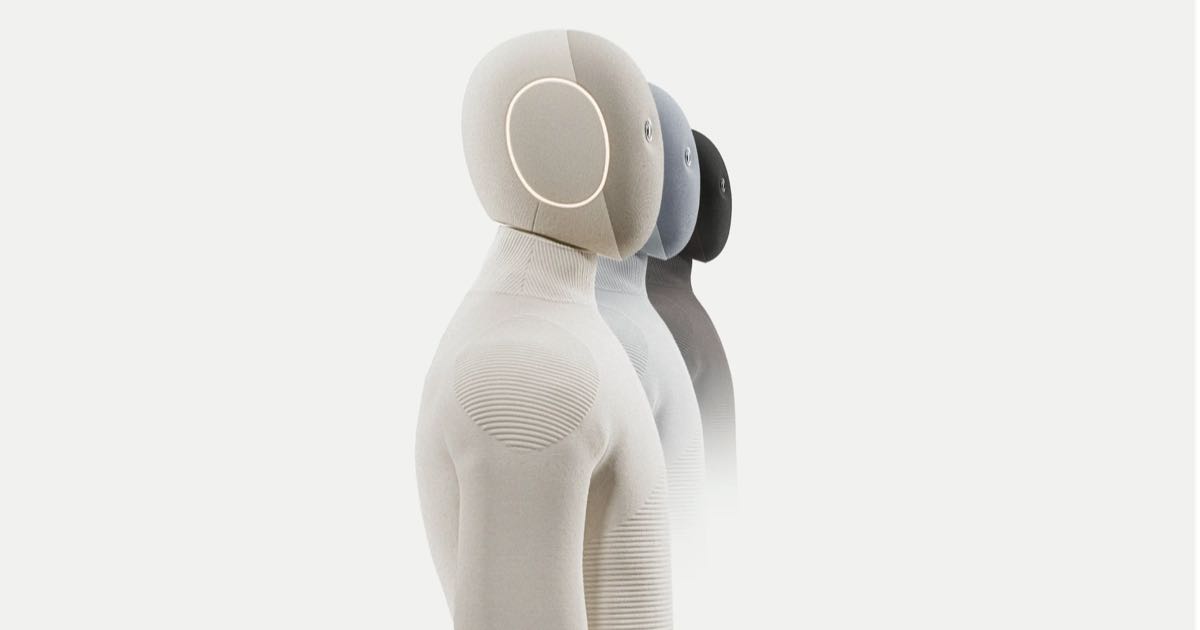
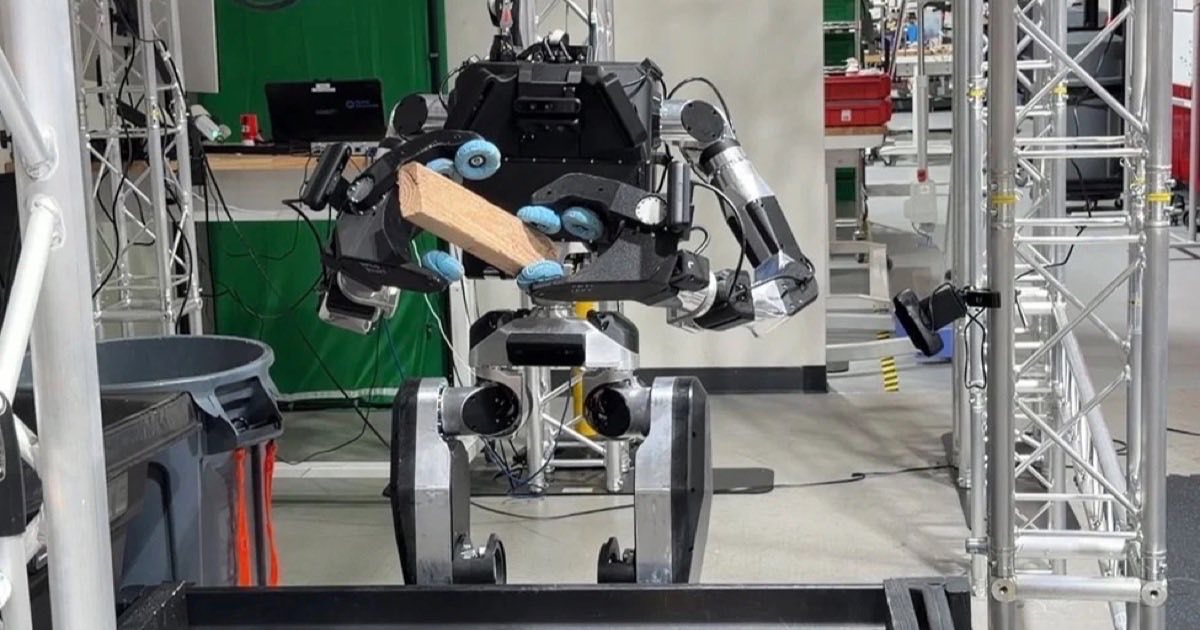
The deal’s most interesting feature is what it reveals about how Son now thinks about robotics distribution. SoftBank’s robot portfolio — Boston Dynamics, the majority stake Hyundai bought into in 2024 and SoftBank retains exposure to, Autonomous construction bet Gravis Robotics at $200M, the reported $6 billion push for 1X — has world-class engineering and, so far, no mass consumer or commercial channel. Buying a security firm inverts the usual M&A logic: instead of acquiring technology to sell through existing channels, SoftBank would be acquiring the channels themselves — hundreds of thousands of sites, guard posts, patrol schedules, and client contracts — each one a potential robot deployment slot.
This mirrors the vertical-integration pattern playing out across physical AI: Australia’s robotics builders buying their way into construction fleets, SoftBank’s own Japan sovereign-robotics push, and logistics firms building robot fleets in-house. Security is the highest-labour-cost, lowest-physical-complexity service industry of scale in the Western economy — the exact profile that makes it both the obvious robotics test bed and a questionable near-term business case, because guard duties mix unpredictable human interaction with low tolerance for failure.
The Time-Gap Problem in the Deal Logic
Both wire reports hedge identically, and the hedge is the real story inside the story: any robot replacement of human guards is framed as an eventuality, and humanoid guards specifically as “likely to take longer.” Nothing in Bloomberg’s reported detail suggests a deployment timeline; the concrete near-term overlap — robot fleets at one-off events “when the economics make sense” — is the least demanding use case available and still conditional on cost curves that haven’t arrived yet.
That matters for a $30 billion transaction. If robotisation is the strategy, then part of the price is being paid for revenue SoftBank expects to replace — not to grow. A security firm run for cash and margin is a decent business; a security firm bought at deal size specifically so its headcount can be amortised down is a riskier one, and its labour unions would not be the only parties watching the gap between “eventually” and the interest bill on $12 billion of assumed debt.
New Zealand reads this deal from a useful middle distance. Our own guard and patrol sector is small and not obviously a near-term robotisation target, but the deal’s underlying signal travels: when one of the world’s largest tech investors starts buying service companies at workforce scale, it is pricing labour as a transitional cost. The same premise animates India’s move to film human workers at scale to train world robots and every humanoid pricing announcement this year — including Faraday Future’s $2,490 education humanoid. Somewhere in the middle distance, labour-heavy service firms are being repriced as robot deployment surfaces, and SoftBank has just planted a $30 billion flag on the idea.
❓ FAQ
Has the deal been agreed? No. Reuters, citing one source familiar, says deliberations are preliminary with no decisions on price or structure; Bloomberg, cited by Investing.com, calls discussions “closely held” and early. SoftBank declined comment; Allied Universal did not respond to Reuters.
How big is the deal being discussed? About $18 billion in equity, per Reuters, with roughly $12 billion in Allied Universal’s publicly traded debt taking the total close to $30 billion, per Bloomberg’s reproduction via Investing.com.
Why does a security firm matter to AI? For the data-centre security business Allied already runs — relevant given SoftBank’s AI infrastructure investments — and more strategically because a large guard workforce means a large installed base of sites, contracts and shift patterns where security robots could eventually be piloted and deployed at scale.
Are robot guards actually here yet? No. Both wire reports hedge on the timeframe: “eventually replace some staff” and humanoid guards “likely to take longer.” The near-term concrete case — event-based robot fleets — is conditional on economics that haven’t arrived yet.
🔍 THE BOTTOM LINE
This deal, if it happens, is best read as infrastructure M&A with a labour overlay: SoftBank paying for a service firm’s contracts and client list because they are where robots would go first. The honest framing is a decade-long hypothesis carried on a balance sheet in the meantime. The robotics sector’s own veteran operators keep making the Lego-era argument — that physical AI general-purpose robots are still at the interlocking-blocks stage — and institutional money keeps betting against that caution at scale. This is the largest such bet yet made public.
📰 Sources
- Reuters (via AOL) — “SoftBank weighs $18 billion acquisition of Allied Universal, source says” (16 October 2026)
- Bloomberg — “SoftBank Is Said to Weigh Buying Top US Security Firm Allied” (16 October 2026; text via Investing.com reproduction)
- EconoTimes — “SoftBank Eyes $18 Billion Allied Universal Acquisition to Expand AI Robotics” (16 October 2026)
- Yahoo Finance / ad-hoc-news.de — syndicated coverage of the same reporting (17 October 2026)