President Donald Trump signed a proclamation on October 28 declaring that imports of industrial robots, machine tools and their components “threaten or impair” US national security — and then did not impose tariffs. According to the White House proclamation, Commerce Secretary Howard Lutnick’s Section 232 investigation found the United States “relies on foreign imports for most types of robotics and industrial machinery,” that US producers cannot meet demand, and that foreign-built robots carry “significant cybersecurity vulnerabilities that can result in severe consequences.” As Ars Technica reports, the response is negotiation first: US agencies have 180 days to strike agreements with trading partners, and tariffs, duties, quotas and fees stay on the table as leverage if those talks fail by late April 2027.
What the proclamation actually covers
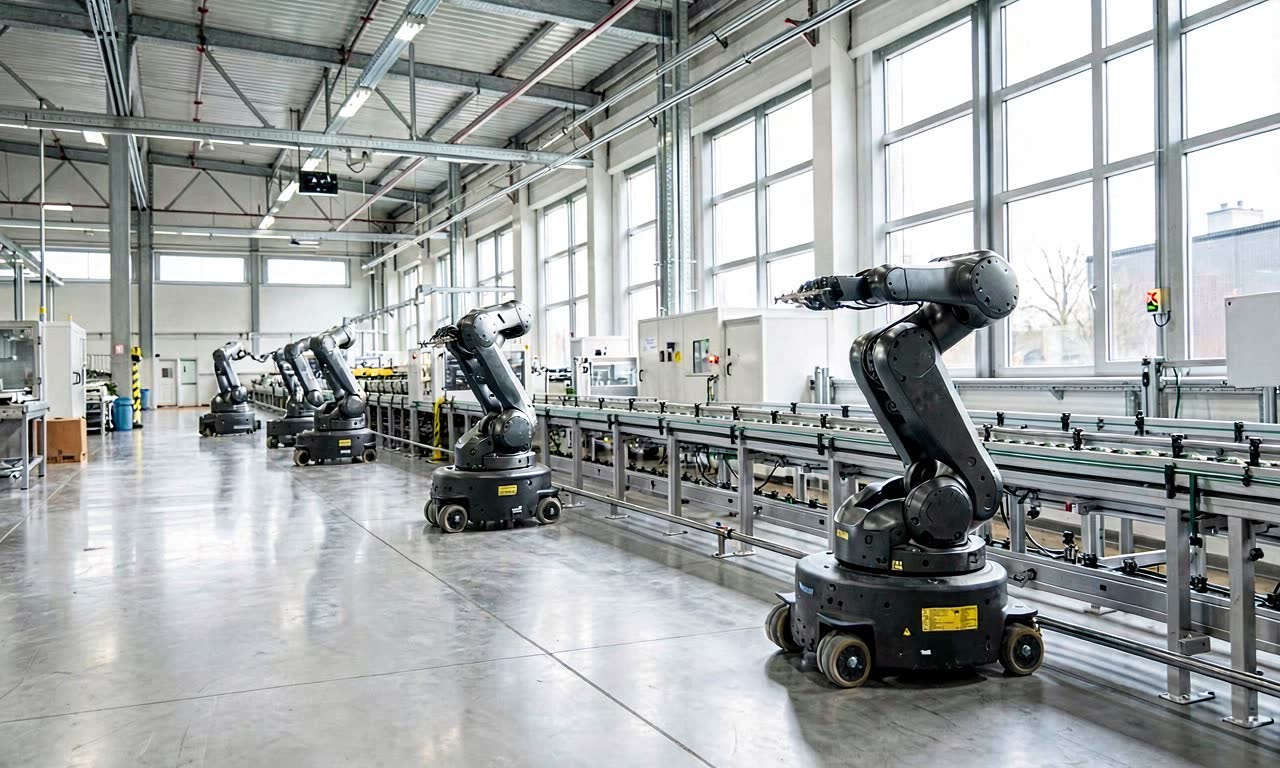
The order reaches far past humanoids. The underlying Commerce investigation, opened in September 2025, sweeps in CNC machining centres, welding and stamping robots, laser and water-jet cutters, autoclaves and industrial ovens — the machinery that shapes, joins and finishes “the metal parts that go into jets, missile bodies, ship hulls and artillery shells,” as Deseret News summarizes the White House’s framing. Unmanned aircraft are excluded — drones already got their own Section 232 order in August, with duties of 25% to 100% that took effect in September.
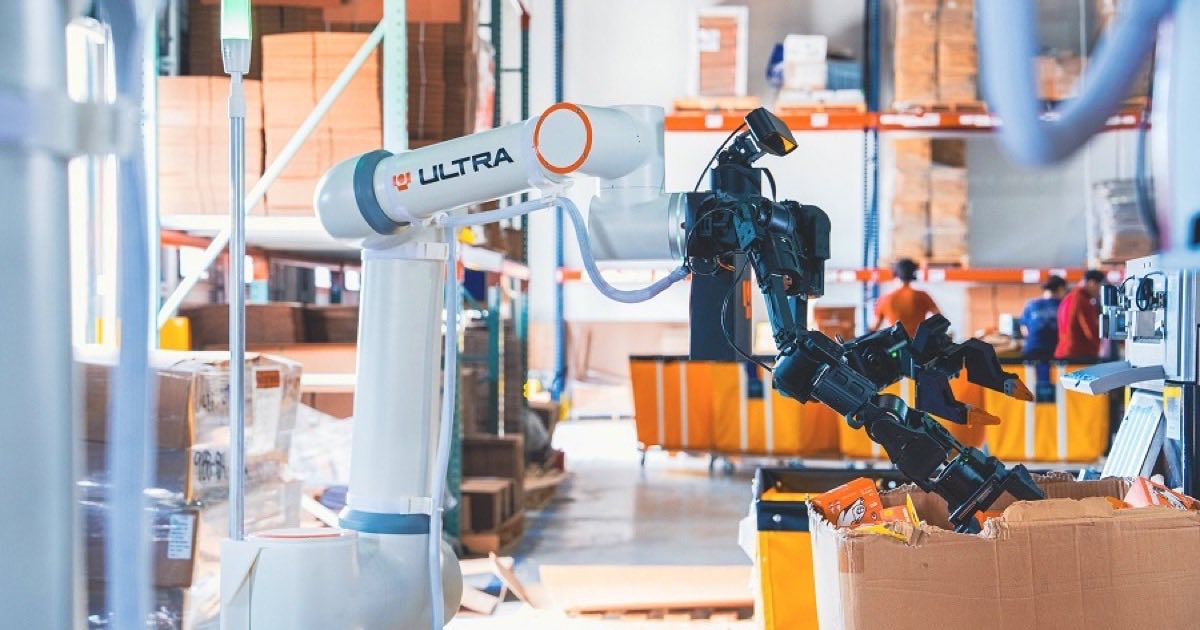
The contradiction at the centre of the document is the finding itself. The proclamation acknowledges that no US company currently offers comparable heavy-duty factory hardware to the “big four” robotics makers — FANUC of Japan, ABB of Switzerland, Yaskawa of Japan and KUKA of Germany — even though those same vendors have been expanding US engineering and assembly plants. GM, Ford, Tesla, Boeing and Lockheed Martin all buy from them. So does Amazon, which as Reuters notes via the American Journal of Transportation has deployed more robots than any company in the world and still runs FANUC arms alongside its in-house fleet.
The no-tariff paradox — and the April deadline
The administration’s own logic contains a trap its authors appear to know about: restricting machinery imports before domestic capacity exists would tax the very defence build-up the proclamation says it is protecting. Reporting in the trade press noted that the drone order ran the opposite way — duties first, talks later — while the robot order reverses the sequence. Progress is due to the president by April 26, 2027; absent agreements, Section 232 lets him impose duties unilaterally. Industry groups spent the 13-month investigation arguing exactly this point, and the National Association of Manufacturers submitted comments warning that tariffs on machines makers do not yet build at home would stall the investments the policy is meant to encourage.
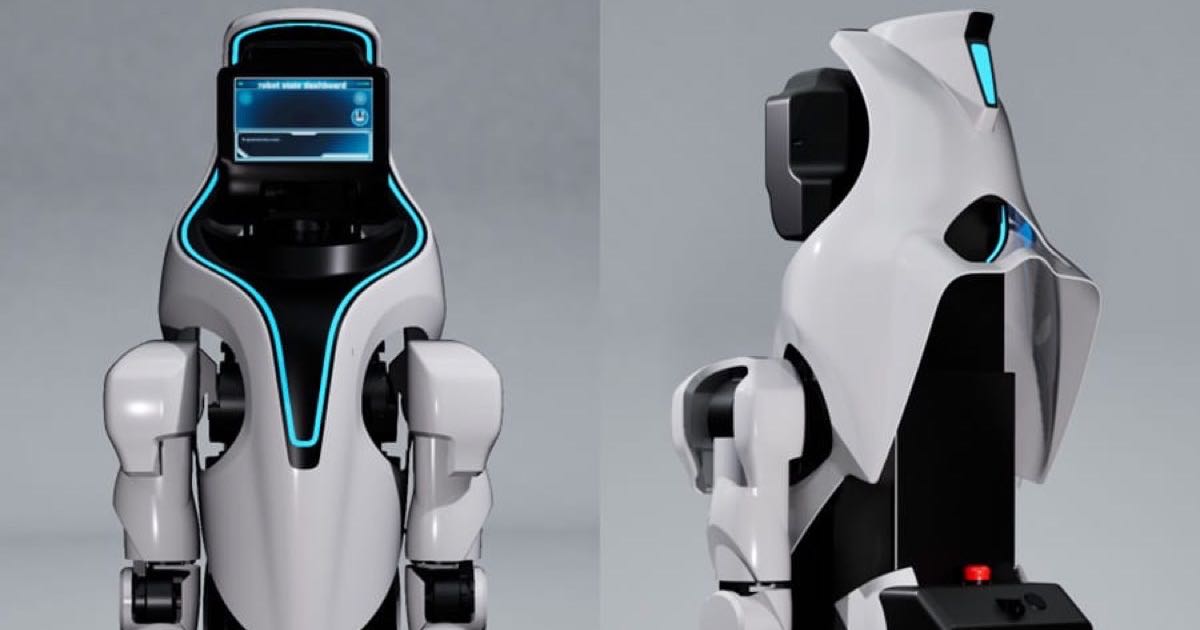
The cybersecurity rationale, meanwhile, echoes the FCC’s July ban on new Chinese humanoid and quadruped robots — a rule that explicitly exempted the fixed industrial arms this proclamation now sweeps in. The through-line is a regulatory ratchet: consumer robots were severed from the US market first on security grounds, the drone sector was tariffed next, and the factory floor is now formally inside the perimeter. What was a product-by-product campaign is consolidating into a single trade architecture around physical AI.
The read-through for buyers, including ours
For anyone buying robots — which eventually includes every New Zealand manufacturer, integrator and logistics operator watching US policy set the global tone — three things follow. First, the immediate effect is price uncertainty with a date on it: anything quoted for delivery after April 2027 carries a tariff option the buyer cannot price. Second, the “big four” are the least exposed players — they have been building US assembly capacity for years, which is precisely what this policy rewards; the pressure lands on newer entrants, especially Chinese makers such as Unitree, AGIBOT and UBTech, whose US door was already half closed by the FCC rule. Third, it accelerates the bifurcation this site has tracked all year: an increasingly self-contained US robotics market with its own capital dynamics, and a Chinese-dominated one everywhere else — with countries like New Zealand, which builds neither, negotiating both.
The honest caveat is that this proclamation is leverage, not law. No tariff exists. The 180-day clock could end in agreements that keep supply chains open, or in duties that raise the cost of automating American factories during the exact window when North American robot orders hit record levels. Both readings are available; the April check-in will pick one.
As of publication, the White House factsheet and proclamation text are live, and coverage from Ars Technica, Deseret News and the Reuters wire is consistent on the core facts; no trading partner’s formal response has been widely reported yet.
❓ FAQ
Did Trump impose tariffs on robots? No. The October 28 proclamation finds imported robotics and industrial machinery threaten national security and orders 180 days of trade negotiations. Tariffs, quotas and duties remain options if talks fail by April 26, 2027.
What robots and machines does it cover? Industrial robotic arms, CNC machining centres, welding, stamping and laser-cutting equipment, autoclaves, industrial ovens and their components — essentially the machinery used to build military and civilian manufactured goods. Drones are excluded under their own August order.
Why not act against China directly? The proclamation names no country. The FCC’s July rule already bans new Chinese humanoid and quadruped robots; this order creates the legal basis for tariffs on machinery imports from anywhere, which covers the German, Japanese and Swiss vendors US factories actually depend on.
Does this affect New Zealand? Not directly — NZ imports few US-bound robots — but US measures on robotics trade tend to set the template other countries copy, and a fragmented US-China robotics market narrows supplier and pricing options for everyone downstream.
Sources: White House proclamation · Ars Technica · Deseret News · Reuters via AJOT · DroneXL