Chinese robotics startup Lumos Robotics is preparing for a stock-market listing next year, and it’s making the case that the companies surviving China’s humanoid robot boom will be the ones proving their machines can work a factory floor, not the ones going viral on social media.
The Shenzhen-based company has raised about 1 billion yuan ($147 million) across seven funding rounds, with Japanese industrial giant Mitsubishi Electric as its largest outside shareholder. Founder and CEO Yu Chao told Reuters that fresh capital would fund industrial deployments, hardware development, and computing infrastructure for AI models.
From Backflips to Bottom Lines
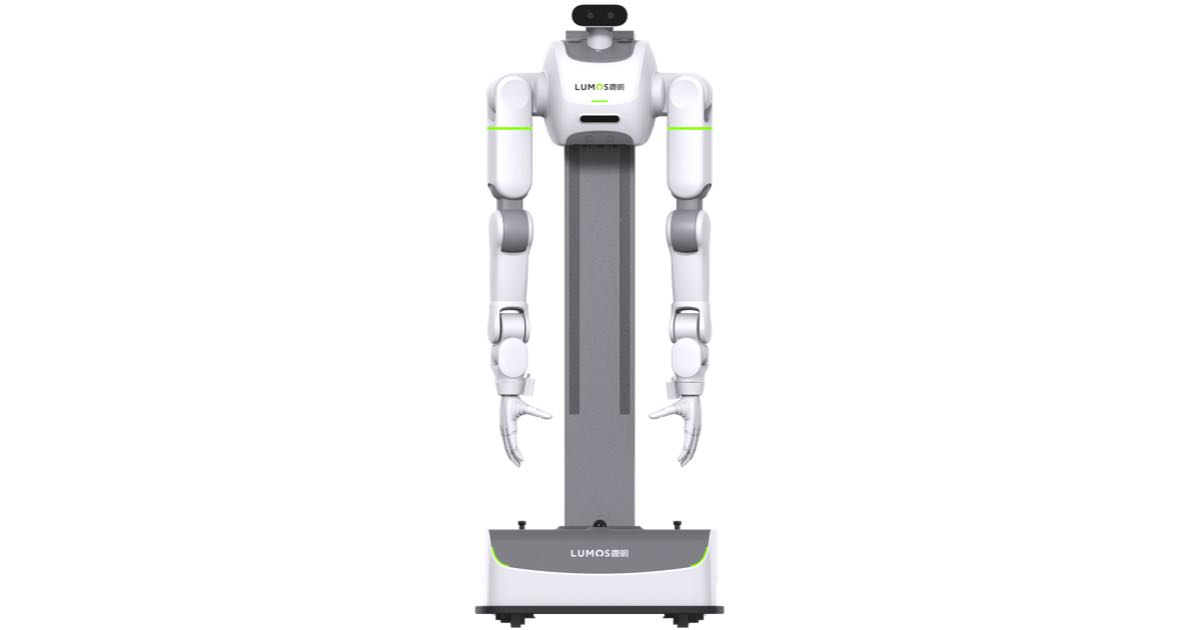
Lumos develops bipedal robots but sells MOS 2, a wheeled, dual-arm machine built for factory work — quality inspection, material handling, the unglamorous tasks that determine whether a robot earns its keep.
“The stage of running and jumping has basically passed,” Yu said, speaking ahead of the World Robot Conference opening in Beijing. “The most important thing now is improving reliability in actual industrial deployment.”
That framing cuts against the grain of China’s current robot hype cycle. Unitree’s Shanghai IPO was 8,000 times oversubscribed by retail investors. Conferences showcase robots breakdancing and running marathons. But as one analyst told Reuters, 50 to 70 per cent of humanoid robots produced this year could end up in “data factories” — collecting training data rather than doing productive work for paying customers.
The Numbers That Actually Matter
Lumos has deployed around 30 MOS robots in inspection and material-handling applications, with roughly five more deployments due shortly. Yu targets about 300 deliveries this year, with 50 more shipping over the next month.
The cost claim is where it gets interesting. In one inspection project with Mitsubishi Electric, Lumos says it reduced the cost of a solution to below 350,000 yuan from roughly 500,000 yuan to 1 million yuan previously, while achieving a cycle time comparable with a human worker. Reuters could not independently verify the figures.
For context, an industrial humanoid would need to cost about 160,000 yuan, including maintenance, to pay for itself within two years compared with a worker earning 80,000 yuan annually, according to Guotai Securities. In reality, such robots typically cost 300,000 to 500,000 yuan, per Berlin-based think tank MERICS.
Lumos has accumulated about 700,000 hours of robotics data from deployed machines, feeding that back into training new skills. That data flywheel — real deployment data improving the model, which improves the next deployment — is the structural advantage Yu is betting the IPO on.
Why This Matters
The argument Lumos is making is straightforward: the companies that cannot create value for a customer “will be washed out.” It’s a line that could come from any Silicon Valley pitch deck, but it carries different weight in China’s crowded embodied-AI sector, where dozens of companies are building robot bodies, models, or data in isolation.
What stands out is how unglamorous the product is. MOS is wheeled, not bipedal. It does one task at a time, though Lumos has demonstrated multi-task operation internally. Yu expects robots capable of reliably handling multiple industrial tasks at scale within two to three years. That timeline is honest enough to be credible — and slow enough to make investors nervous.
The Shenzhen-based company plans to push overseas next year, initially targeting the Middle East and Europe, with Japan and South Korea also under consideration. The Mitsubishi Electric partnership gives it a credible bridge into the Japanese manufacturing sector, where industrial automation standards are exacting.
The Bigger Picture
Lumos is one data point in a broader shift. The conversation at this week’s World Robot Conference in Beijing is moving from viral demonstrations to commercial reality — how much human supervision robots require, whether they can earn a return on their cost, and whether large-scale adoption beyond limited pilots is actually happening yet.
China accounts for 82 per cent of global humanoid shipments, according to technology research firm IDC. But shipments and deployments are different things. The gap between a robot that looks impressive at a trade show and one that runs an assembly line without an engineer hovering is still wide.
For New Zealand, the relevance is indirect but real. Industrial robotics adoption in manufacturing supply chains affects everything from appliance costs to construction timelines. If Chinese factory robots genuinely deliver the cost reductions companies like Lumos claim, the competitive pressure on manufacturers across the Asia-Pacific — including those sourcing from or competing with Chinese production — intensifies.
❓ FAQ
What is the difference between a humanoid robot and an industrial robot like MOS?
Humanoid robots are designed to resemble and move like humans — bipedal, with two arms — and are often pitched as general-purpose machines. The Lumos MOS robot is wheeled with dual arms, purpose-built for factory tasks like quality inspection and material handling. It trades the versatility (and spectacle) of a humanoid form for reliability and cost-effectiveness in specific industrial applications.
Why is Mitsubishi Electric investing in a Chinese robotics startup?
Mitsubishi Electric is Lumos Robotics’ largest outside shareholder and is working with the company on robotics solutions for manufacturing. The partnership gives the Japanese industrial group access to China’s fast-moving embodied-AI ecosystem, while Lumos gains credibility and manufacturing expertise from one of the world’s leading industrial automation companies.
How does Lumos compare to Unitree or other Chinese humanoid robot makers?
Lumos is betting that factory-floor results matter more than viral demos. While Unitree has gone public with massive retail investor demand, Lumos is focusing on wheeled industrial robots with proven deployment metrics. The company was founded in 2024, later than several competitors already pursuing IPOs, and is targeting a listing next year.