Anthropic researchers put a number on the robot takeover this month, and it is two numbers pointing in opposite directions: robots can already perform 74% of physical tasks in the United States, covering 34% of working hours — and they are cost-competitive with humans for just 0.3% of job tasks.
The study, “What work can robots do?”, was released on Anthropic’s research page on 30 September. It got a fresh round of attention this week: The Next Web’s robotics wire recirculated it on 17 October under the blunt headline “Robots and AI could reach 80% of work but rarely cheaply,” and Business Insider ran a first-person meditation on the same finding — written, naturally, by someone wondering why “AI was supposed to spare gardeners.” MIXED Reality News had picked the core figures up on 2 October. Anthropic’s own page, TNW, and MIXED together give the study the three-source base this publication requires for a labour-market claim, and we could find no outlet disputing its central numbers.
The numbers, unpacked
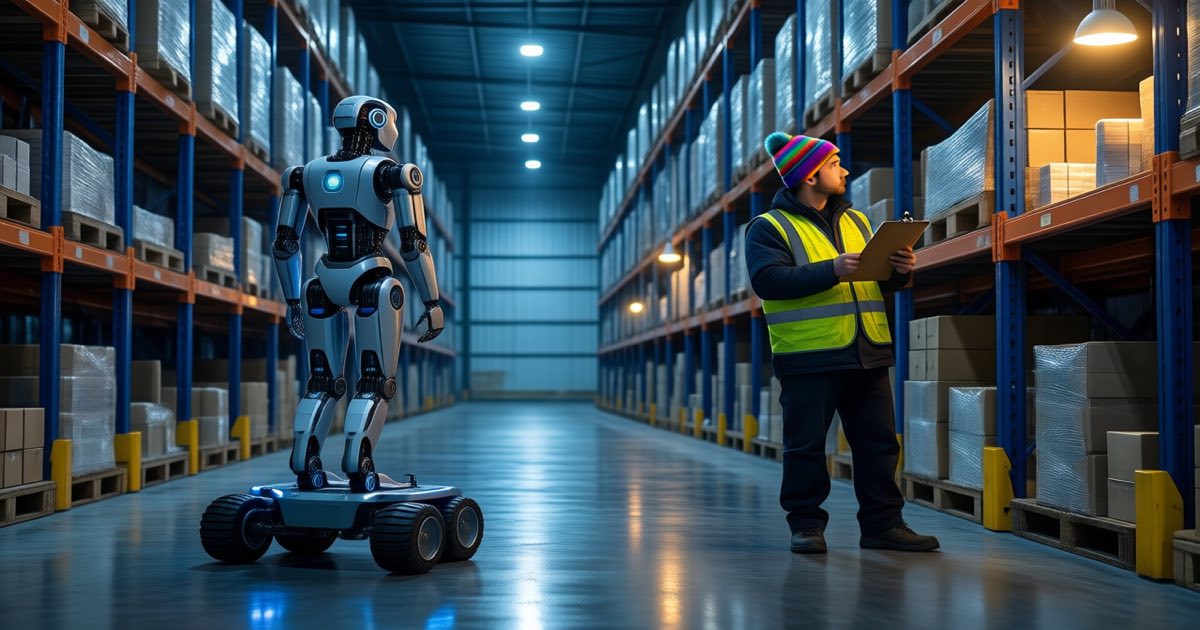
Anthropic’s researchers defined a robot as “autonomous physical machines that sense and act” — car washes that adjust sprayers in, surgeon-controlled surgical machines out. Using O*NET’s roughly 19,000 job tasks, they had Claude score which tasks robots can perform today, and in what kind of environment. Robots do best where environments are controlled: warehouses, factories, structured settings. Three-quarters of physical tasks are technically within reach; the workers most exposed skew male, less educated, and lower paid.
Then comes the number that reorders the whole robotics debate. When Anthropic’s methodology prices full deployment of robots against human total compensation for the same output, robots win for 0.3% of tasks. If robot prices keep falling at their historical rate, that share reaches 10% in about 40 years.
The occupation-level detail is more revealing than the averages. Robotaxis would cost only about $7,000 a year more than a taxi driver — but face regulatory walls. Welding robots that can lay a bead autonomously still cost around five times a human welder once you buy the positioning, ladder-climbing, quality-checking and grinding work around the weld. Dishwashers and cleaners earn $25,000-$30,000 a year less than welders, and robot cleaners still cost several times more, because cleaning resists standardisation. The one occupation where economics and capability already align: packers and packagers, 560,000 of them in the US, whose employment has fallen 22% since 2015 and whom the BLS projects to shed the 11th-most jobs of any occupation by 2035.
The 50-year backtest is the sober part. Jobs more exposed to robots of the day saw greater wage and employment declines in later decades — and robots gain the ability to do about 2% more of the physical work they previously couldn’t, every year. Capability compounds. Cost-competitiveness, so far, does not.
Why the 0.3% is the story
This is the unglamorous bridge between two narratives that otherwise never meet. On one side: the humanoid boom — 22,000 units shipped in six months, China making 97% of them, price floors collapsing from $14,000 to under $3,000, and real deployments in Chinese logistics running at 85% of human efficiency. On the other: US factories installed a record 38,400 robots in 2025 and factory hiring went up.
Both are true, and the 0.3% is the reconciliation. Adoption is real but surgical — a targeted wedge into standardised, high-volume workflows where the environment can be engineered around the machine. That is why the freshest deployment stories are all the same shape: warehouses at peak complexity, humanoids trained overnight in Danish supermarkets, welding ships, loading delivery robots. It is also why the general-purpose humanoid pitch keeps slipping: the machines arriving at customers’ facilities can do 74% of what the work needs and be paid for 0.3% of it.
The New Zealand angle is arithmetic. Our wage levels are lower than the US benchmark the study uses, which makes cost-competitive robots harder again; our workplaces are smaller and less standardised; and our robotics-relevant labour shortages (caretaking, aged care, orchards) sit mostly in the unstructured settings where robots score worst. The realistic near-term import of this study for NZ employers is not displacement but the bridge-economy pattern already visible locally — people employed to install, supervise and clean up after machines that still cost more than they save. Two local threads worth noting: Auckland researchers building robots that interpret for deaf Māori, and open-source robot dogs built on the NZ number-8-wire ethos — both treat robots as scarce capital to be applied carefully, not as headcount replacements, which is roughly the posture the 0.3% figure recommends.
Anthropic’s numbers will age — Claude scored the tasks, after all, and the cost model leans on the company’s own estimates of robot lists and lifespans. A lab that sells tokens arguing automation is slower than the hype is a self-interested narrator; a lab that sells tokens saying automation is imminent would also be one. But the underlying discipline — enumerate what machines do today, price it honestly, backtest against 50 years — is the most falsifiable framing the robotics-labour debate has produced. If humanoid prices break their historical curve, 0.3% becomes 3% fast, and we will see it in procurement figures before anyone’s manifesto admits it. Watch the packers.
- Anthropic Opened Its Own Hiring Data — Junior Roles Fell From a Quarter of New Technical Hires to Under a Tenth
- The Robots Are Already Working — What Japan’s Demographic Crisis Means for New Zealand
- US Factories Installed 38,400 Robots in 2025. Factory Hiring Went Up.
- 22,000 Humanoid Robots Shipped in Six Months. Most Are Not Working in Factories.
Sources: Anthropic research (30 Sep 2026); The Next Web (17 Oct 2026); MIXED Reality News (2 Oct 2026; site returned 403 and is credited but not counted); BLS/ONET data as cited in the study.*