Runway, the company best known for selling generative video models, is now selling robot control. On 1 October (UTC) it announced Praxis-1, an open-weight “world action model” built on the same large-scale video pretraining behind its general world models — the pitch being that a model which has watched millions of hours of people doing things already knows how objects behave, and only needs a light nudge to drive a robot arm. According to The Robot Report, which spoke to Runway CTO Kamil Sindi, the model is aimed at robotics developers and researchers and is being tested across a variety of embodiments ahead of a public release “in the coming months.”
The argument runs straight through the scarcest resource in robotics: demonstrations. “Most robot policies are bottlenecked by robot data, which is scarce and expensive to collect,” Sindi told The Robot Report, adding that performance improves as video scales, “so its ceiling is set by how much video it can learn from, not how many robot demonstrations exist.” Teleoperating a robot through a task thousands of times is slow and dear; people filming their kitchens is free and ongoing.
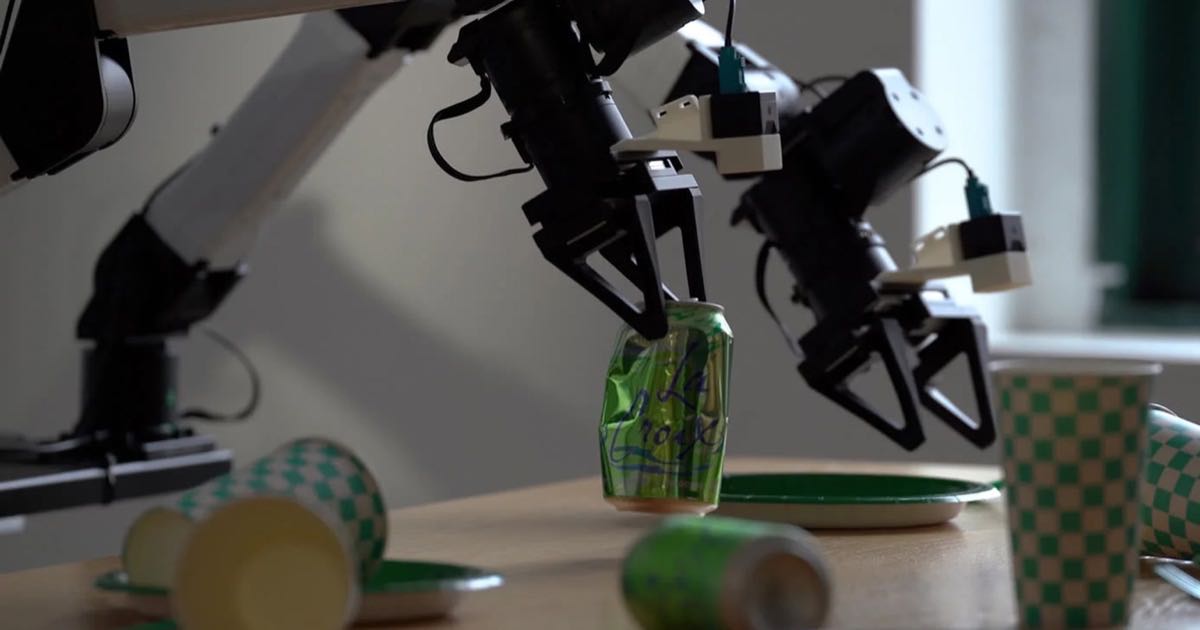
Runway’s own numbers make the case, with the usual caveat that they are self-reported. The company says simulating robot policies inside its world model predicts real-world results with 0.95 correlation — pitched as beating costlier 3D-reconstruction techniques. Robotics & Automation News surfaced the most interesting experiment: policies pretrained on ordinary web video versus those pretrained on teleoperated robot video, where web-video pretraining landed a final placement error of 16.1 cm against 16.0 cm for teleop video — a gap Runway itself concedes is not statistically significant. If web video and robot video really are interchangeable at pretraining scale, the data problem dissolves. The training tasks run from lifting soda cans to packing gift bags, which sounds trivial until you remember deformable objects like bags are precisely where rigid-body simulators fall apart.
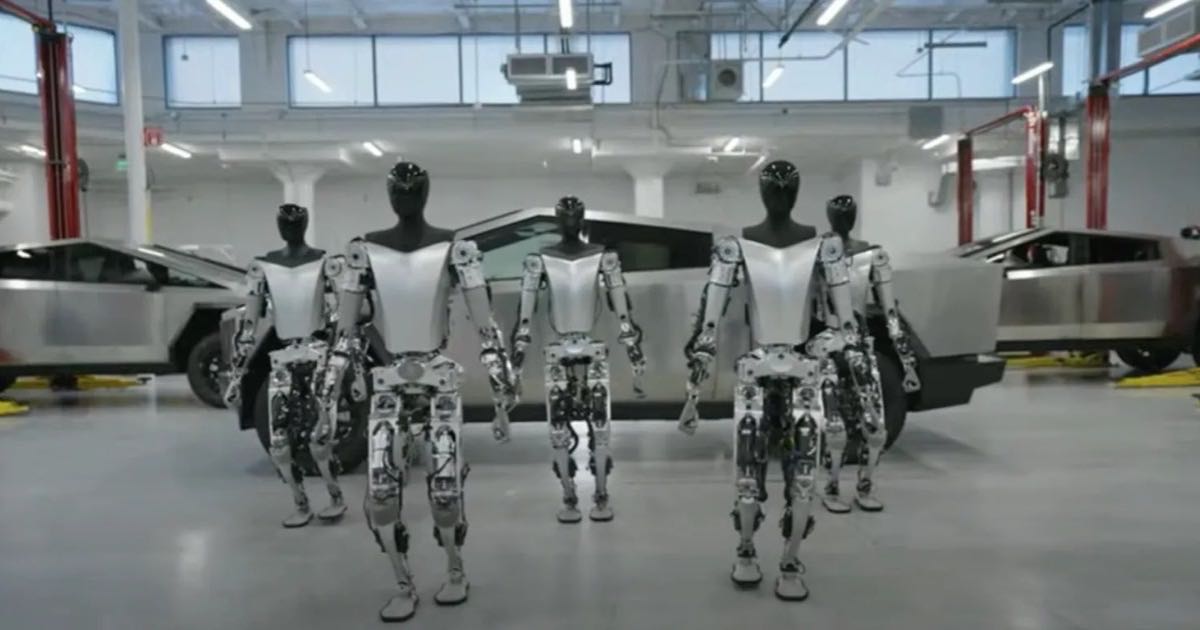
Early partners — Noble Machines, Standard Bots and Ultra, per Runway’s announcement — are running Praxis-1 on their own hardware, from bimanual arms to humanoids, with what the company describes as light fine-tuning. Open weights are the notable strategic choice: hardware developers will be able to download, run and adapt the model themselves rather than renting it from Runway’s servers. “Open weights give hardware developers flexibility and control they don’t have today,” Sindi said, framing it — in a distinctly American register — around US leadership in physical AI and manufacturing.
It is also the precise opposite of the bet FieldAI just cashed in. FieldAI raised at a $10 billion valuation in September partly on the claim that robots shouldn’t lean on internet video at all. Runway’s entire thesis is that internet video is the answer. Both cannot be fully right, but the field benefits either way: two expensive labs running a natural control experiment on whether the web or the warehouse is the better teacher. Watch which one ships general-purpose capability first.
The deeper pattern is the one large language models already walked. Pretrain on the internet, fine-tune on the task — robotics is making the same journey a few years behind, with open embodied-AI datasets like AgiBot World feeding the same instinct and Google’s Gemini Robotics 2 pushing generalist policies from the other direction. For anyone outside the big labs — a hardware startup, a university group, a New Zealand integrator with no model-training budget — an open-weight robot policy changes the maths. You fine-tune someone else’s pretraining instead of building your own, and the entry cost to teaching a robot a new trick drops from millions to comparatively little. That, more than the 0.95 figure, is why Praxis-1 matters.
Sources: The Robot Report (2 Oct 2026); Robotics & Automation News (1 Oct 2026); AlphaSignal; Runway’s announcement (2 Oct 2026). Runway’s 0.95-correlation and placement-error figures are company-reported.