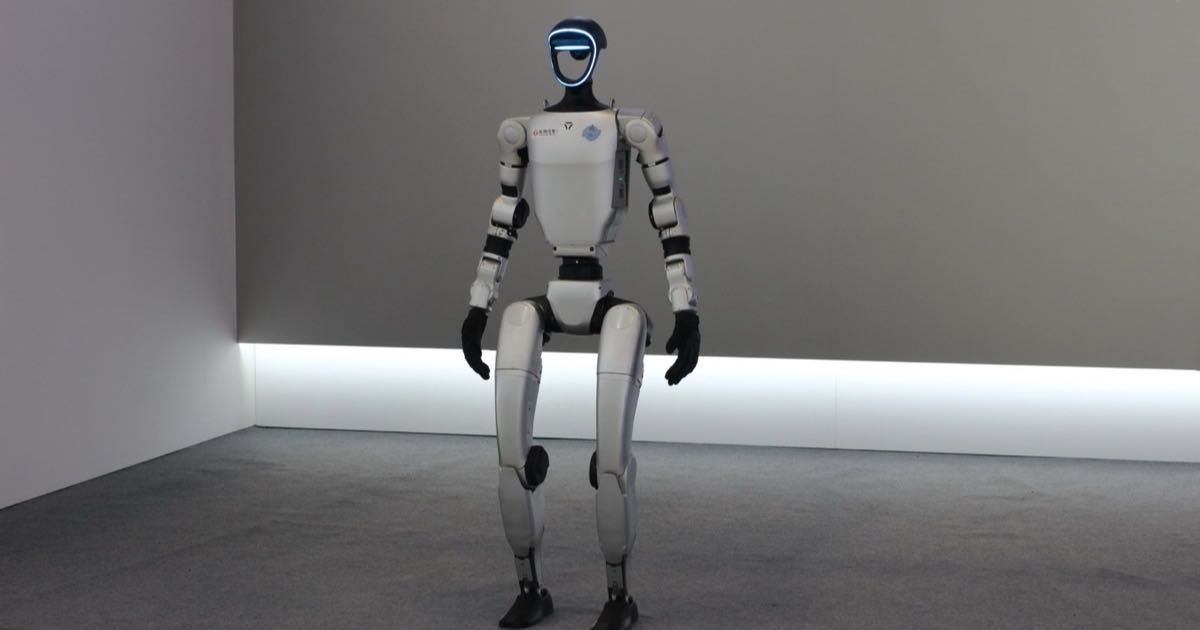
Tesla wants to build humanoid robots in California, and according to a Wall Street Journal report cited by Automotive News on 23 September 2026, it plans to do it with parts from China. The company has reportedly begun sourcing components from Chinese suppliers for the Optimus robots it will assemble at its Fremont plant — a decision that puts the American automaker’s flagship robotics program right in the middle of the world’s largest humanoid robot supply chain, and right in the middle of a US policy debate about keeping Chinese robotics out.
The logic is straightforward. Building robots at Tesla’s target volume requires a parts ecosystem that simply does not exist at scale in the United States yet. China’s does. The country produces more humanoid robots than anywhere else, and its supplier base for actuators, precision machining, and robot-grade components is the deepest in the industry. If your goal is a million-unit production target rather than a thousand, the fastest route to the parts bin currently runs through the Yangtze River Delta.
The Ningbo audits
The reporting has a specific geography. Chinese media reported in mid-September that a Tesla team arrived in Ningbo on 16 September and began a fresh round of Optimus supplier audits the following day — the kind of on-the-ground vetting that precedes production contracts, not fact-finding tours.
Robotics and automation analyst Georg Stieler told the publication why the region keeps drawing them in: “The Yangtse Delta is at least as important as Shenzhen for this industry.”
He has a point the map makes for him. The Yangtze Delta hosts Unitree in Hangzhou and AGIBOT in Shanghai, and the region’s supplier density means a robot company can visit several component makers in a morning. Tesla auditing suppliers in Ningbo is not an anomaly; it is what happens when you get serious about volume in an industry whose centre of gravity sits on China’s east coast.
The awkward overlap with US policy
Here is where the story gets uncomfortable for everyone involved. Washington has spent this year pushing Chinese robotics out of the American market — banning Chinese-built humanoid robots over espionage concerns — while Chinese automakers like Dongfeng put their own humanoids onto factory floors. Now the report describes the most prominent American robotics programme embedding itself in that same Chinese supply chain.
There are two ways to read it, and both are probably true at once. The pragmatic reading: Tesla needs volume, China has the parts, and waiting for a domestic supply chain to mature would hand the entire category to competitors. The risk reading: sourcing critical robot components from the country your own regulators treat as a security concern invites exactly the scrutiny — tariffs, export controls, political pressure — that has battered other supply chains this decade. Neither reading involves wrongdoing. Both involve tension that will not resolve quietly.
Which components, from which suppliers, and at what volume remain the open questions. What the reporting makes clear is that the Optimus ramp is no longer a California story with a Chinese footnote. It is a global supply chain story with a California assembly address — and the same week Tesla audits suppliers in Ningbo, its home market is building walls around the very ecosystem it is shopping in.
FAQ
Is Tesla confirmed to be using Chinese components in Optimus? According to a WSJ report cited by Automotive News, Tesla has begun the sourcing process. Tesla has not announced a supplier list, and the specific components remain unconfirmed.
Why source from China rather than the US? China is the world’s largest humanoid robot producer with the industry’s densest component ecosystem, per the report. US suppliers capable of volume production for humanoids are still being built out.
When did the supplier audits happen? Chinese media reported a Tesla team arrived in Ningbo on 16 September 2026 and began supplier audits on 17 September.