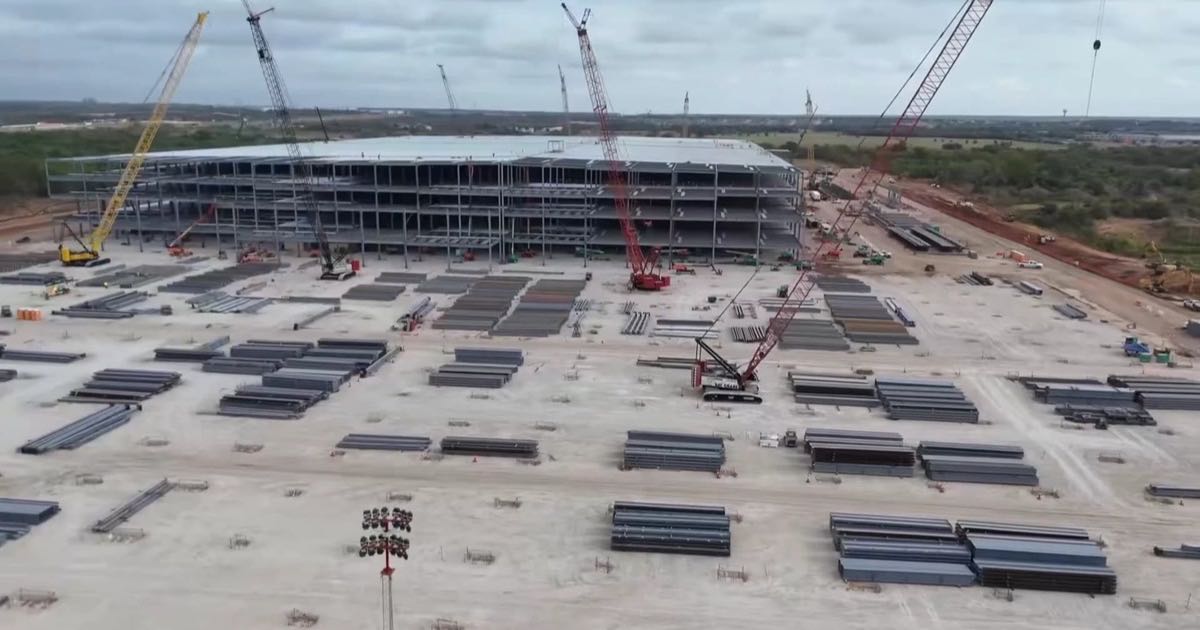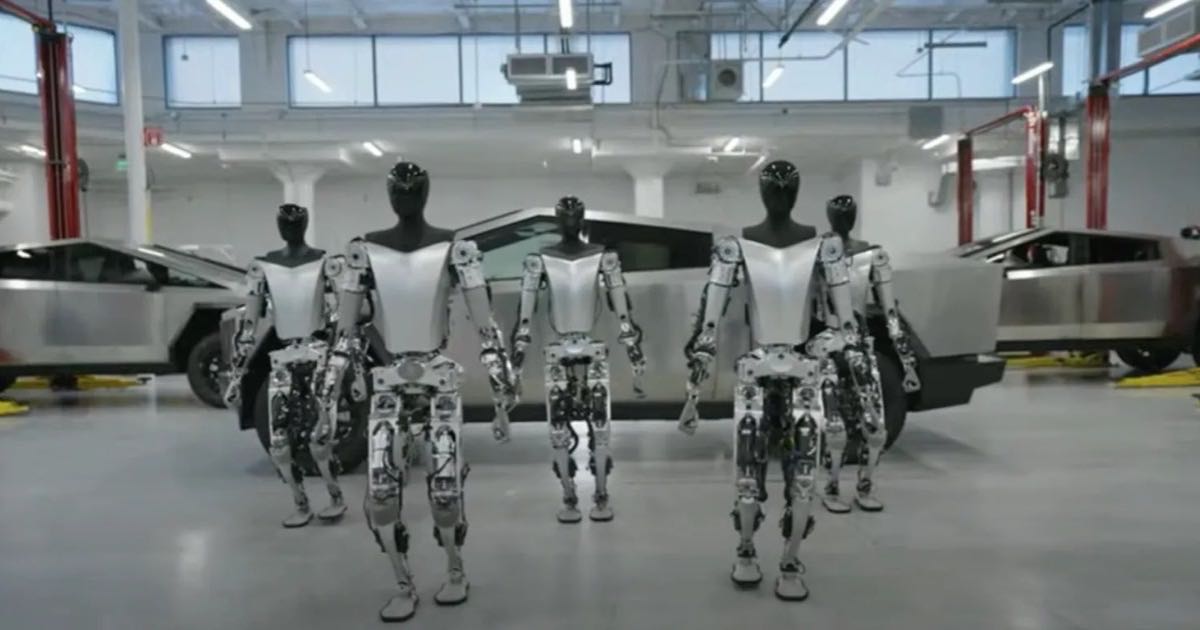
Tesla has confirmed what its factory floor has been hinting at for months: Optimus production has begun. “Optimus production began in Fremont on our high-volume lines. The bots coming off this line are the first production-quality bots that we have manufactured,” the company wrote in its Q3 2026 shareholder letter, published this week alongside quarterly results in which net income fell to $0.8 billion from $1.37 billion a year earlier. As TechCrunch reported, the robots are being built on manufacturing space once dedicated to the Model S and Model X, both of which rolled their final vehicles in May.
🔍 THE BOTTOM LINE: Tesla has crossed from building proof-of-concept robots to running a serial production line for them — but the same letter and call made clear that “production” and “product” are far apart. Full production is still about a year out, hands are the bottleneck, and the first outside deliveries are being pointed at the end of 2027.
What Tesla actually said
The shareholder letter classifies the Fremont line as an “early ramp,” with a Texas Optimus facility still in “construction” behind it. CEO Elon Musk, on the earnings call, described the current state as “early production” and warned the ramp will be slow and “somewhat bumpy because it is such a radically new product.” His target: 20,000 units per week by the end of 2027. Press coverage of the call, including a Yahoo Finance market summary, quotes Musk calling Optimus “will be the biggest product ever” and “the hardest product to scale manufacturing that we’ve ever made at Tesla.”
The letter’s economics tell their own story. Revenue was essentially flat at $28.0 billion while GAAP net income dropped to $0.8 billion — a 39% fall — as the company poured capital into AI compute, the robotaxi buildout and the Optimus line. Tesla, in other words, is paying for its robotics future out of a shrinking car-company margin, from a letter that says so without drama: “Much hard work lies ahead.”
The hands problem has not gone anywhere
The timing matters because the ramp-up has been stuttering for months. As The Information reported (via The Next Web’s recap), Tesla was producing several hundred robots a week in September, up from a few dozen in the second quarter — with hands, factory equipment and suppliers all named as the drag. Each Optimus hand and forearm packs more than 100 screws and small parts assembled by hand; touch sensors have been unreliable enough that Tesla designed a removable “sensing glove” to hold them. On the call, Musk acknowledged the hands remained the limiting factor and pushed meaningful delivery volume toward late 2027.
The software side lags the hardware. Optimus still needs programming and training for each job, with basic tasks taking days to learn, and most units are being used inside Tesla for testing, training and data collection in supervised areas — the same finding we noted in September when Tesla passed a thousand robots a week and admitted the robots can’t generalise. Musk’s own metaphor on the call was that training the robot is like raising a toddler — a candid admission that the general-purpose promise is still being raised, not shipped. The gap between those two facts — serial production of a humanoid, and a humanoid that needs days of tutoring per job — is exactly where every humanoid company on earth is presently stuck.
The bet under the hood
Two structural reads change how the Fremont news should be weighed. First, this is a vertical-integration story as much as a robotics one: Tesla builds the robot, its own AI5 inference silicon, the training compute (a planned 400 MW of “SI training compute” by year-end, per the letter), and now the factories that make the robots that make the factory. Second, the plan for outside buyers has quietly firmed up: coverage of the call points to deliveries to companies outside Tesla beginning around the end of 2027, most likely as leases before sales — which, if it holds, would make Tesla the first Western company to place — or at least lease — a general-purpose humanoid at volume, roughly a year behind China’s Unitree on production count.
For New Zealand the near-term read is unglamorous: fleets of leased humanoids in California factories are a data-collection instrument, not a labour market event. The number to watch is not the 20,000-a-week target — Musk has missed Optimus timelines regularly and said so himself with the “bumpy” caveat — but whether Fremont’s line can hit even the interim cadence of more than 1,000 a week by the end of 2026 that The Information’s reporting describes. If it can’t, the “biggest product ever” framing stays a story about ambition; if it can, the 2027 lease wave becomes the first real supply of general-purpose humanoids any non-Chinese buyer can order — a gap we tracked last week against Unitree, which says its humanoids have reached 10,000–20,000 units produced.
🔍 THE BOTTOM LINE (bottom): Production starting is real — the letter, the line and the conversion of Model S/X space all check out. But the honest summary is the one Musk gave: the hardest part isn’t making one good humanoid, it’s making one that doesn’t wear out after a month, at a price, by the tens of thousands. That phase starts now, and history says it will take longer than the calendar suggests.
❓ FAQ
Did Tesla start mass-producing Optimus? It started production on a high-volume line in Fremont that Tesla calls an “early ramp” — the first production-quality units are coming off, but Tesla and Musk both describe full production as roughly a year away, with 20,000 units per week targeted for the end of 2027.
When can companies outside Tesla buy one? Musk pointed to deliveries to outside companies beginning around the end of 2027, likely as leases first. No pricing or preorders have been announced.
What’s the bottleneck? Hands and dexterity: each hand has 100+ hand-assembled parts, unreliable touch sensors led to a removable “sensing glove,” and station equipment misaligns small parts. On the software side, robots still need days of task-specific training.
How is Tesla paying for this? Out of the car business: Q3 net income fell 39% to $0.8 billion while spending on AI compute, robotaxi and the Optimus line rose, with capex above $25 billion for 2026.
📰 Sources
Tesla Q3 2026 shareholder letter · TechCrunch · Interesting Engineering · The Next Web (The Information recap) · Yahoo Finance · Tech Insider