Most AI models see the world as a flat sequence of pixels. World Labs’ new model doesn’t. Atlas, announced by Fei-Fei Li’s startup on 1 September 2026, is a “world model” — a system pretrained from scratch to work natively on text, images, video and 3D all at once, with an internal understanding of space that survives when the camera moves.
What Atlas actually does
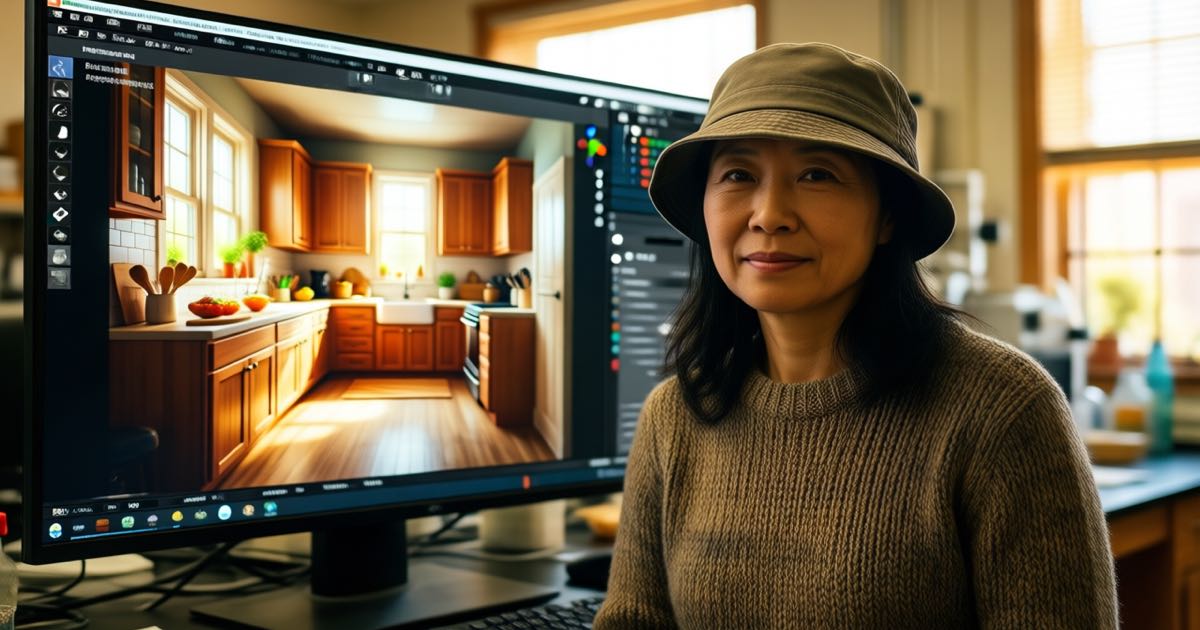
The technical name is a mouthful — a multimodal autoregressive diffusion transformer — but the practical capability is easier to describe. Feed Atlas one photo of a room. It can generate that room from any angle you specify, including the parts the camera never saw, guessing what the back of the sofa looks like from broad world knowledge and keeping it geometrically consistent with everything it did see.
Three capabilities stand out from the launch post:
- Camera-controlled generation. Video from one to six input images with pixel-perfect camera paths — up to one minute at 1440p. This is aimed at filmmakers and game developers who want to “move the camera” through a still image.
- Spatial reconstruction. From one to dozens of photos, Atlas outputs both novel-view frames and explicit 3D — and World Labs claims it outperforms state-of-the-art models specialised for 3D reconstruction. A generalist beating the specialists is the headline result here.
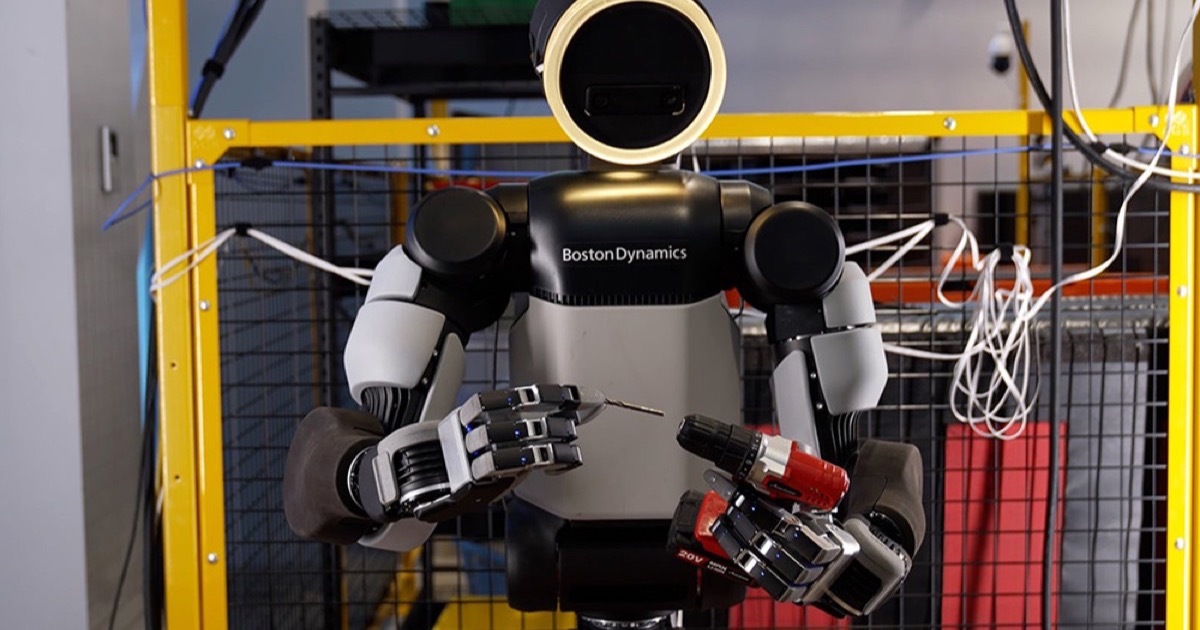
- Real-to-sim for robotics. Atlas can take video of the real world and turn it into a simulatable environment — the workflow robot developers use to train robots in simulation before touching the real thing.
It will power the next version of Marble, World Labs’ consumer world-generation product.
Why world models keep attracting the smartest money
Fei-Fei Li — the Stanford researcher behind ImageNet, the dataset that kicked off modern deep learning — founded World Labs in 2024 on a specific bet: language models alone won’t get us to machines that understand the physical world. Spatial intelligence is a separate problem. Yann LeCun at Meta has made the same argument from a different direction, and Ami Labs raised $1.03 billion for world models with LeCun himself on board earlier this year. The field has effectively split into two camps, and both are now well funded.
What makes Atlas notable in that contest is scope. Earlier world models from World Labs generated single static 3D scenes. Atlas handles generation, reconstruction and simulation — modelling how a scene evolves over time — in one model. That’s the property robotics people actually care about: a robot can’t rehearse in a simulator that doesn’t know how the world behaves when nobody’s looking.
What stands out here is the timing. Humanoid robots are shipping in record numbers — global shipments are climbing fast, and Chinese factories are putting them on production lines — but their training bottleneck is simulation data. World models like Atlas are the supply side of that equation.
The honest caveats
One minute of 1440p video is short by film standards, and generated worlds are still approximations — the launch post shows impressive consistency but doesn’t claim physical accuracy. Whether “performance improves with training compute” holds the way it did for language models is exactly the open question World Labs is asking investors to fund. The company says it expects the trend to hold; that’s a hypothesis, not a result.
Still, the trajectory is hard to argue with. Two years ago this lab’s demos were blurry static rooms. Today it’s reconstructing real environments from a handful of phone photos and simulating them in motion. If you want a single indicator for how close we are to robots that learned to move before they learned to fall over, watch this space — literally.
For readers in New Zealand: the interesting local angle is the skills pipeline, not the labs. World-model tooling like Marble turns spatial capture — photogrammetry, drone passes, even phone scans — into usable simulation. For a country with a small robotics industry and strong geospatial sector, that’s a workflow worth watching more than the model leaderboard.
— CJ Murden, editor of Singularity.Kiwi. Former digital technologies teacher, author of AI-focused books. Writing with a New Zealand focus.