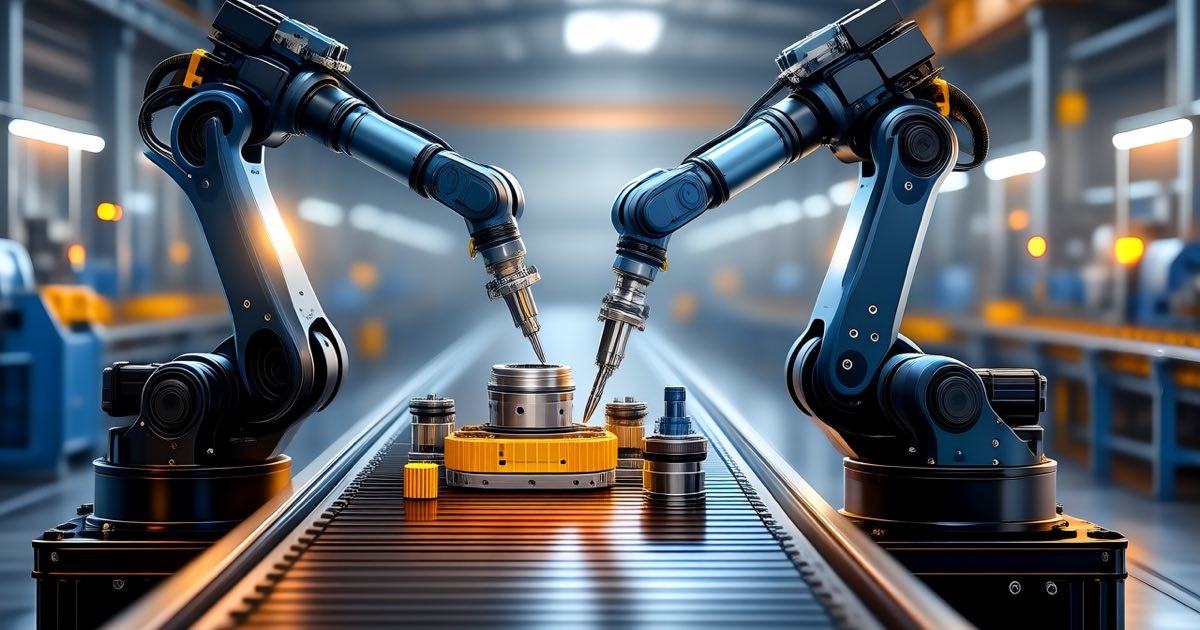
Reuters reported on Wednesday, 15 October 2026, that Shanghai-based robotics startup DexForce is training its humanoid robots mostly with synthetic data generated in virtual environments — a strategy management argues will cut both the cost and the time it takes to make robots genuinely useful. Chief executive Jia Kui framed the ambition in terms anyone who has watched the last four years will recognise: a ChatGPT-style breakthrough moment for physical AI.
🔍 THE BOTTOM LINE
The robotics industry is quietly splitting into two data religions. One pays humans to demonstrate tasks on camera; DexForce argues that game is unwinnable at scale. If the simulation-first approach holds up outside the demo reel, the scarce resource in robotics stops being robot operators with film crews and becomes software people with good simulators — a shift that would favour teams like DexForce over the recording-boom happening in the West. The catch, as always with Chinese humanoid claims, is independent verification: the performance figures so far are DexForce’s own.
The 10-Trillion-Sample Problem
Jia Kui’s argument to Reuters — carried in full on Yahoo Finance’s syndication — is arithmetic. “Trying to achieve ‘physical artificial general intelligence’ purely through real-world data collection would require 10 trillion samples … manual (data) collection for infinite human tasks is fundamentally inefficient,” he said, defining physical AGI as a humanoid completing new tasks in an unfamiliar environment on command. The ChatGPT parallel he drew is deliberate: the claim is that synthetic data could do for robots what internet-scale text did for language models.
It’s the same “ChatGPT moment” framing our Unitree coverage tracked in the middle of this year — and notably, China’s humanoid leaders now compete on who gets there first by arguing about data strategy, not just price.
What DexForce Actually Sells
DexForce (跨维智能) was founded in June 2021 by Professor Jia Kui, and Caixin Global’s funding coverage describes it as a software-first embodied AI company: its DexVerse simulation engine generates synthetic training data, its PickWiz stack handles industrial 3D vision, and its W1 Pro is a wheeled humanoid rather than a legged one — a deliberately pragmatic body for factories, with 40 degrees of freedom, 1,000 Hz joint control and sub-millimetre vision accuracy according to the company’s own specifications. Robots International’s profile credits the DexVerse pipeline with grasp success rates above 99.9% — a company-reported figure, not an independent benchmark, and one that should be read the way you read any vendor’s bench results.
The July 2025 round Caixin reported — several hundred million yuan, backed by Chengdu Science and Technology Venture Capital, Lenovo Capital and Hongtai Capital — put the company in the same wave of Chinese embodied-AI funding as the Unitree IPO story, which is the financial backdrop to everything happening in Hangzhou and Shenzhen right now.
Two Roads to Robot Data
The contrast with Western practice is sharpening. A Business Insider report published the same day describes AI companies paying workers worldwide to record themselves doing their jobs so robots can learn from the footage. DexForce’s wager is the inverse: that the world’s tasks can be modelled, generated and learned in software, with real-world data demoted to calibration rather than curriculum.
Both roads have a known failure mode. Real-world demonstration data is expensive and slow but transfers reliably; simulation is cheap and fast but has to prove the sim-to-real gap closes on real hardware. That proof is exactly what Chinese humanoids facing real factory floors keep having to produce, and what manipulation benchmarks are trying to measure fairly. As of publication, Reuters’ report on DexForce’s simulation-first strategy has not been independently confirmed by other outlets — Caixin’s earlier coverage corroborates the company’s background and funding, but the performance claims remain DexForce’s own.
The New Zealand Angle
For this country, the simulation-first pitch is quietly attractive. A sim-trained robot doesn’t need a data-collection deployment parked in your factory for months before it earns its keep, which lowers the price of experimenting for firms without billion-yuan backers — think of a small Tauranga manufacturer wanting a repetitive handling job automated without a motion-capture project. The sensible checkpoint for any NZ adopter is the same one the global industry uses: demonstrated transfer on real hardware in the buyer’s own conditions, not a vendor’s simulation demo.
❓ FAQ
What is DexForce? A Shanghai-based (with strong Shenzhen ties) embodied-AI startup founded in 2021 by Professor Jia Kui, building an industrial 3D vision stack (PickWiz), the DexVerse simulation engine, and the W1 Pro wheeled humanoid robot.
Why simulation instead of real-world data? CEO Jia Kui told Reuters that real-world collection alone would need around 10 trillion samples to reach “physical AGI”, which he called fundamentally inefficient; synthetic data generated in virtual environments is cheaper and faster to generate at scale.
Has the approach been independently verified? No. Reuters’ report relies substantially on the company’s own claims, and DexForce’s headline figures (such as 99.9%+ grasp success) are company-reported. As of publication the Reuters piece has no independent confirmation.
What is Real2Sim2Real? DexForce’s training loop: real-world scenarios are reconstructed in simulation, massive synthetic data is generated there, and the trained behaviour is deployed back onto the real robot.
🔍 THE BOTTOM LINE
DexForce’s bet reframes the robotics data question from “how many demonstrations can you film?” to “how good is your world model?” — and if simulation-first training transfers reliably, the economics of useful robots change faster than any hardware improvement in the last two years. Until that transfer is shown on someone else’s factory floor, treat the 99.9% numbers as an opening bid.
📰 Sources
- Reuters (syndicated via Yahoo Finance) — Chinese startup DexForce trains humanoid robots using virtual data to slash costs (15 October 2026)
- Caixin Global — China’s Embodied AI Boom Rolls on as DexForce Lands New Funding Round (11 July 2025)
- DexForce — official site: W1 Pro, DexVerse Real2Sim2Real engine, product specifications
- Robots International — DexForce company profile (DexVerse, W1 Pro, 3D vision stack)
- Business Insider — AI companies are paying workers worldwide to record their jobs so robots can learn to do them (15 October 2026)
- TradingView — Reuters wire copy timestamp 15 October 2026, 03:43 GMT-4
— CJ Murden, editor of Singularity.Kiwi. Former digital technologies teacher, author of AI-focused books. Writing with a New Zealand focus.